
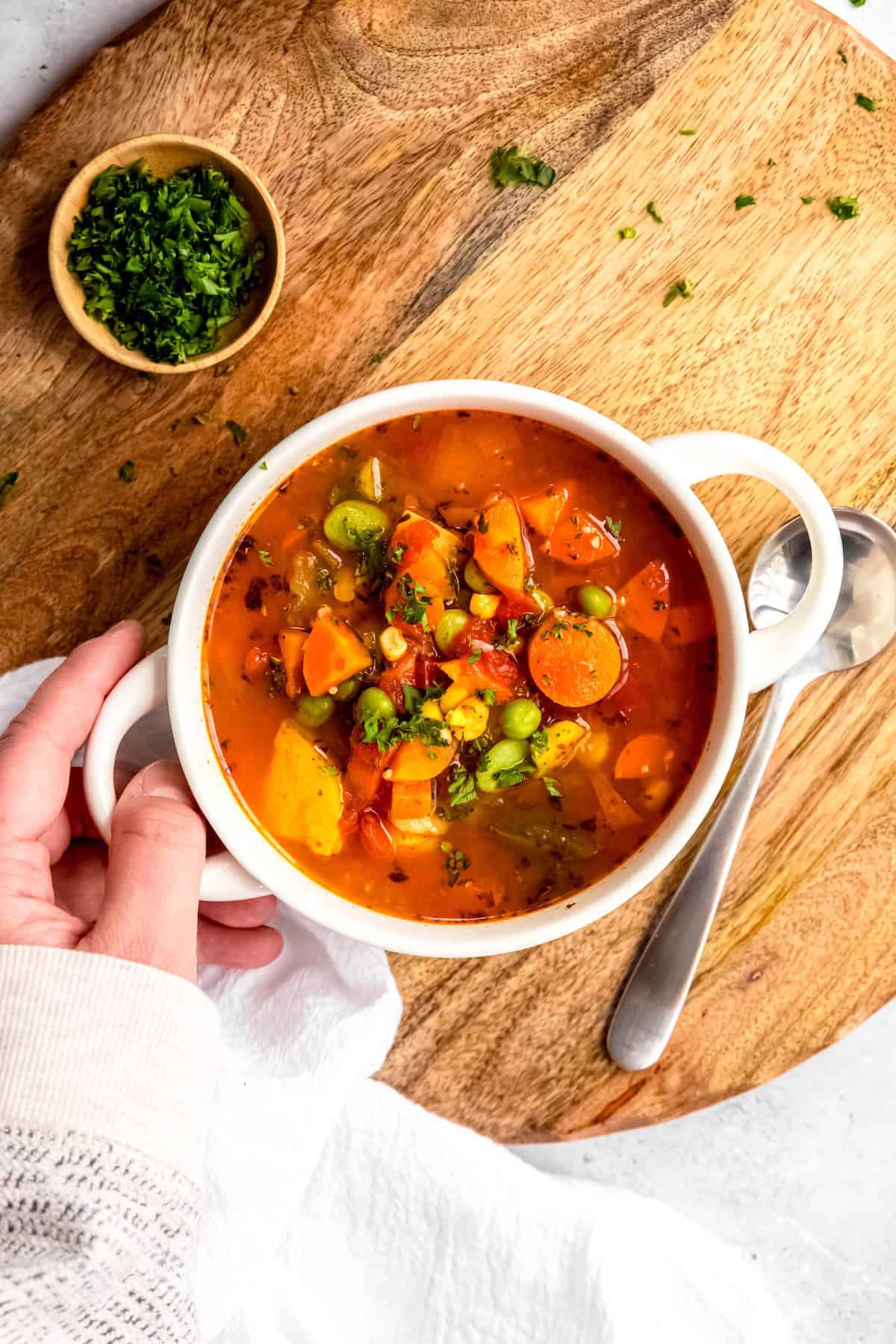
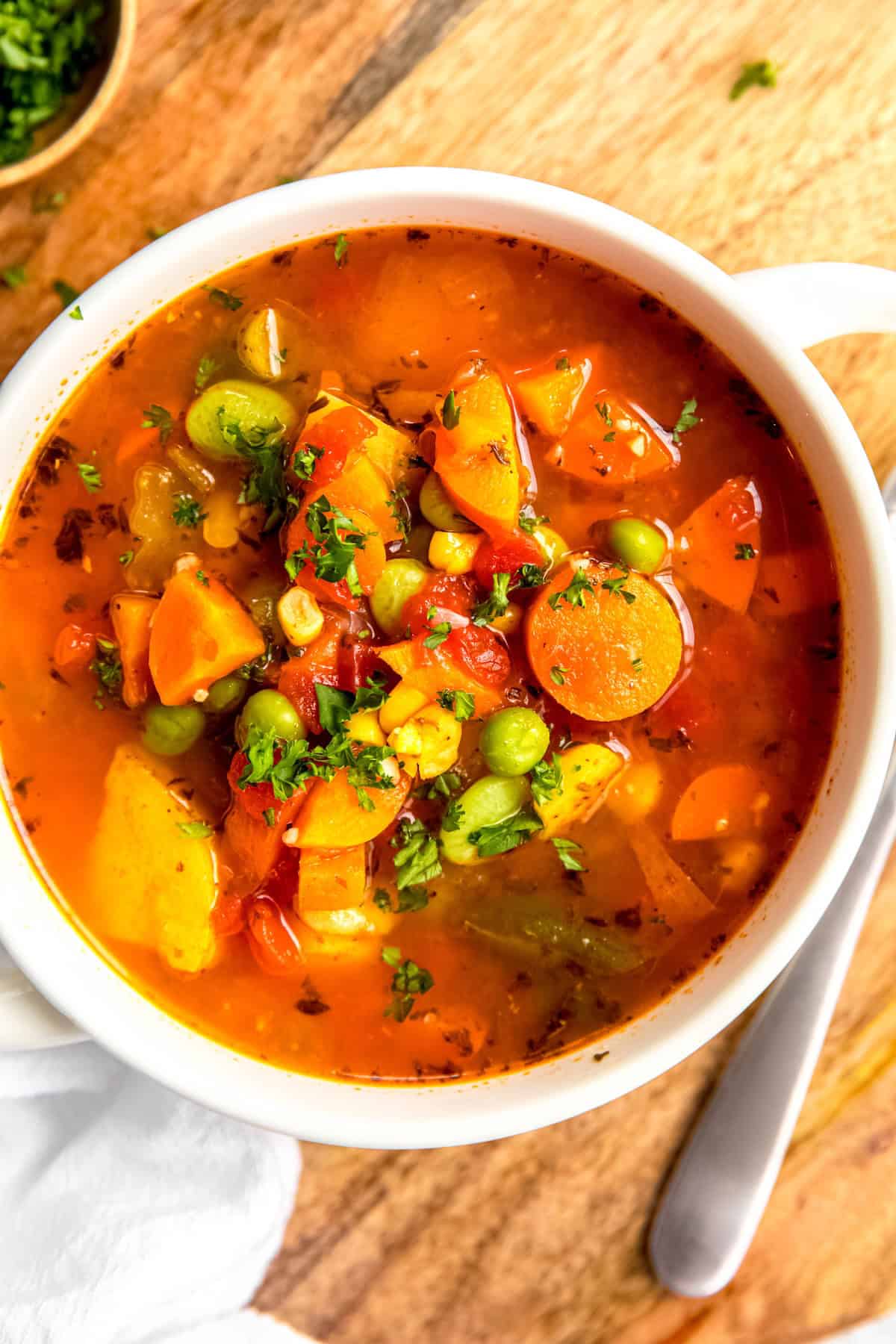
If you have been searching for a healthy, comforting dinner that makes use of what you already have on hand, this recipe for Easy Instant Pot Vegetable Soup with Frozen Vegetables is for you! It works with just about any frozen veggies you have kicking around in the crisper drawer and freezer, making it the perfect meal for a no-spend challenge.
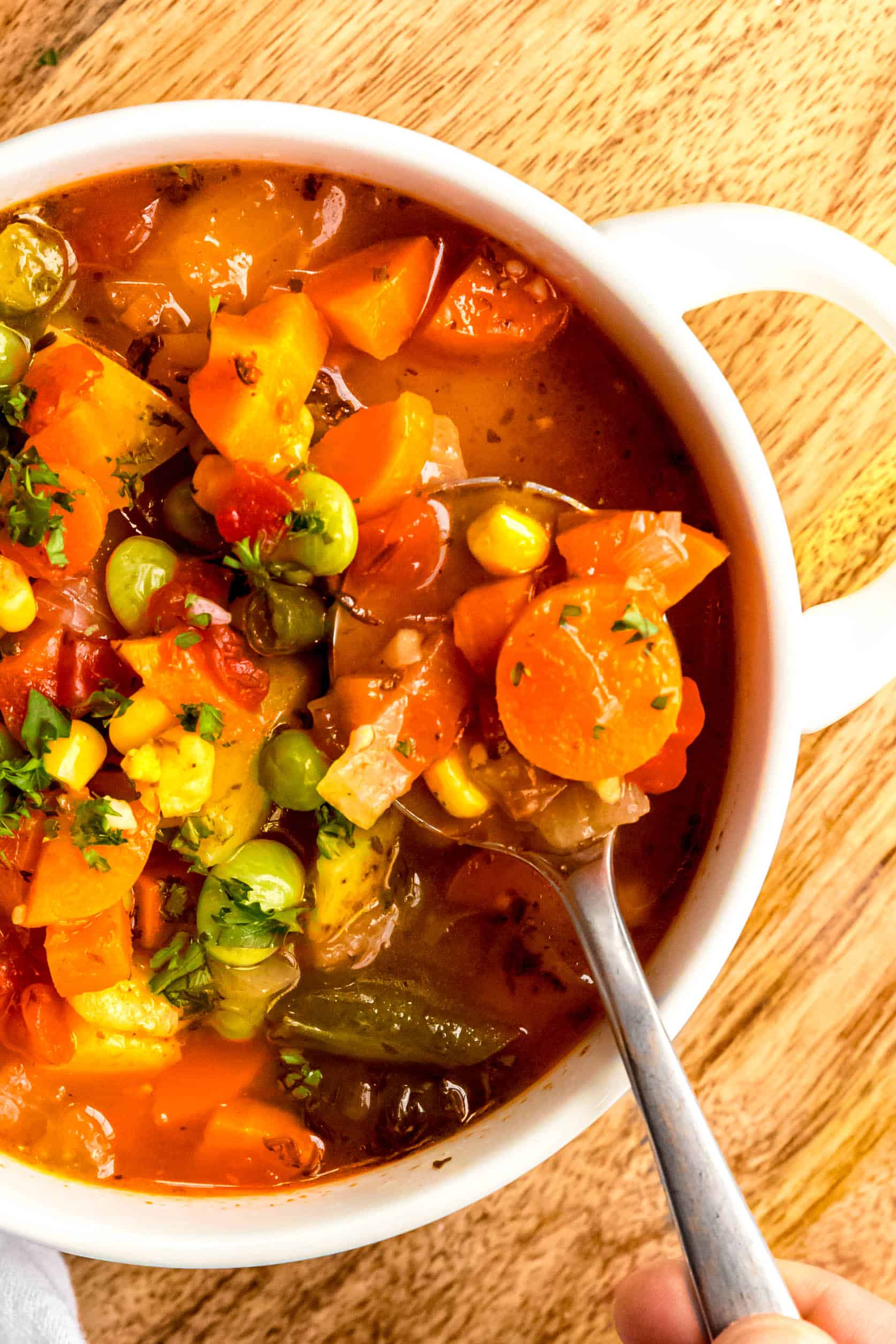
The beauty of this Instant Pot vegetable soup isn’t just that it’s easy—it’s that it’s endlessly adaptable. Once you understand the basic formula, you can pivot in any direction your freezer and spice cabinet allow. No special trip to the store. No rigid ingredient list. Just thoughtful layering of flavor using what you already have.
Love Instant Pot soup recipes as much as I do? Check out my Instant Pot split pea soup, Instant Pot gluten-free potato soup, and Instant Pot navy bean soup recipes next!
Jump to:
- Why You’ll Love This Instant Pot Vegetable Soup Recipe
- Ingredients & Substitutions
- The Best Aromatics for Soup
- Optional Flavor Combinations To Keep It Interesting
- How to Make Instant Pot Vegetable Soup with Frozen Vegetables
- How to Make This Vegetable Soup Without an Instant Pot
- Expert Tips
- Storage Instructions
- FAQs
- More Pantry-Based Soup Recipes
- Easy Instant Pot Vegetable Soup With Frozen Vegetables
- 💬 Reviews
Why You’ll Love This Instant Pot Vegetable Soup Recipe
- Random Medleys Encouraged - Remember your panic-driven freezer-stocking adventures from the last time a storm rolled through town? If it's time to clear things out, this easy vegetable soup will help you use up those stray bags of veggies you bought when the world was ending.
- Perfect for Rent Week - If finances are tight, everything is more stressful, and double-shifts are often part of the deal. This colorful bowl of yum comes together with almost zero effort, uses just one pot, is ideal for meal prep, and it’s made with whatever you have on hand.
- All-Inclusive - This Instant Pot veggie soup is naturally gluten-free, Whole30 and paleo-friendly. If you omit potatoes or sweet potatoes, it's keto. Oh, and if you use vegetable broth, it's also vegan. So, no matter your diet preferences, this easy veggie soup has you covered!
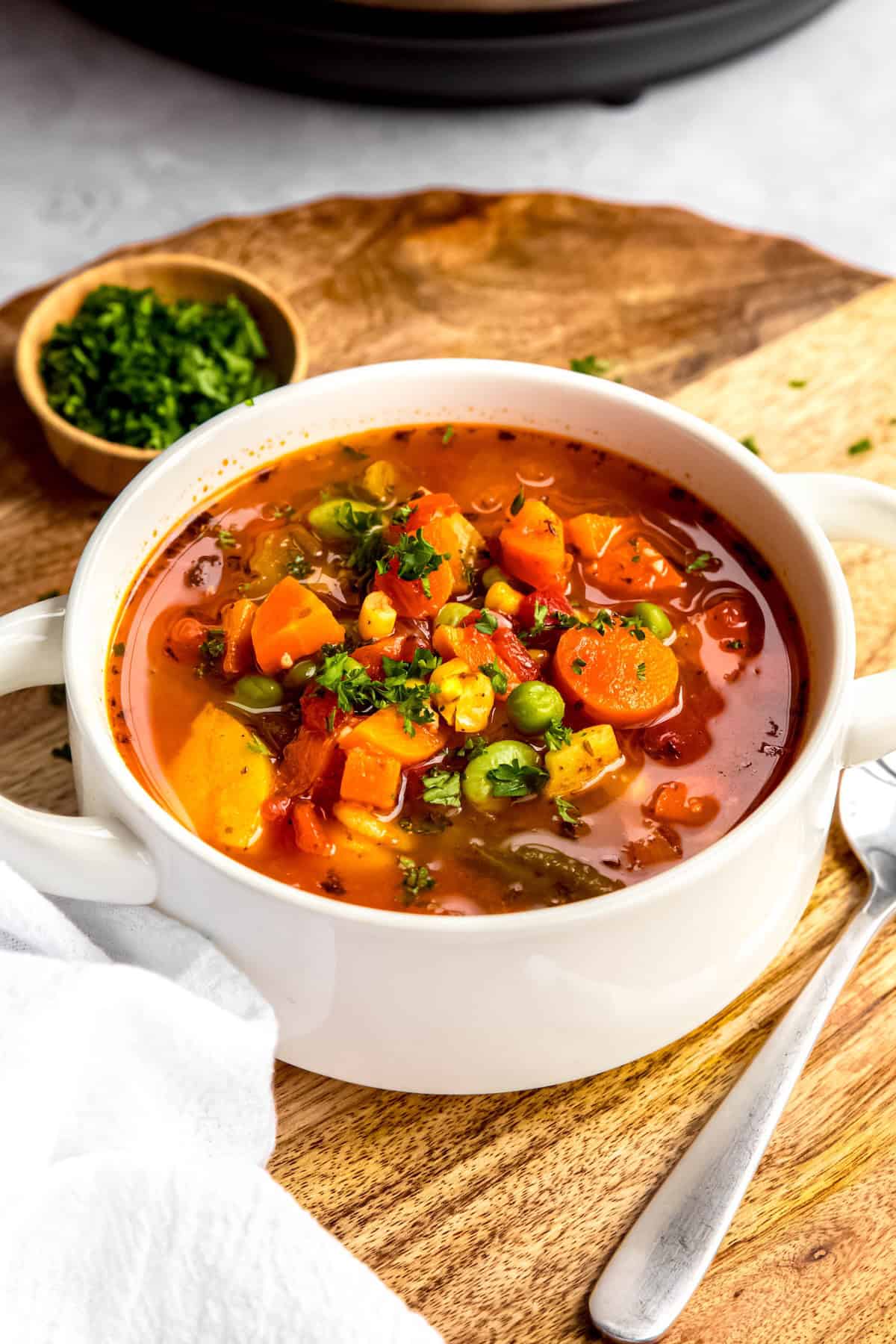
Ingredients & Substitutions
Here's everything you need:
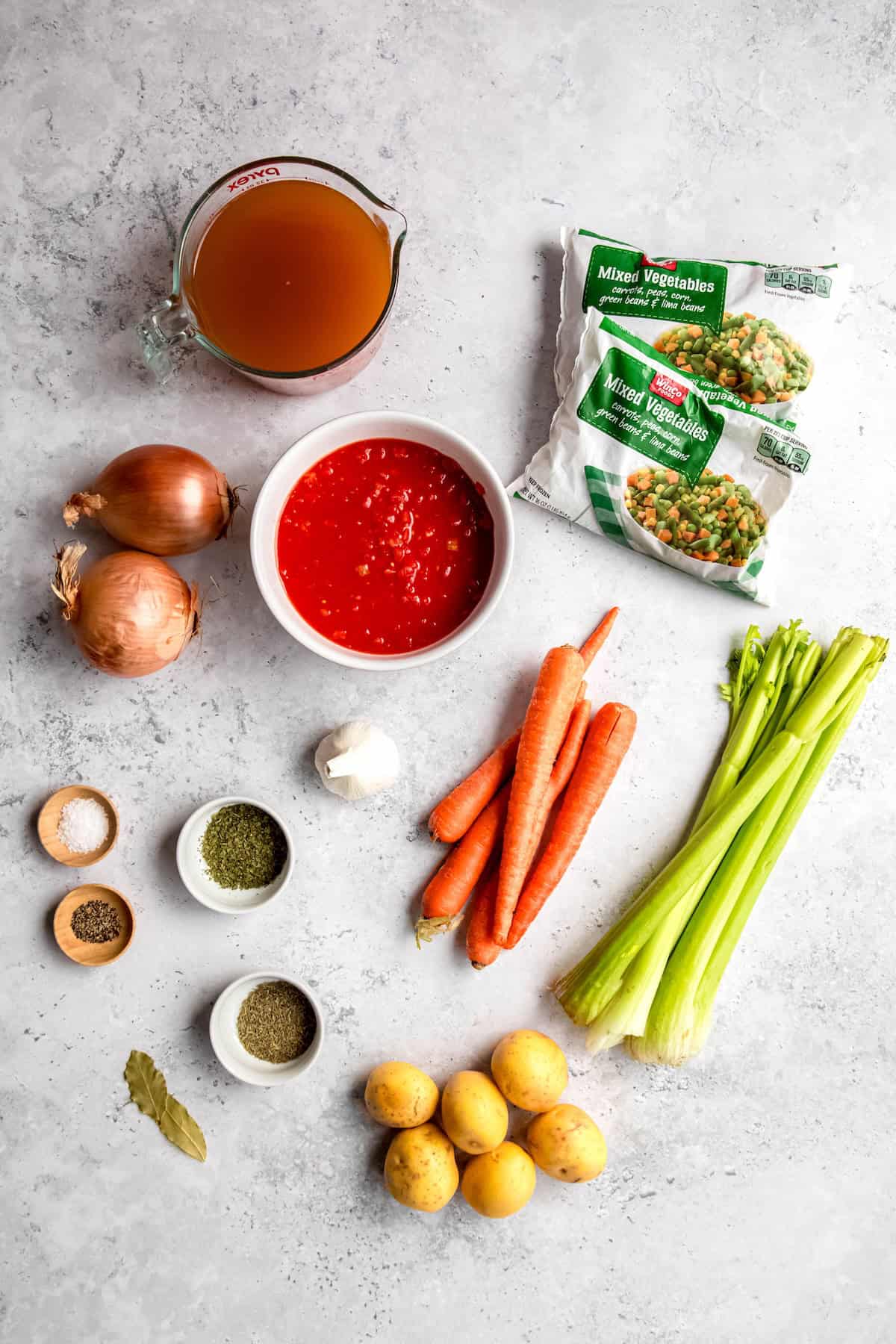
- Mirepoix - Also known as the French trinity, this is a traditional flavor base made from carrots, celery, and onions. Start any pot with those three ingredients, and you’re practically guaranteed to make something phenomenal—even if it’s super duper simple. That said, hop down a section for more aromatic combinations to try.
- Garlic - In our house, there’s no such thing as too much garlic, but I hate to peel it. I like to buy a Costco-sized bag of peeled cloves to store in the freezer for whenever I need. You can also use jarred minced garlic or garlic paste, or swap in ¼ teaspoon of dried garlic powder for each clove of fresh.
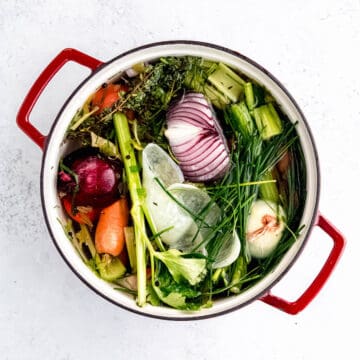
- Kitchen Scrap Vegetable or Bone Broth - One of my favorite money-saving grocery tips is to keep a gallon-sized freezer bag that I fill with scraps like onion tips/skins, root ends of carrots/celery, etc. and then turn into free broth (with your Instant Pot, if you want!). Feel free to swap in any boxed or canned broth or reconstituted powder or paste you prefer.
- Canned Diced Tomatoes - Fire-roasted diced tomatoes are my favorites, but regular work too. You can also use whole canned tomatoes (just roughly chop them first), crushed tomatoes, or tomato purée. Tomato paste is more umami, so you won’t need nearly as much, but that would work too. You could even use sun-dried tomatoes!
- Yukon Gold Potatoes - IMHO, Yukon Golds have the perfect balance between starchy fluffiness and waxy “hold-your-shape-ness,” but other thin-skinned potatoes (e.g. yellow or red potatoes, baby new potatoes, fingerling potatoes) will all work. I don’t recommend using baking potatoes unless you like them pretty soft.
- Dried Bay Leaves, Dried Thyme & Dried Parsley - This is a tried-and-true trio, but certainly not the only one. Bay leaves add massive depth for just 1-2 leaves, but don’t fret if you don’t have them. Dried thyme and parsley can be replaced with 3x as much fresh. You’re also welcome to use any combo of dried herbs like basil, oregano, marjoram, cilantro, or go for a pre-mixed blend like Italian seasoning, herbs de provence, or Greek seasoning.
- Frozen Veggies of Choice - This is where the Frankenstein fun comes into play! As I mentioned earlier, just about any frozen or fresh veggies can play. Hop down for a bit more detail.
- Salt & Black Pepper - Just the basics! Use freshly cracked black pepper and kosher or sea salt for the best flavor.
The Best Aromatics for Soup
If you don't have all the components of mirepoix (carrots, celery, onion), don't fret. The great thing about this Instant Pot soup recipe is how flexible it is—you truly can use it to clear out your “pantry.” Any mix of onions, carrots, celery, bell peppers, green onions, chiles, ginger or garlic will all work, but they’ll each affect the flavor of your soup slightly differently.
- Onions (yellow, white, or red) form the backbone of most soups. Yellow onions are tender and slightly sweet, soft red onions bring a subtle sweetness and color, and white onions are sharper and cleaner with more of an al dente bite. If you only have one aromatic, make it onion.
- Carrots add natural sweetness and body. Even a handful will round out acidity from tomatoes or balance spice. If your soup tastes slightly bitter or flat, carrots are often the fix.
- Celery adds savory depth and a subtle herbaceous note. It’s not flashy, but it quietly makes everything taste more “complete.”
- Bell Peppers bring sweetness and a slightly fruity note. Green peppers lean savory and a little grassy, while red, yellow, and orange peppers add more sweetness. These are especially great in Southern, Tex-Mex, or Mediterranean variations.
- Garlic adds warmth and aroma. Fresh garlic sautéed in oil before adding liquid gives the most flavor, but even frozen or jarred garlic works beautifully here. Just be careful not to burn it—garlic turns bitter quickly.
- Ginger shifts the soup in an entirely different direction. Fresh grated ginger adds brightness and subtle heat, making the broth feel lighter and more aromatic—especially good in Asian-inspired versions.
- Green Onions (Scallions) are milder than bulb onions and work well as both an aromatic and a garnish. The white parts can be sautéed at the beginning; the green tops are best stirred in at the end for freshness or added as a bright garnish.
- Chiles (fresh or frozen) add heat and personality. Jalapeños give moderate warmth, serranos bring more intensity, and mild green chiles add flavor without too much spice. If you’re using dried chili flakes, add them early to bloom in the oil.
The key with aromatics is to sauté them briefly in a little oil before adding broth. You’re essentially laying the foundation—everything else you add to your soup builds on top of it. And remember: you don’t need perfection here. Two aromatics are enough. Three is great. Four is luxury. The goal is big flavor and flexibility!
No Fresh Aromatics? Check the Pantry.
If your veggie drawer is looking bleak, don’t give up. Some of the best aromatic boosters live in the pantry:
- Dried whole chiles (like ancho, guajillo, or árbol) can be simmered directly in the broth, then removed before serving. They add deep, complex heat.
- Red pepper flakes bloom beautifully in hot oil.
- Onion powder and garlic powder aren’t glamorous, but they absolutely build savory depth.
- Dried minced onion works surprisingly well in soups.
- Bay leaves add subtle background complexity.
- Italian seasoning, Cajun seasoning, curry powder, or garam masala can act as “aromatic shortcuts,” layering in multiple flavors at once.
- Bouillon cubes or paste (chicken, vegetable, or beef) add concentrated savoriness when you’re short on fresh ingredients.
- Even a drizzle of olive oil infused with garlic or chili flakes can add aromatic dimension if that’s what you have!
The Best Frozen Vegetables for Vegetable Soup
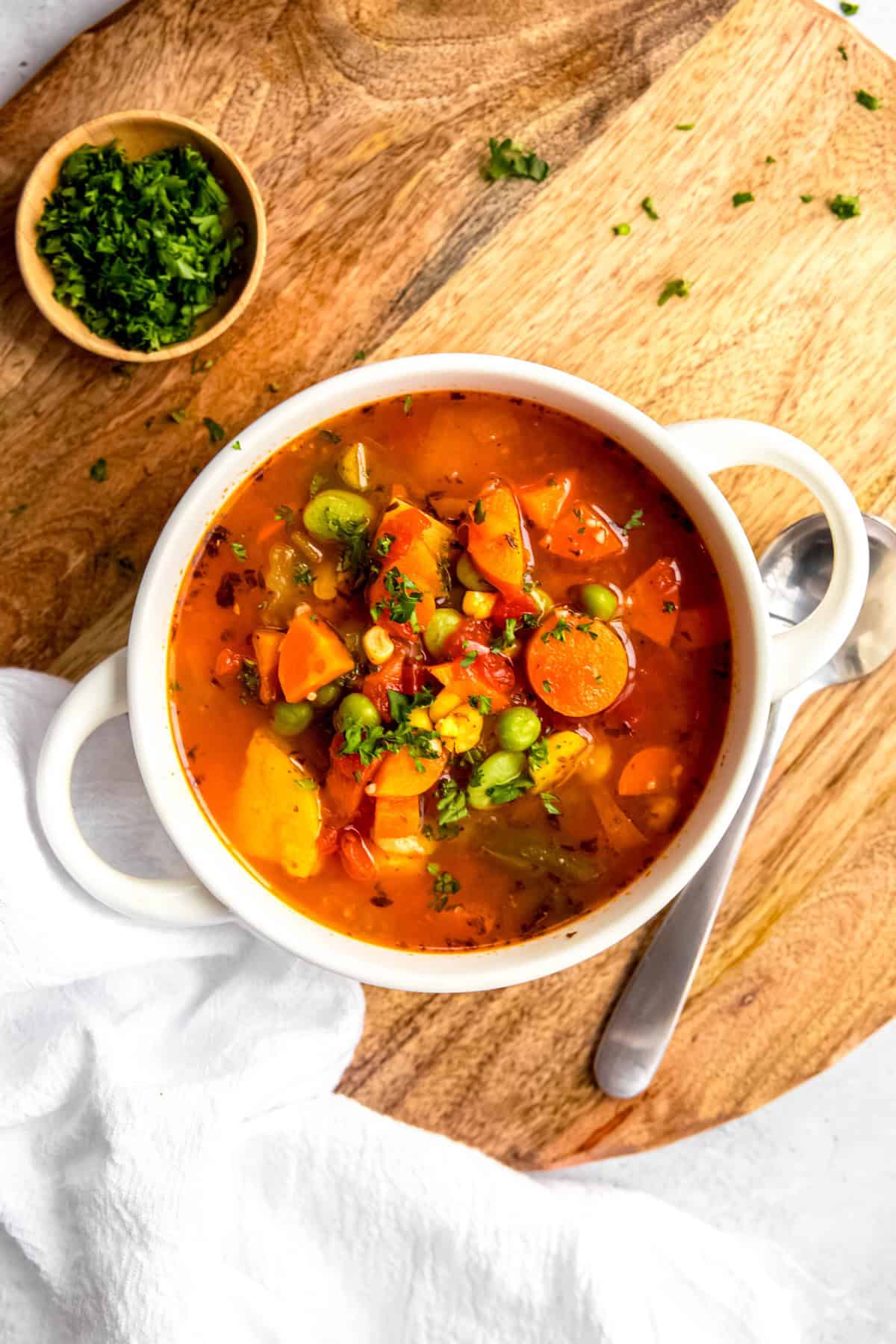
I’ve said it before and I’ll say it again: I LOVE FROZEN VEGETABLES. They’re affordable, prepped, and flash-frozen at peak ripeness meaning great flavor with almost no work. That said, not all frozen vegetables behave the same way in soup:
- Frozen Corn - Frozen corn adds little pops of sweetness and texture. Because it’s already tender, it doesn’t need long pressure cooking. Stir it in before sealing the lid if you like it soft and integrated, or add it after pressure cooking and let it simmer on sauté mode for just a few minutes if you want it to retain a bit of snap.
- Frozen Peas - Peas are delicate and can turn mushy if overcooked. For best texture and bright green color, stir them in after pressure cooking and let the residual heat warm them through for 2–3 minutes. They’re perfect in lighter brothy soups or anything with herbs and lemon.
- Frozen Edamame - Shelled edamame are sturdy and protein-packed. They hold up well under pressure and can be added before cooking without turning mushy.
- Frozen Green Beans - Green beans are sturdier and can handle pressure cooking, but they’ll soften significantly. If you prefer a bit of bite, add them after pressure cooking and simmer on sauté mode for a few minutes instead of cooking them under pressure.
- Frozen Okra - Frozen okra is perfect for thickening soups naturall. Add it before pressure cooking so it has time to release its natural starches. If you’re concerned about “sliminess,” roast or sauté it briefly in a little oil before adding broth, or balance the soup with a splash of vinegar or tomatoes to cut through it.
- Frozen Broccoli & Cauliflower - These cruciferous vegetables soften quickly and can become very tender under pressure. If you want them intact, add them after pressure cooking and simmer for 3-5 minutes on sauté. If you don’t mind them being soft (or plan to blend part of the soup), they can go in from the start.
- Frozen Spinach or Kale - Frozen spinach, kale, or collards are nutritional powerhouses. Because they’re already blanched, they don’t need much time. Stir them in at the end and let them heat through. If adding heartier greens like frozen collards, you can include them before pressure cooking for a more tender result.
- Frozen Mixed Vegetables - Whether a classic bag of carrots, corn, peas, and green beans or a stir-fry mix, a bag of mixed veggies is also fair game. Since the vegetables vary in texture, expect some will have a softer finish—but for a budget-friendly, clean-out-the-freezer soup, they’re perfect. Toss them in at the beginning and let the Instant Pot do its thing.
- Frozen Butternut Squash or Sweet Potatoes - These add body and subtle sweetness. They can go in at the beginning and will soften nicely under pressure. If you mash a few cubes against the side of the pot after cooking, they’ll naturally thicken the soup.
- Zucchini & Summer Squash - These soften very quickly. For defined pieces, add them after pressure cooking. For a more integrated, thickened soup, add them before.
- Mushrooms - Mushrooms release a lot of liquid and can be a bit rubbery if pressure cooked from frozen. For best flavor, sauté them first to cook off excess moisture and concentrate their umami before adding broth.
The main takeaway? Sturdier vegetables can handle pressure cooking. Delicate vegetables are best stirred in after. From there, feel free to mix and match confidently!
Optional Flavor Combinations To Keep It Interesting
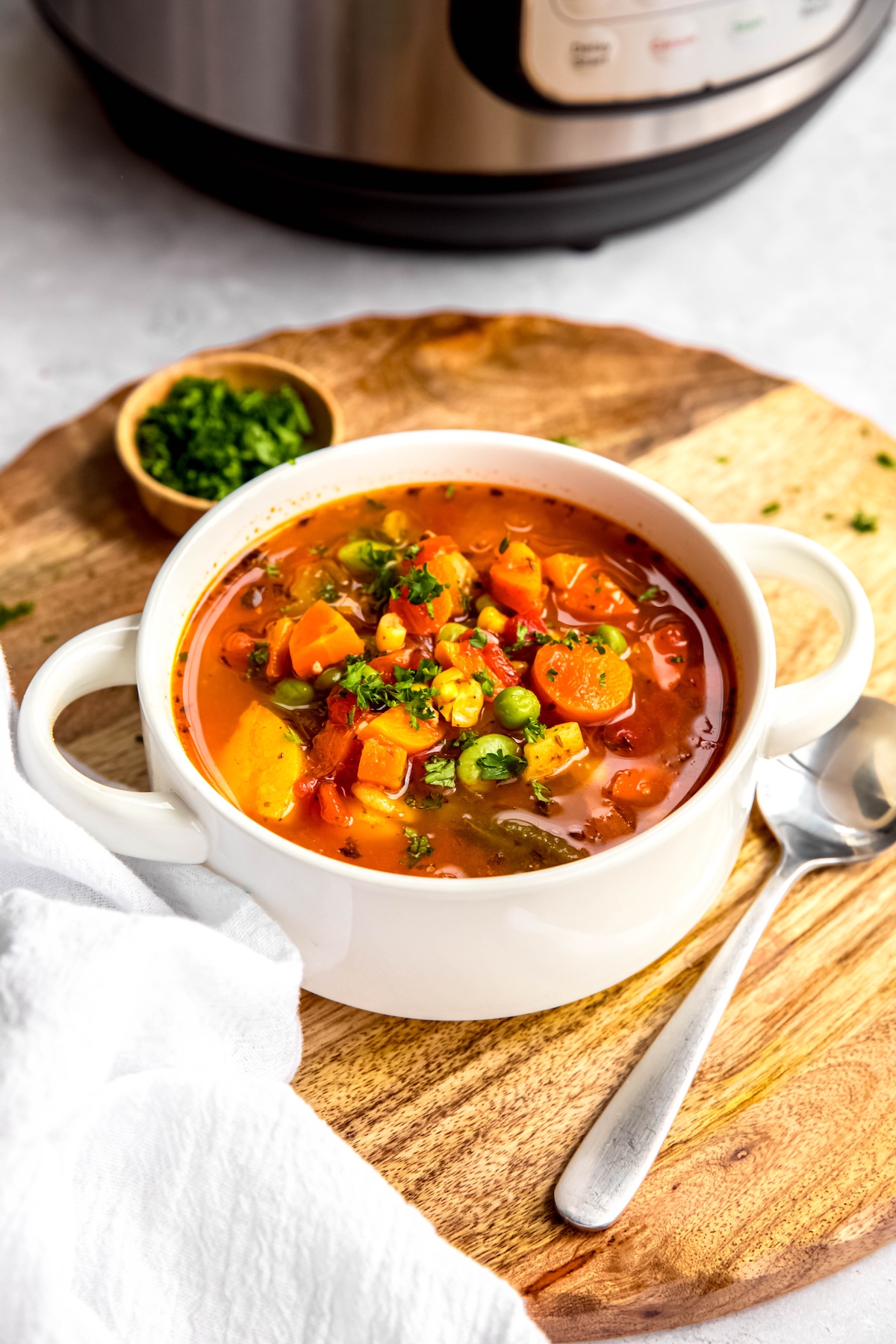
Once you understand how different frozen vegetables behave and how to shift the seasoning profile, you can transform one basic method into completely different meals. Consider this frozen vegetable soup less of a recipe and more of a strategy—and once you start thinking that way, dinner gets a whole lot easier (and more interesting).
Here are just a few combinations I like to mix and match:
Southern-Inspired:
Use the Trinity (green bell peppers, celery, and onions) instead of mirepoix, lean on Cajun seasoning for your salt and spice, and build around vegetables common in Southern cooking. Think tomatoes, okra, dark leafy greens like collards or kale, sweet corn, green beans, bell peppers, and zucchini.
This version is especially hearty and flexible. Bulk it up with red beans or kidney beans, stir in cooked rice, or add protein like chicken, sausage, or even frozen shrimp straight from the freezer. A splash of hot sauce and sprinkle of parsley at the end will make it feel straight-up gourmet.
Asian-Inspired
Skip the bay leaf, thyme, and parsley and lean into ginger, garlic, onions, and maybe a fresh chile for heat. Add vegetables you’d typically see in a stir-fry: snap peas, snow peas, shelled edamame, bell peppers, mushrooms, zucchini, or canned bamboo shoots.
Season the broth with soy sauce, fish sauce, and a drizzle of toasted sesame oil. For extra depth, add a strip of kombu while cooking, or stir in shredded seaweed or furikake at the end. You can go brothy and light, or creamy and tangy with a splash of coconut milk, lemongrass, and lime juice. Roasted tofu cubes, cooked chicken, frozen shrimp, or white fish make excellent protein additions.
Mediterranean-Inspired
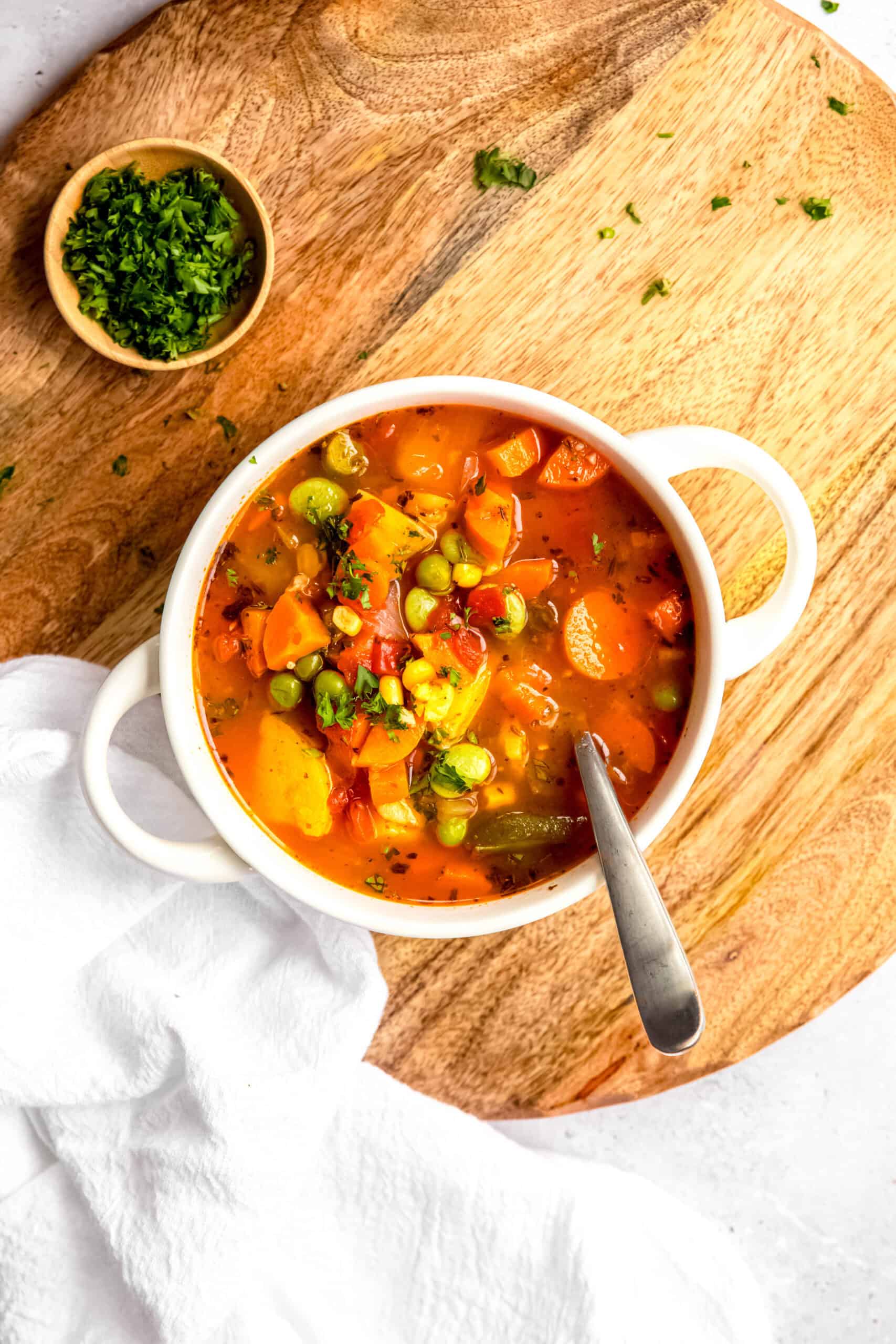
Start with classic mirepoix, then add garlic and a pinch of dried oregano or Italian seasoning. Build the soup around tomatoes (canned or frozen), zucchini, green beans, spinach, and maybe some frozen or canned, drained artichoke hearts if you have them tucked away.
For seasoning, keep it simple with olive oil, a squeeze of fresh lemon or splash of red wine vinegar, and plenty of black pepper. A Parmesan rind (stash them in the freezer when you’re done with the wedge) adds incredible depth to the broth while the soup cooks—just remove it before serving. White cannellini beans or chickpeas make this feel like a rustic minestrone, and a sprinkle of feta or fresh parsley at the end brightens everything up.
Tex-Mex Inspired
Swap the herbs for cumin, chili powder, and smoked paprika. Use onions and bell peppers as your base, then lean into frozen corn, tomatoes, green chiles, black beans, zucchini, and even frozen butternut squash for subtle sweetness.
Finish with a squeeze of lime and chopped cilantro. You can stir in cooked rice or quinoa to bulk it up, or add shredded chicken, ground beef, or turkey if you want extra protein. Top bowls with avocado, crushed tortilla chips, or a dollop of Greek yogurt or sour cream for cozy taco-soup energy.
Cozy Italian Minestrone Soup
Keep mirepoix as your base and add garlic, bay leaf, and dried thyme. Frozen green beans, peas, carrots, spinach, zucchini, and diced tomatoes all work beautifully here. Stir in canned kidney beans or white beans for heartiness.
If you’d like to make it more filling, add a handful of small pasta (like ditalini) after pressure cooking and simmer on sauté until tender. Finish with olive oil, fresh basil or a dollop of pesto if you have it, and a generous grating of Parmesan.
How to Make Instant Pot Vegetable Soup with Frozen Vegetables
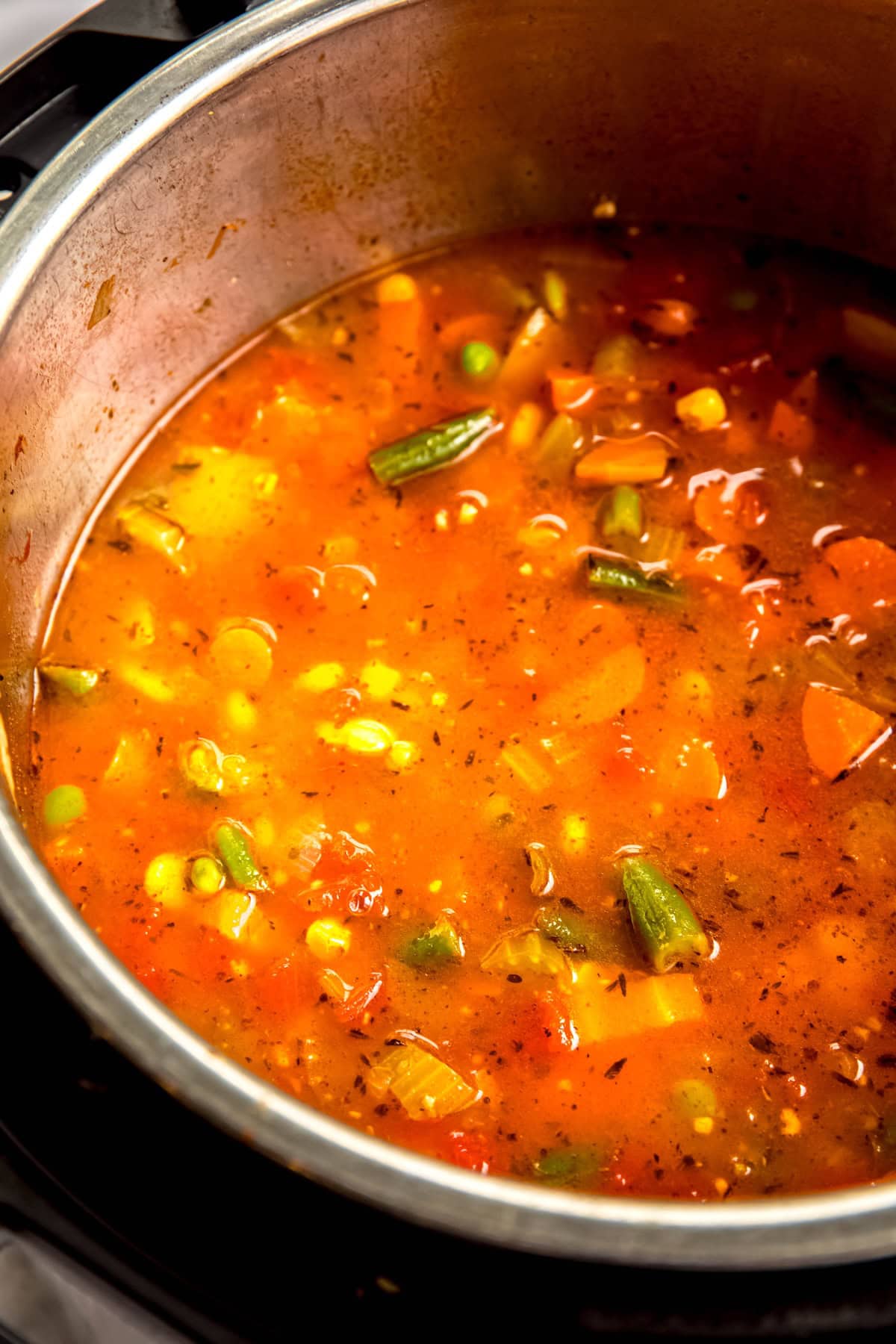
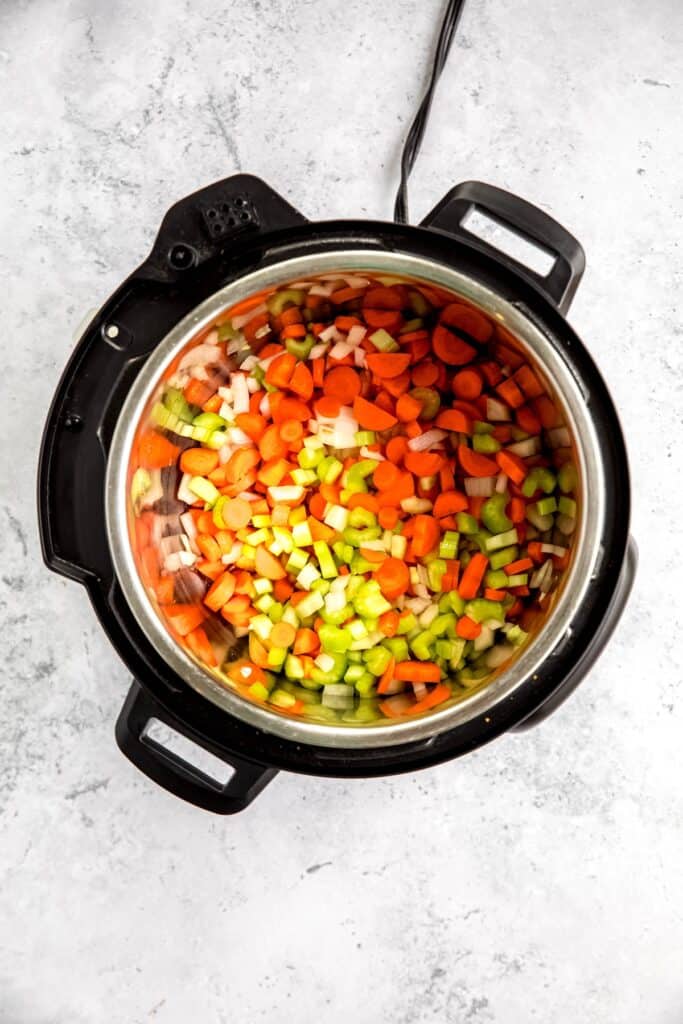
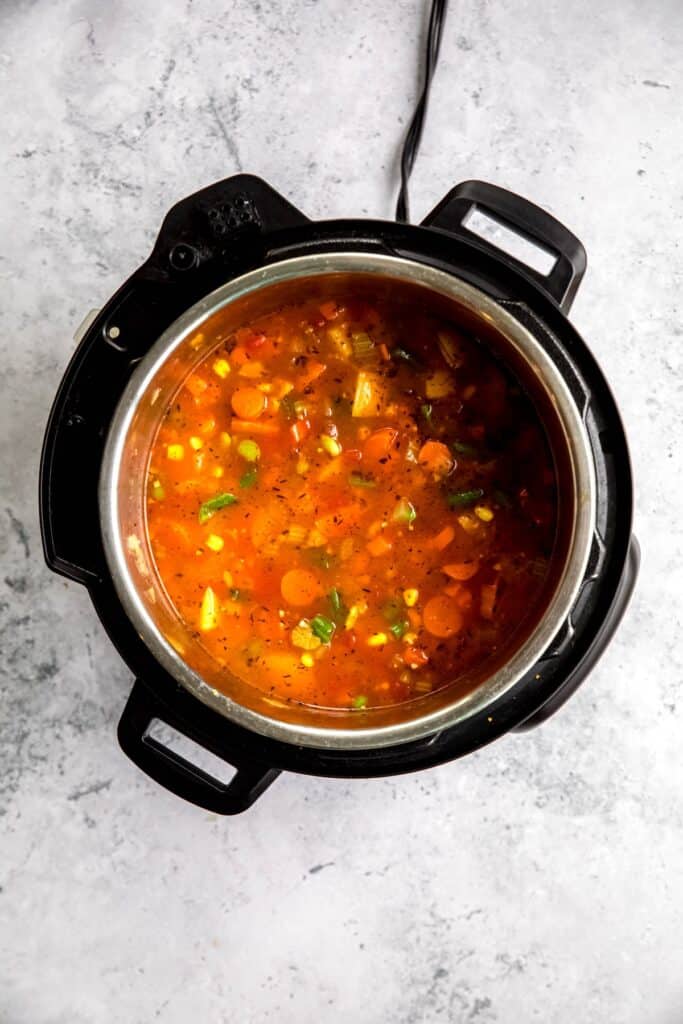
Step 1: Sauté Aromatics. Set your Instant Pot to sauté over medium heat, add a glug of olive oil and tip in your mirepoix. Sauté for about 5 minutes, until the veggies are beginning to soften a bit and the onions are becoming translucent.
Step 2: Garlic. Next up, tip in your minced garlic. Stir and continue to sauté until fragrant, around 30-45 seconds.
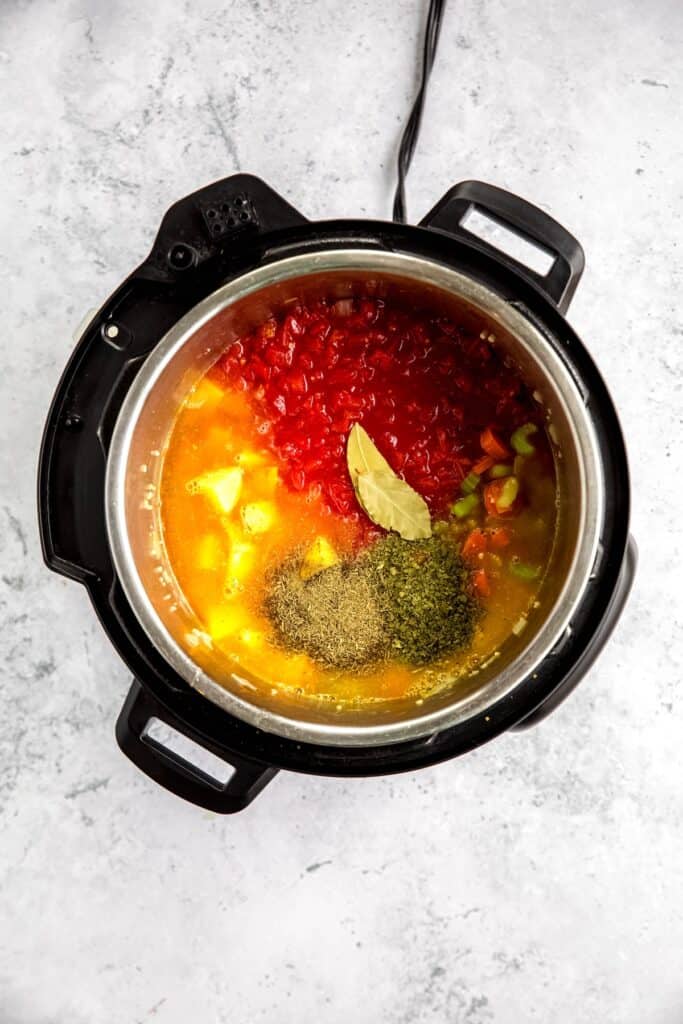
Step 3: Canned & Fresh Veggies. Add in your canned tomatoes, potatoes (if using), dried herbs and broth. Stir to combine.
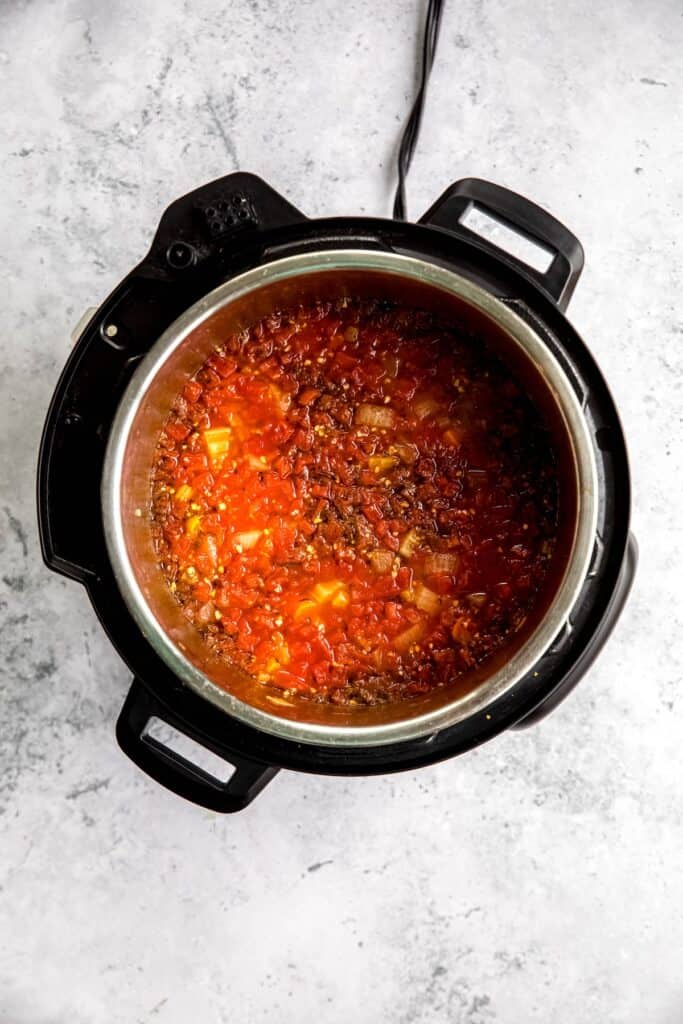
Step 4: Pressure Cook. Secure the lid of the Instant Pot, then set it to pressure cook on high pressure for 10 minutes. Allow the pressure release valve to do a natural pressure release for 5 minutes, then manually quick release whatever steam is left. Be careful not to burn yourself on the steam!!
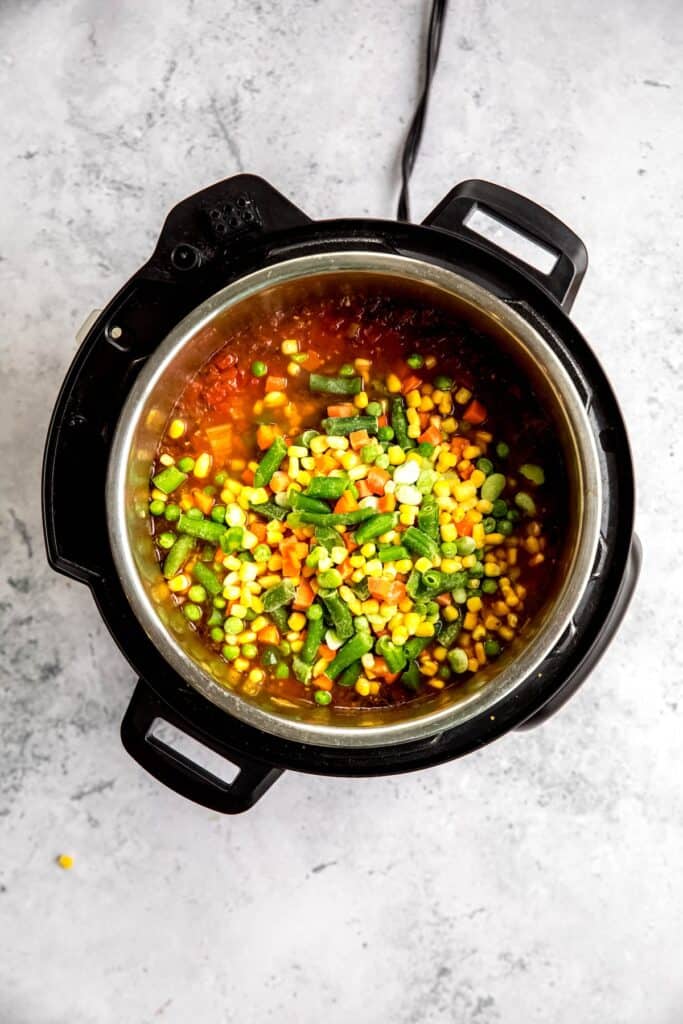
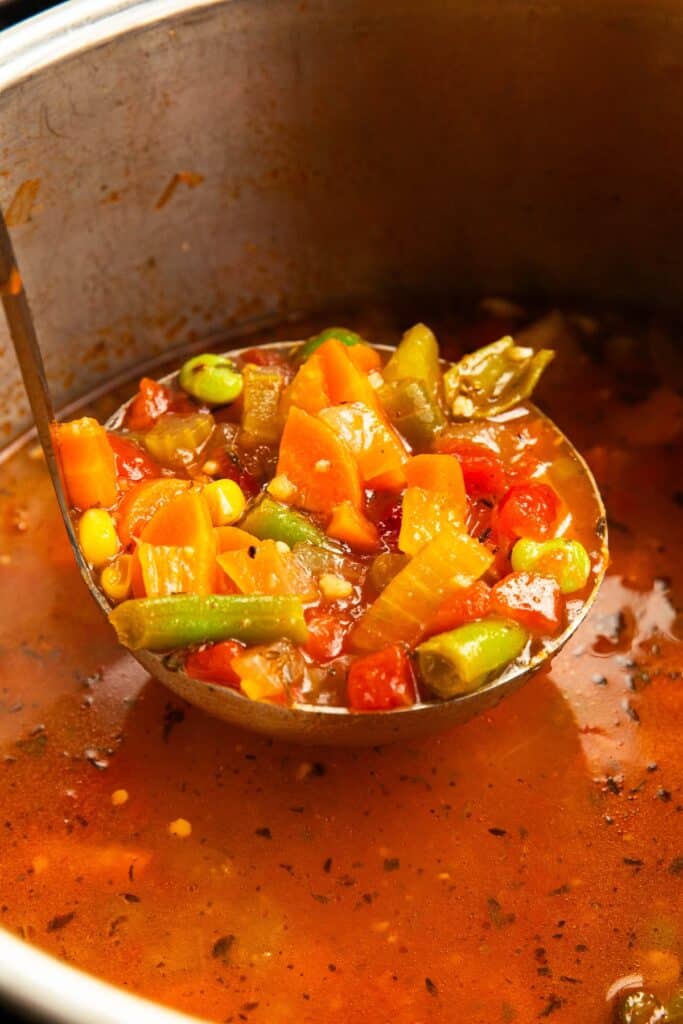
Step 5: Frozen Veggies. Remove the lid of the Instant Pot and switch it back to the sauté function over medium heat. Add in your frozen mixed veggies here, stirring to combine. Cook until the frozen veggies are warmed through and are soft enough for your liking (between 3-8 minutes).
👉TIP: Most frozen mixed vegetables are par-cooked before freezing, meaning they take slightly less time to cook through than their fresh counterparts. Hop back up to the “which frozen vegetables are best for soup” for more information.
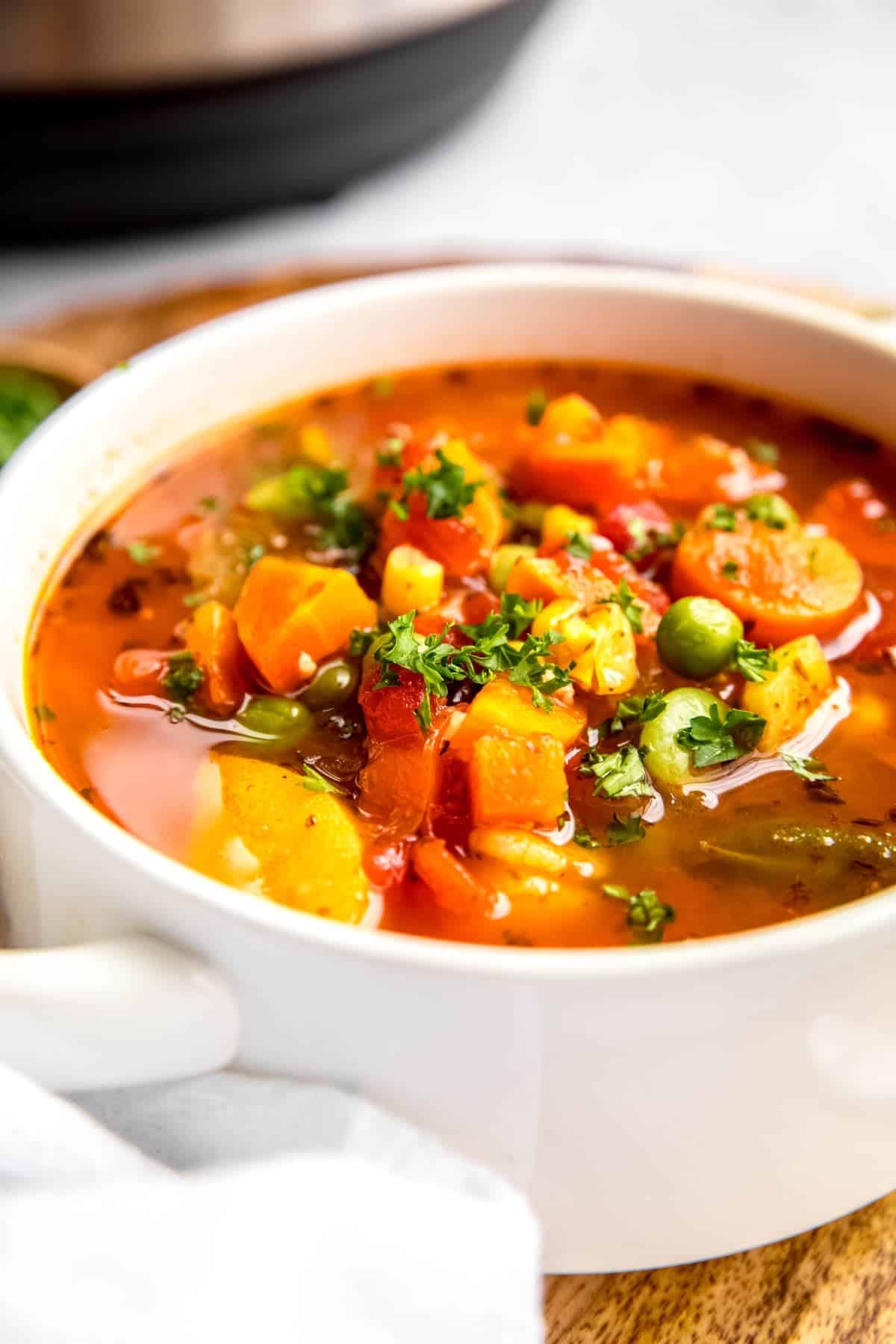
Step 6: Serve. Scoop into bowls and top with a drizzle of balsamic vinegar or hot sauce, a dollop of pesto or a sprinkling of cheese depending on how you're feeling. A crusty sourdough ciabatta dinner roll on the side wouldn’t hurt, either. Dig in and enjoy!
How to Make This Vegetable Soup Without an Instant Pot
Slow Cooker Method
Sauté the aromatics and garlic in a skillet on the stovetop first , then transfer them to your slow cooker. Add the canned tomatoes, potatoes (if using), dried herbs, and broth.
Cook on LOW for 6-8 hours or HIGH for 3-4 hours, until the potatoes are tender. Stir in the frozen vegetables during the last 20-30 minutes of cooking so they heat through without becoming overly soft. Taste and adjust seasoning before serving.
Stovetop Method
In a large Dutch oven or soup pot, sauté the aromatics in olive oil over medium heat for about 5 minutes, until softened. Add the garlic and cook until fragrant (30-45 seconds).
Stir in the canned tomatoes, potatoes (if using), dried herbs, and broth. Bring to a gentle boil, then reduce to a simmer. Cover and cook for 15-20 minutes, or until the potatoes are just fork-tender. Add the frozen vegetables and simmer uncovered for another 5-8 minutes, until warmed through and tender to your liking. Taste, adjust seasoning, and serve.
Expert Tips
- Don’t Skip the Sauté Step - Even though this is a pressure cooker recipe, those first few minutes on sauté mode matter. Cooking the aromatics in oil before adding liquid builds depth and prevents the soup from tasting thin or flat. If your soup ever tastes “watery,” it’s usually because this step was rushed.
- Bloom Dried Herbs & Spices - If you’re using dried thyme, oregano, Italian seasoning, or Cajun seasoning, stir them into the hot oil with the aromatics for 30 seconds before adding broth. This wakes up their flavor and makes a noticeable difference.
- Cut Potatoes Evenly - If using potatoes, aim for evenly sized 1-inch cubes. Large chunks may need extra time, while very small pieces can overcook and fall apart during pressure cooking. Remember: consistency equals predictability.
- Layer Salt Strategically - Season as you go, but go lightly at the beginning—especially if you’re using bouillon—then taste and adjust after pressure cooking. Frozen vegetables can dilute seasoning as they release water, so a final sprinkle of salt at the end is often necessary.
- Use Natural Release for Better Texture - It allows the soup to settle and helps prevent vegetables from breaking apart too aggressively. Quick-releasing immediately can sometimes make softer vegetables split or turn mushy.
- Add Delicate Veggies Last - Frozen peas, spinach, corn and mixed vegetables are best added after pressure cooking. They’re blanched before freezing and only need to heat through. Overcooking them can dull both flavor and color.
- Cook Beans or Grains First - If you plan on adding dried beans, grains (like rice or farro), or pasta, cook them separately or in stages rather than throwing everything in at once. For dried beans, either pre-soak and cook them ahead of time, or pressure cook them separately before building your soup. Canned beans, on the other hand, can be added right in with the broth since they’re already cooked. Grains like rice, barley, or farro can absorb a surprising amount of liquid. If you pressure cook them with the vegetables, they may soak up too much broth and change the texture of the soup from brothy to stew-like. For best control, cook grains separately and stir them into individual bowls when serving. The same goes for pasta. Small shapes like ditalini or orzo cook very quickly and can become overly soft if pressure cooked for 10 minutes. Instead, add pasta after pressure cooking and simmer on sauté until just tender, or cook it separately and add it at the end.
- Adjust Thickness to Your Preference - If your soup is thinner than you’d like, mash a few potatoes or beans against the side of the pot and stir them back in. For a brothier soup, simply add a splash more hot water or broth at the end.
- Finish with Acid - A squeeze of lemon, a splash of balsamic vinegar, or a few drops of hot sauce at the end brightens everything up. If your soup tastes “almost good but not quite,” it probably needs acid, not more salt.
- Make It Tomorrow’s Lunch - Like most soups, this one tastes even better the next day after the flavors meld. If you’re meal prepping, slightly undercook your frozen vegetables so they don’t get overly soft when reheated.
Storage Instructions
- Refrigerator: Allow the Instant Pot vegetable soup to cool slightly before transferring it to an airtight container. It will keep well in the refrigerator for up to 4-5 days. The flavors actually deepen over time, so don’t be surprised if it tastes even better the next day.
- Freezer: This frozen veggie soup freezes beautifully, making it a favorite for my annual soup swap. Let it cool completely, then portion into a freezer-safe container or zip-top bags (lay flat to save space, then store like books on a shelf). Freeze for up to 3 months for best quality. If your soup contains pasta, rice, or certain grains, note that they may soften further after freezing and reheating. For the best texture, consider freezing the soup base and adding freshly cooked grains when serving.
- How to Reheat: Reheat gently on the stovetop over medium-low heat, stirring occasionally, until warmed through. You can also microwave individual portions in 1-minute increments, stirring between each round. If the soup has thickened in the fridge (which is common, especially if it contains potatoes or grains), simply add a splash of water or broth while reheating to loosen it up.
- Pro Tip: Taste before serving and adjust seasoning. Cold storage can dull flavors slightly, so a pinch of salt or a squeeze of lemon at the end can bring everything back to life.
FAQs
Heck yeah, you can! Just note that, like fresh vegetables, not all frozen vegetables will act the same. So, if you’re making soup in the Instant Pot using the pressure cooking function, you’ll generally be better off waiting to add the veggies to the pot until afterwards. If you’re cooking on a stovetop, some of the same thinking should apply—heartier veggies like potatoes will require longer to cook than tender ones like corn or spinach. Hop back up a few sections for my best tips for using frozen vegetables in soup.
Not usually, but there are a few exceptions. For example, I find boiled brussels sprouts and mushrooms to be vile, but I LOVE sautéed or roasted brussels sprouts and mushrooms. Or, if the mucilaginous nature of okra grosses you out, giving them a quick roast will dry them right up so you don’t get the slime. But, most frozen veggies are par-cooked before freezing, so they only need a few minutes to warm through in soup.
Common mistakes when making vegetable soup usually come down to timing and seasoning.
One of the biggest issues is overcooking delicate vegetables, which can turn peas, broccoli, or green beans mushy and dull in color. Another is skipping the sauté step, which leads to flat, watery flavor because the aromatics never had a chance to develop.
It’s also common to under-season early and forget to adjust at the end. Vegetable soups almost always need a final pinch of salt or a splash of acid (like lemon juice or vinegar) to brighten everything up. And finally, adding grains or pasta too soon can cause them to overcook and absorb too much broth, turning your soup into a stew.
The fix? Layer flavor, stagger cooking times, and taste before serving.
More Pantry-Based Soup Recipes
If you tried this recipe and loved it, be sure to rate and review it below! For more inexpensive and delicious recipe inspiration, be sure to follow me on Pinterest. You can also get all of my newest content delivered straight to your inbox by signing up for my email newsletter!
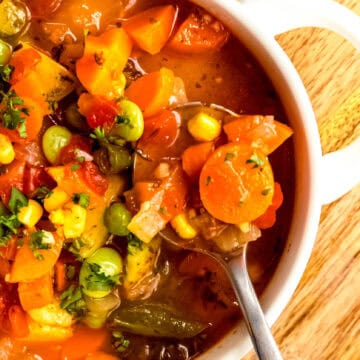
Easy Instant Pot Vegetable Soup With Frozen Vegetables
Equipment
Ingredients
- 8 C Mirepoix (carrots, celery, & yellow onions) or chopped aromatics of choice (frozen okay)
- 8-10 cloves Garlic minced
- 6 C Stock or Broth see notes
- 28 oz Canned Diced Tomatoes and their broth
- 3 Yukon Gold Potatoes scrubbed and medium diced, optional
- 2 Dried Bay Leaves
- 1 Tbsp Dried Thyme
- 1 tablespoon Dried Parsley
- 2 bags Frozen Veggies of Choice
- Kosher Salt and Pepper to taste
Instructions
- Set your Instant Pot to sauté over medium heat, add a glug of olive oil and tip in your mirepoix. Sauté for about 5 minutes, until the veggies are beginning to soften a bit and the onions are becoming translucent.8 C Mirepoix (carrots, celery, & yellow onions)
- Tip in your minced garlic. Stir and continue to sauté until fragrant, around 30-45 seconds. Add in your canned tomatoes, potatoes (if using), dried herbs and broth. Stir to combine.8-10 cloves Garlic, 6 C Stock or Broth, 28 oz Canned Diced Tomatoes, 3 Yukon Gold Potatoes, 2 Dried Bay Leaves, 1 Tbsp Dried Thyme, 1 Tbsp Dried Parsley
- Secure the lid of the Instant Pot, then set it to pressure cook on high for 10 minutes. Naturally release the pressure for 5 minutes, then manually release whatever steam is left. Be careful not to burn yourself on the steam!!
- Remove the lid of the Instant Pot and switch it back to the sauté function over medium heat. Add in your frozen veggies here, stirring to combine. Cook until the frozen veggies are warmed through and are soft enough for your liking.2 bags Frozen Veggies of Choice
- Season with salt and pepper as needed. Scoop into bowls and top with a drizzle of balsamic vinegar or hot sauce, a dollop of pesto or a sprinkling of cheese depending on how you're feeling. Dig in and reap all the benefits of your delicious vegetable soup!Kosher Salt and Pepper
Notes
- I used chicken bone broth, but any vegetable broth or chicken/turkey/beef stock would work. You can also sub a combination of water, wine, bouillon, carrot or tomato juice depending on what you have on hand!
- Soup will refrigerate well for up to a week, or freeze for up to three months.
- Make sure to leave ½" of room in your containers if freezing to allow for expansion.
- See blog post at https://confessionsofagroceryaddict.com/easy-instant-pot-vegetable-soup for more notes on different substitutions you can make for vegetables, herbs and spices! Here are just a few ideas:
Comments
No Comments