
With a perfect balance of crunchy, creamy, salty, and fiery, these Spicy Sesame Chili Ramen Noodles are easily one of my favorite "clean-out-the-fridge" dinners. Made with your choice of noodles, a few pantry staples, and whatever veggies are kicking around in your drawer, these veggie-packed noodles are the ideal rent-week meal!
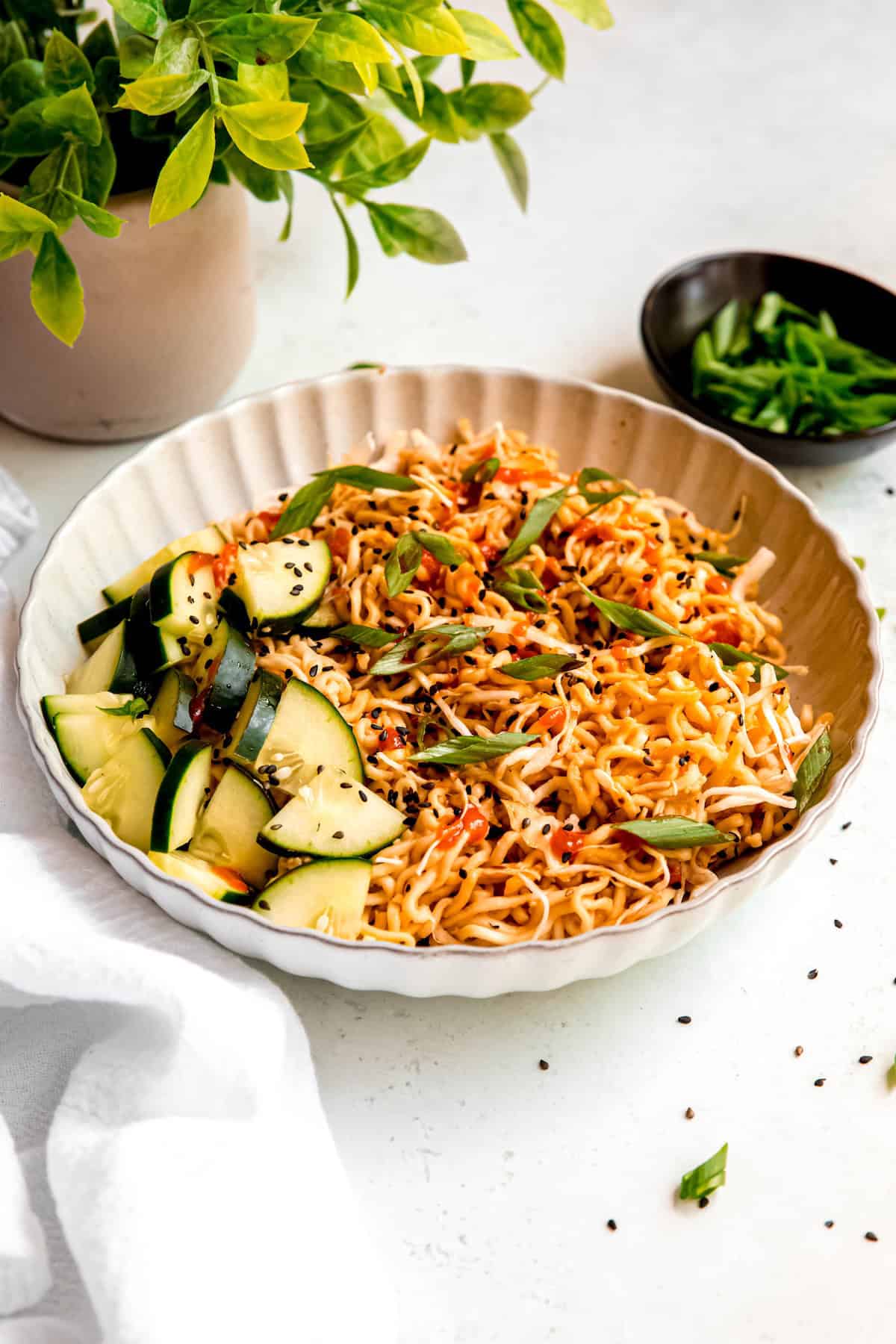
If you grew up like I did, cracking open a brick of top ramen and tossing the contents of the seasoning package straight into boiling water was a simple pleasure that never really goes away—it just evolves. This chili ramen recipe takes that same nostalgic base and levels it up into something your taste buds will thank you for.
Instead of relying on the seasoning packet, we're building our own from-scratch, glossy, craveable sauce that delivers way more flavor than anything you'll find in the product packaging. The result is a great recipe that still comes together almost as fast as the instant version, but tastes infinitely more satisfying.
What really makes this dish shine is how endlessly adaptable it is. Love spicy flavors? Add extra chili flakes or a second drizzle of hot oil. Prefer things milder? Dial it back and let the garlic and sesame take center stage. Either way, you're guaranteed a great taste with minimal effort and minimal cost.
Jump to:
Why You’ll Love Spicy Ramen Noodles
- Group Friendly - This easy recipe for garlic chili oil noodles has become one of my favorites because it is naturally vegan, but can easily be made gluten-free, nut-free, and/or soy-free depending on your company.
- Meal Prep Magic - These spicy peanut sesame noodles are great warm, room temp, or even straight from the fridge, which makes them ideal for packed lunch. Prep a batch on the weekend and enjoy big flavor all week long!
- Completely Customizable - Per usual, this recipe includes possible substitutions and allows for your own inner chef to explore flavors in different ratios according to your tastes. Have fun figuring out your favorite toppings and additions!!
Ingredients & Substitutions
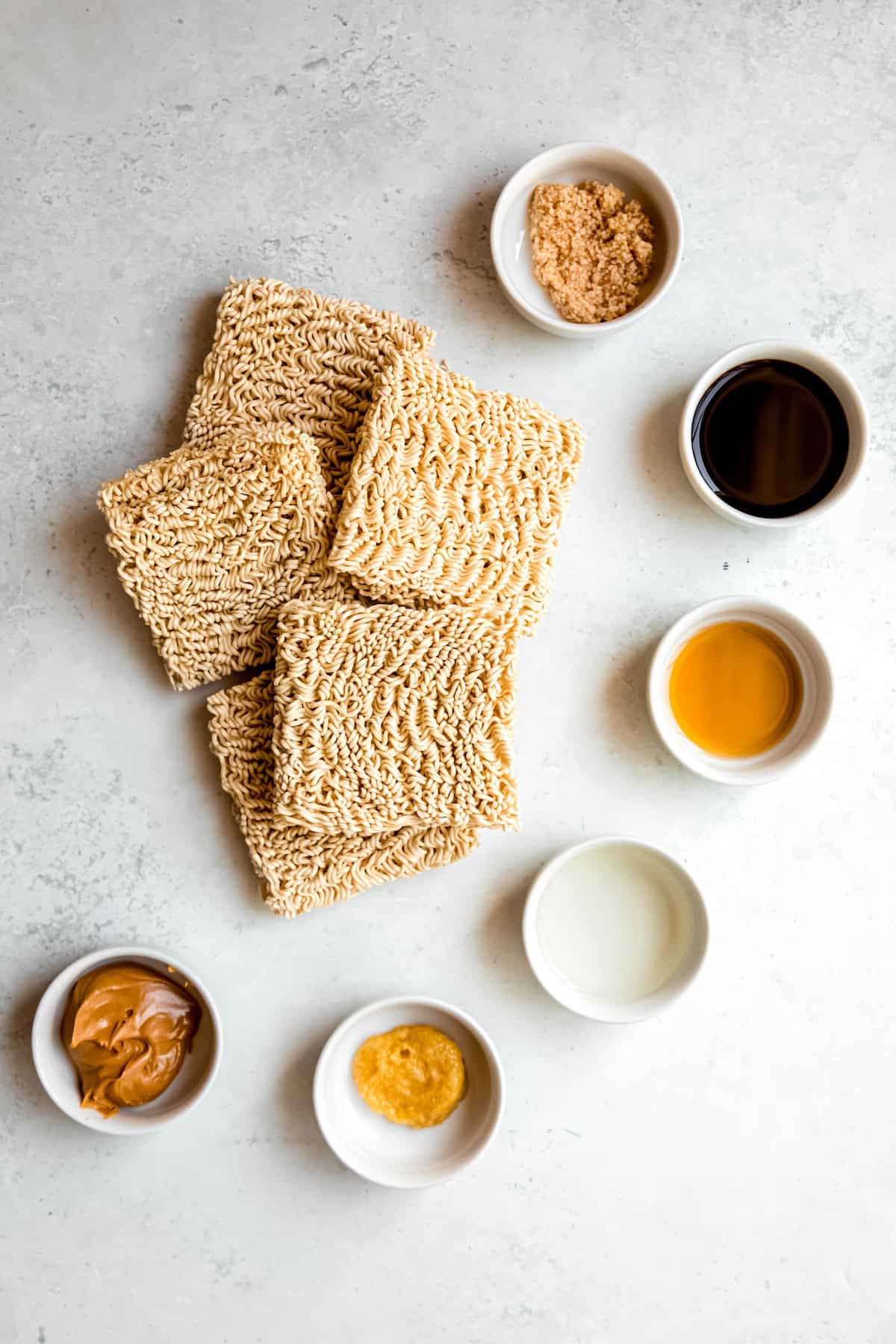
As promised, you don't need a ton of ingredients to make these Asian peanut noodles. Here's what to grab:
- Noodle of Choice - I used 5 original instant ramen noodle Top Ramen packets for this batch, but if you're looking for a gluten-free option, I love Lotus Foods Millet and Brown Rice Ramen! Just make sure to follow the package instructions and rinse them after cooking. You can also use any box of long or short noodles you have kicking around the pantry.
- Hot Sesame Oil - Feel free to swap in regular toasted sesame oil if you're not as obsessed with spicy foods as we are.
You'll need the following to make the sesame ginger sauce for your noodles. Please note that there are LOTS of swaps available here, so if you have dietary restrictions, just keep reading!
- Soy Sauce - I used regular soy sauce, but you can also use tamari to make this peanut chili sauce for noodles gluten-free. Alternatively, if you are soy-free, swap in coconut aminos (gluten-free) or Bragg's liquid aminos (not gluten-free).
- Rice Wine Vinegar - You can also use regular rice vinegar, apple cider vinegar, white wine vinegar, or champagne vinegar.
- Fresh Ginger - I always keep either a knob of fresh ginger, a tube of ginger paste, or a box of Dorot frozen crushed ginger on hand. Any will work beautifully here!
- Peanut Butter - You can also use tahini for more of a concentrated sesame flavor, or a combination of both. Sunflower seed butter is also a great option if you are nut-free.
- Garlic - Fresh is best, but in a pinch you can swap in jarred minced garlic.
- Sriracha - Optional, but yummy if you are a fan of bold chili flavors. Gochujang is an excellent swap if needed.
- Chili Garlic Paste (Sambal Oelek) - Optional, but another fun way to add spicy flavor.
- Agave Nectar - I find that a little bit of sweetness helps to balance out the other bold flavors. Feel free to swap in honey, maple syrup, date syrup, brown rice syrup, or even brown sugar. NOTE: If you opt for a non-liquid sweetener, you may want to heat the sauce to make it easier to dissolve the sugar crystals.
Optional Add-Ons
The following ingredients are all icing on the cake. The sesame garlic chili noodles will be delightful just with the sauce, but if you have any of the following on hand, they will make your meal brighter, crunchier, and altogether yummier!
- Crunchy Vegetables of Choice - If you have them on hand, add in as many crunchy vegetables as your heart desires so you can eat the full rainbow! Here are a few of our favorites to add:
- Scallions, a.k.a. green onions, sliced thinly
- Bell Pepper, any color, sliced thinly
- Cucumber, seeded and sliced into short matchsticks
- Carrot, either shredded or spiralized
- Cabbage, red, green, Napa, savoy, or Bok Choy, shredded or sliced thinly
- Radishes, cut into matchsticks
- Sugar Snap Peas and/or Snow Peas, sliced thinly on the bias
- Toppings of Choice - Add as many toppings as you like for extra flavor and crunch. I like:
- Fresh Mint, Fresh Cilantro, and/or Fresh Basil, Thai if you’ve got it, regular if you don’t
- Chopped Peanuts or Cashews
- Toasted Sesame Seeds
- TJ’s Ghost Pepper Flakes or Red Pepper Flakes
- Extra Sriracha and/or Sambal Oelek
- Nori Komi Furikake - This is a flavor shaker that has nori, which is dried seaweed, and sesame seeds. It is also awesome on popcorn with some sriracha salt.
- Maruesu Tempura Crisps - This is another Costco find that’s a GEM. We eat these by the handful, as well as use them as a garnish any time we can. Get you some!

How to Make Sesame Garlic Chili Ramen Noodles
These easy ramen noodles with peanut chili sauce come together in just a few minutes. Here's how:
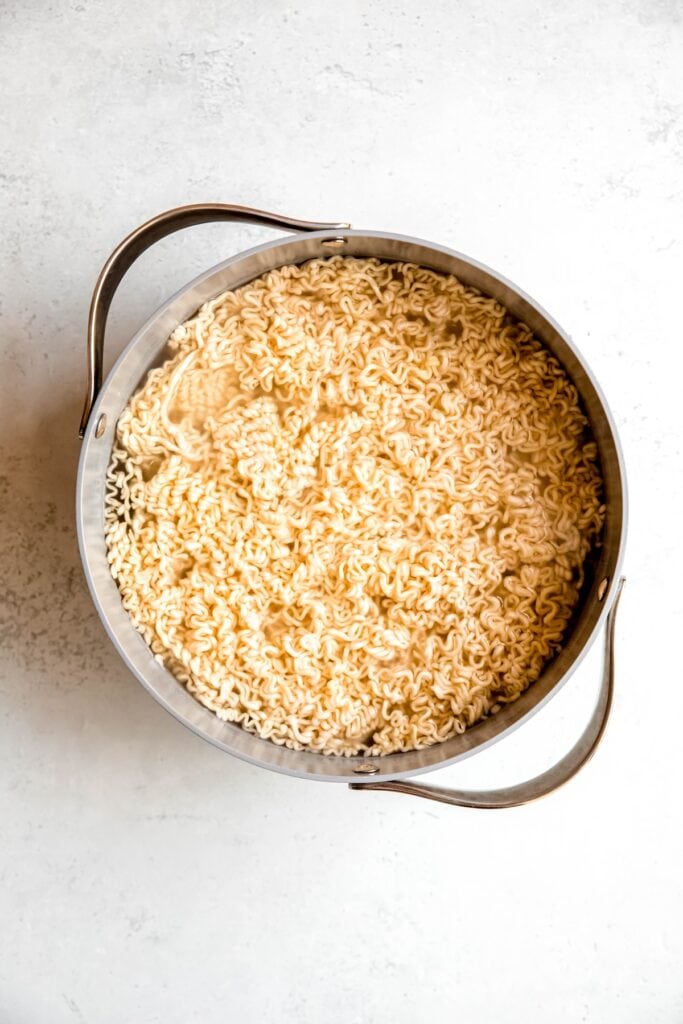
Step 1: Boil noodles of choice in a large pot of salted water according to the directions on the product packaging. Save the seasoning packets for another use (I like making a batch of broth when I'm feeling under the weather). Drain.
Step 2: Toss with oil. To keep the noodles from sticking together, give them a good toss with a drizzle of hot sesame oil. NOTE: regular sesame oil, peanut oil, or even olive oil will achieve the same end. We just happen to like our food nice and spicy over here.
Step 3: Make peanut chili sauce by whisking together soy sauce, rice vinegar, fresh minced ginger, peanut butter/tahini, fresh chopped garlic, sriracha/chili garlic sauce/gochujang (start with around 1 tablespoon and adjust as needed), and agave nectar. Taste and adjust the seasoning as needed.
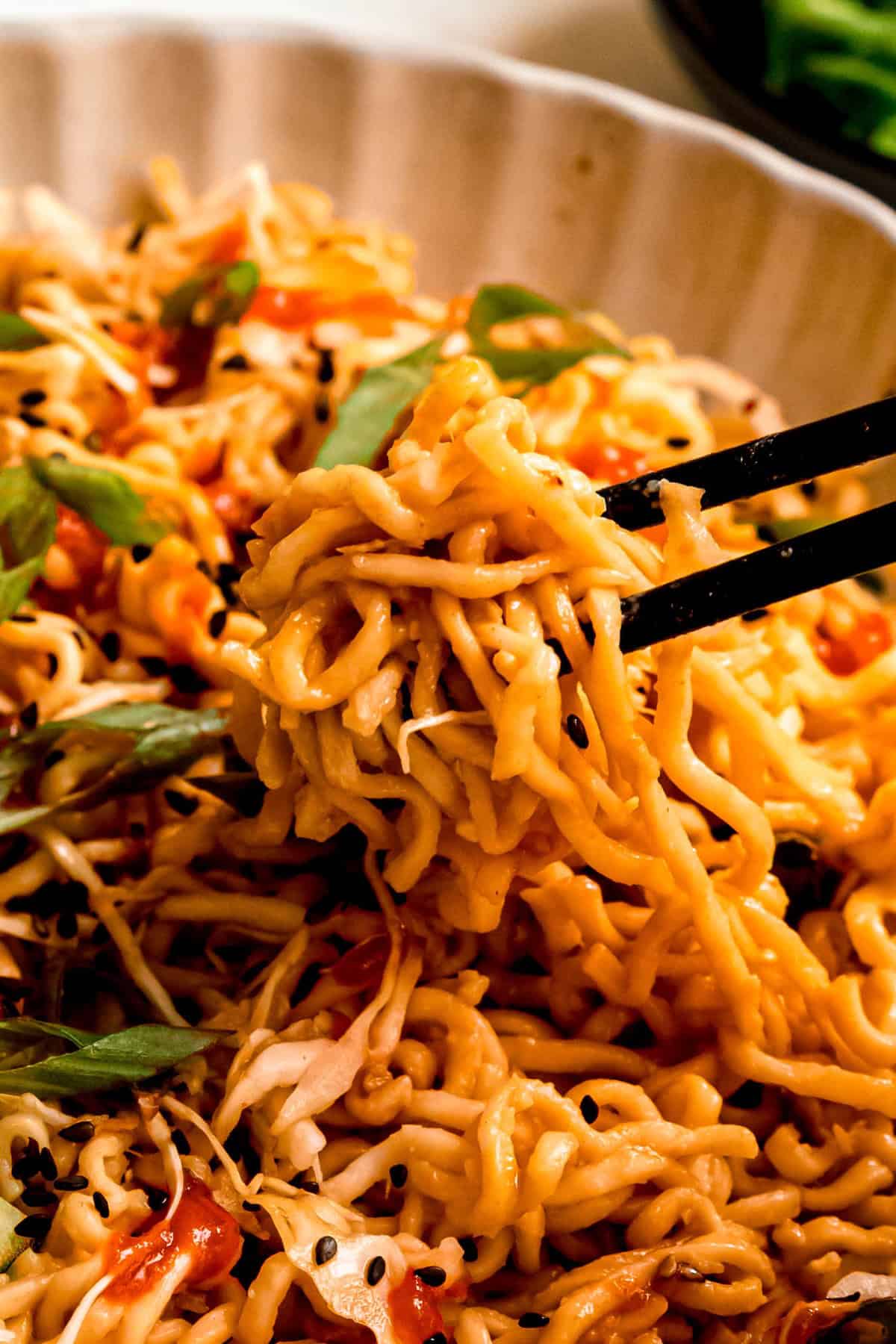
Step 4: Toss the cooked instant noodles in your delicious sauce. Stop here and eat, or, if you have more time, energy, and ingredients move on to step 5!
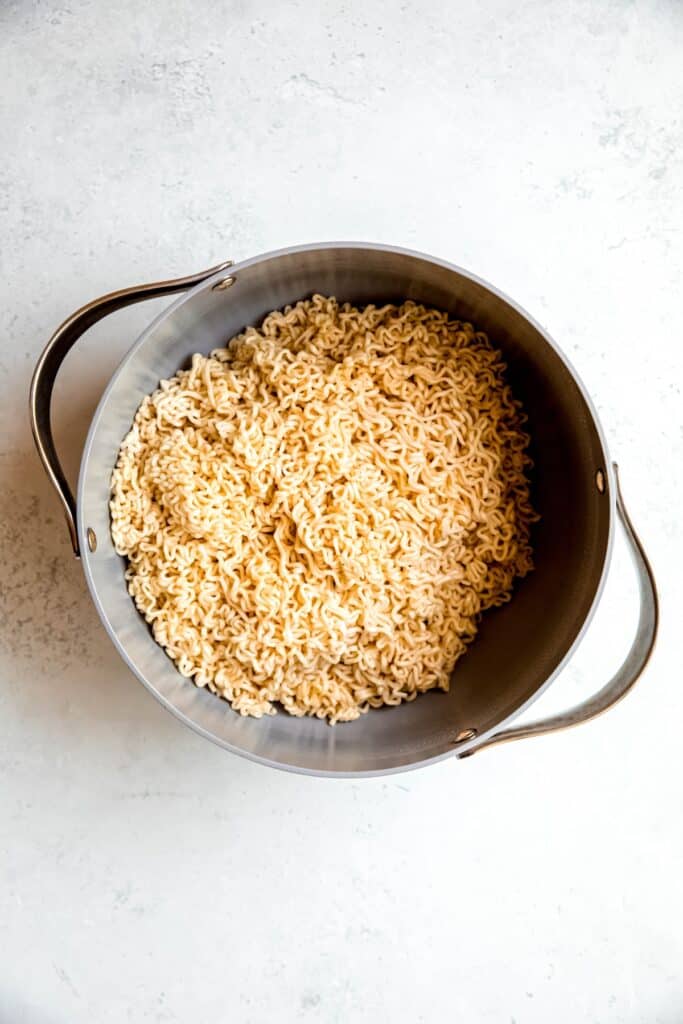
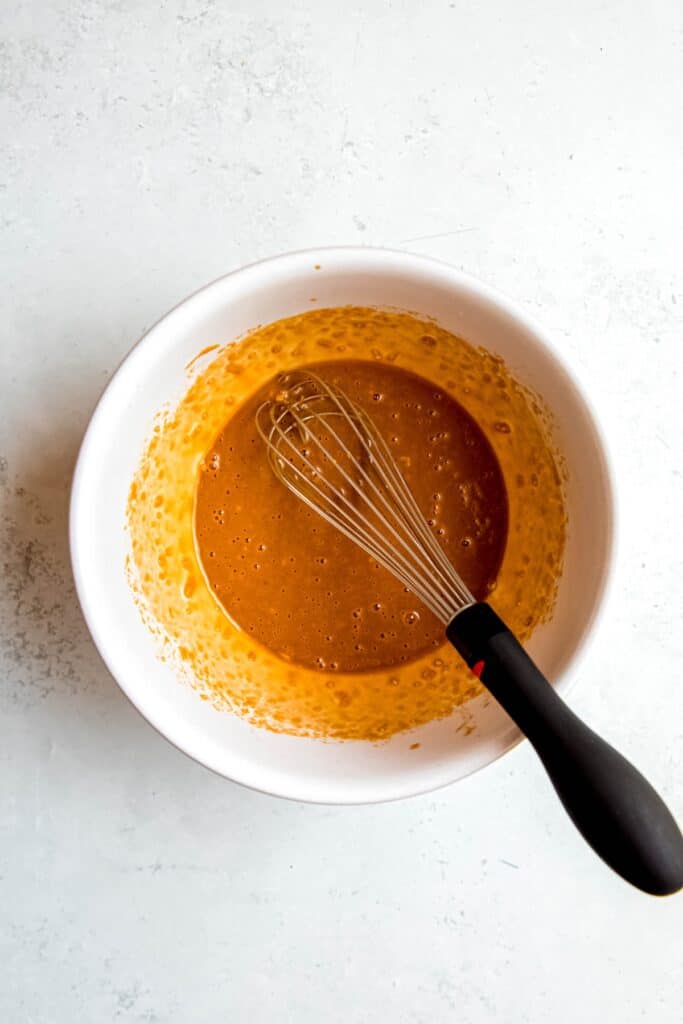
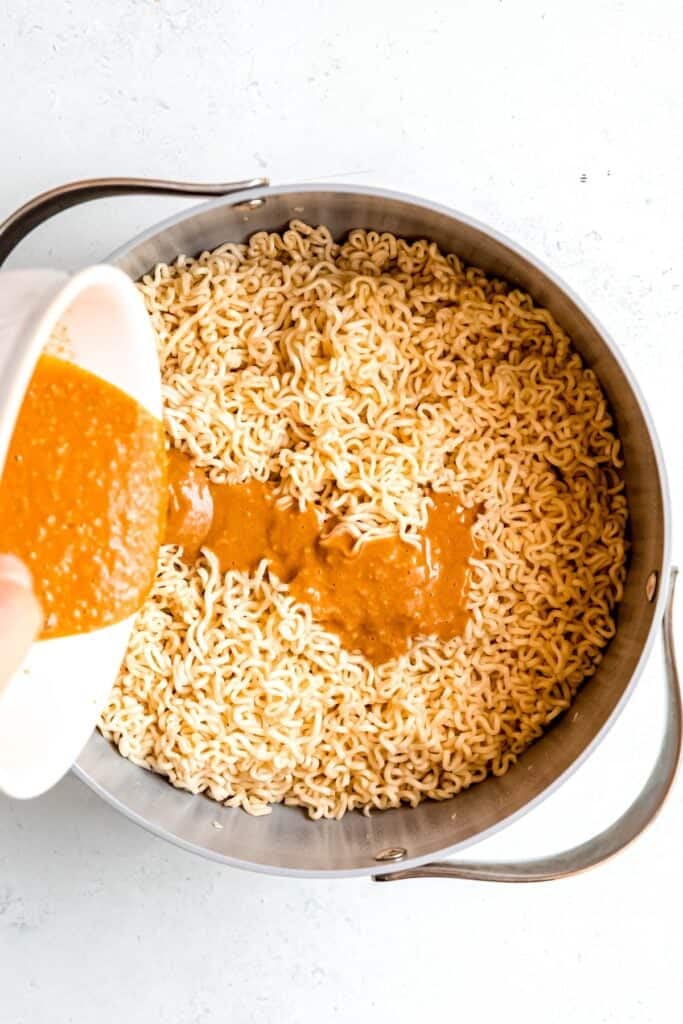
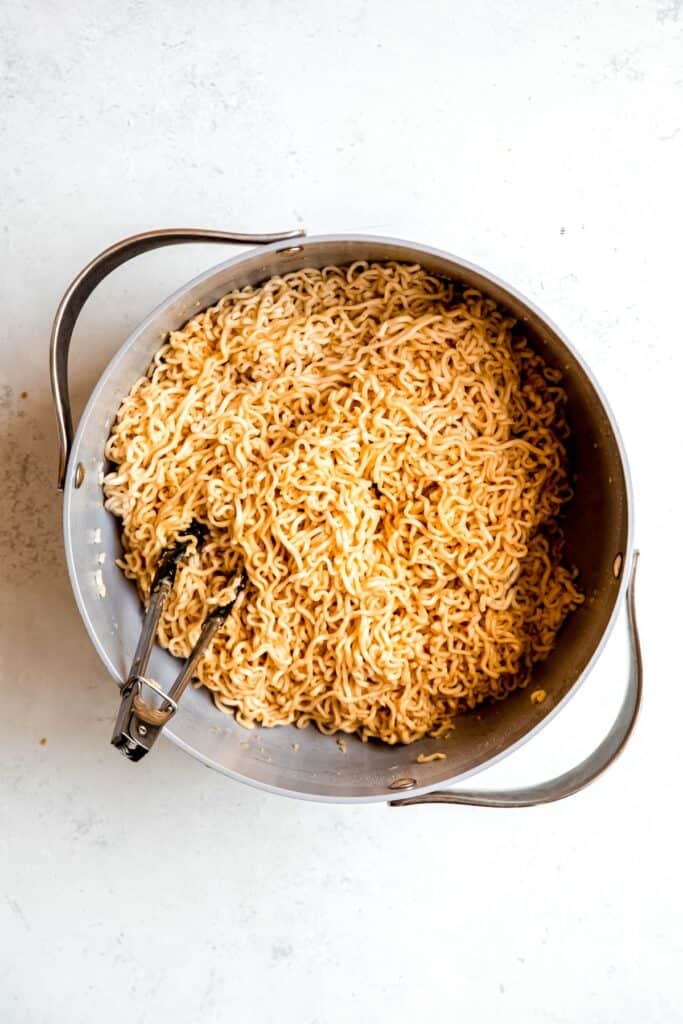
Step 5: Add the prepped veggies, tossing to combine.
Step 6: Eat. Repeat. You know you want to.
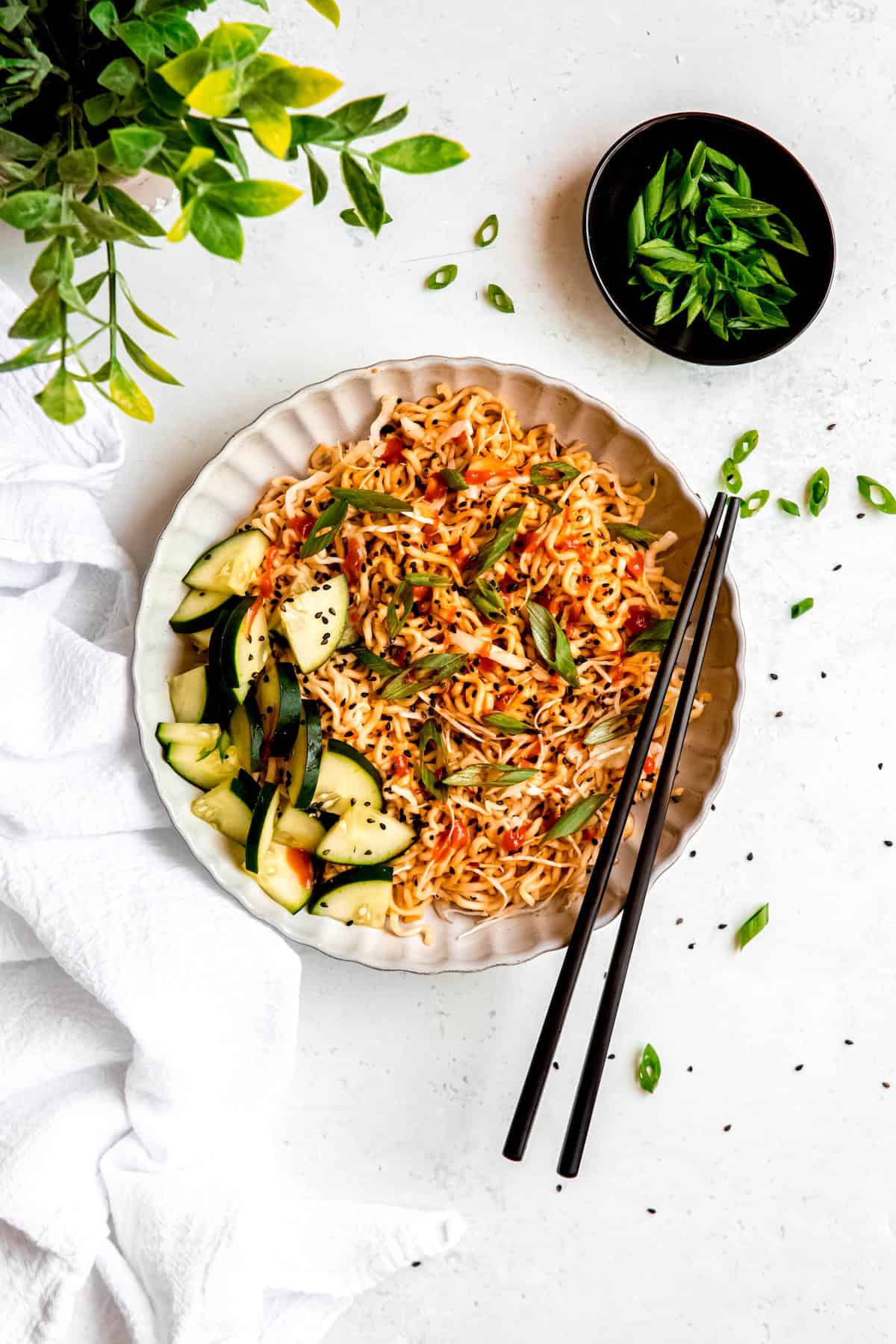
Optional Variations & Dietary Adaptations
I love these sesame chili noodles just the way the recipe is written, but there are plenty of ways to customize them to your exact specifications. Here are some variations to consider:
- Consider sautéing your veggies. I am perfectly happy throwing in all of the veggies completely raw, but Joe prefers his to be a little softer. On the occasions that he’s going to eat with me, I briefly sauté these additions (excluding the cucumber) in a bit of neutral oil and a sprinkling of salt before adding them to the mix. If you want cold sesame noodles that are more like a salad and/or want one less dish to clean up, omit this step. Or, be lazy like me and use the pot you boiled your noodles in.
- Consider adding protein. Keep it vegan with pan-fried crispy tofu, rehydrated TVP or soy curls, or add slices of thin chicken breast, leftover Thanksgiving turkey breast, steak, salmon, or shrimp.
- Swap in Italian-style noodles. Don't have ramen on hand? You can make sesame peanut butter noodles with spaghetti, angel hair, fettuccini, rotini, penne, or literally any shape of pasta you have on hand.
- Gluten-Free - Opt for gluten-free noodles and use either tamari (soy product) or coconut aminos (soy alternative) in place of the soy sauce.
- Soy-Free - Use coconut aminos (gluten-free) in place of the soy sauce.
- Nut-Free - Use tahini or sunflower seed butter in place of peanut butter.
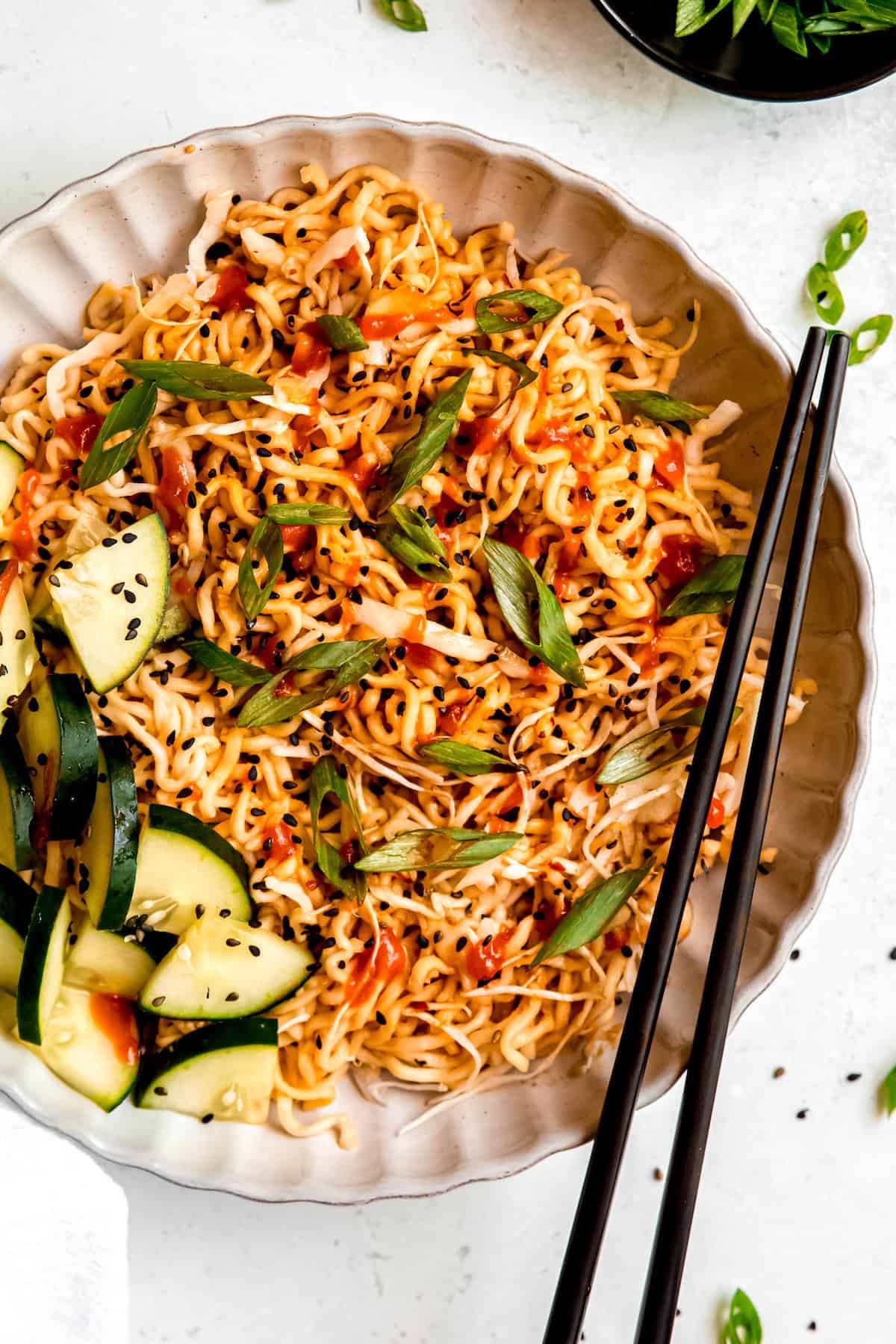
Expert Tips
- Taste the sauce solo. When all the sauce ingredients are whisked together, try a spoonful. Remember that it’s going to be a concentrated flavor that will be tempered by the other ingredients. In my mind, this should taste akin to something you’d dip your potsticker/wonton/spring roll in…salty, vinegary, spicy, a little sweet, and kind of creamy.
- Salt your pasta water. This is less important for instant ramen noodles (which have been fried and seasoned already), but for any plain boxed pasta or plain (read: not instant) ramen, I suggest adding the flavor while you can. While you're welcome to use the chicken bouillon powder packets that come with instant ramen packs, I prefer to use plain salt and save the packets for when I need a chicken broth boost in my day.
- Feel free to use your food processor with the grater blade to make short work of shredding all the veggies. I don't mind the process of chopping (I find it soothing), but bringing out the machine will shave at least 10 minutes off your prep time.
Serving Suggestions
For the best experience, serve these noodles warm, straight out of the large pot, topped with a crispy fried egg or jalapeño pickled egg—the runny yolk mixes into the sauce and makes every bite even richer. If you're looking to turn this into a heartier dinner, pair it alongside Chinese broccoli beef for a takeout-style spread that beats anything from a delivery app.
Don't be shy about customizing the heat and acidity to your liking at the table. A splash of your favorite hot sauce or a drizzle of Chinese black vinegar right before eating brightens up the dish and lets everyone adjust the spicy flavors to their own preference.
These noodles are also fantastic served alongside my copycat Trader Joe’s scallion pancakes and/or kung pao brussels sprouts for a full, well-rounded meal that still comes together on a weeknight.
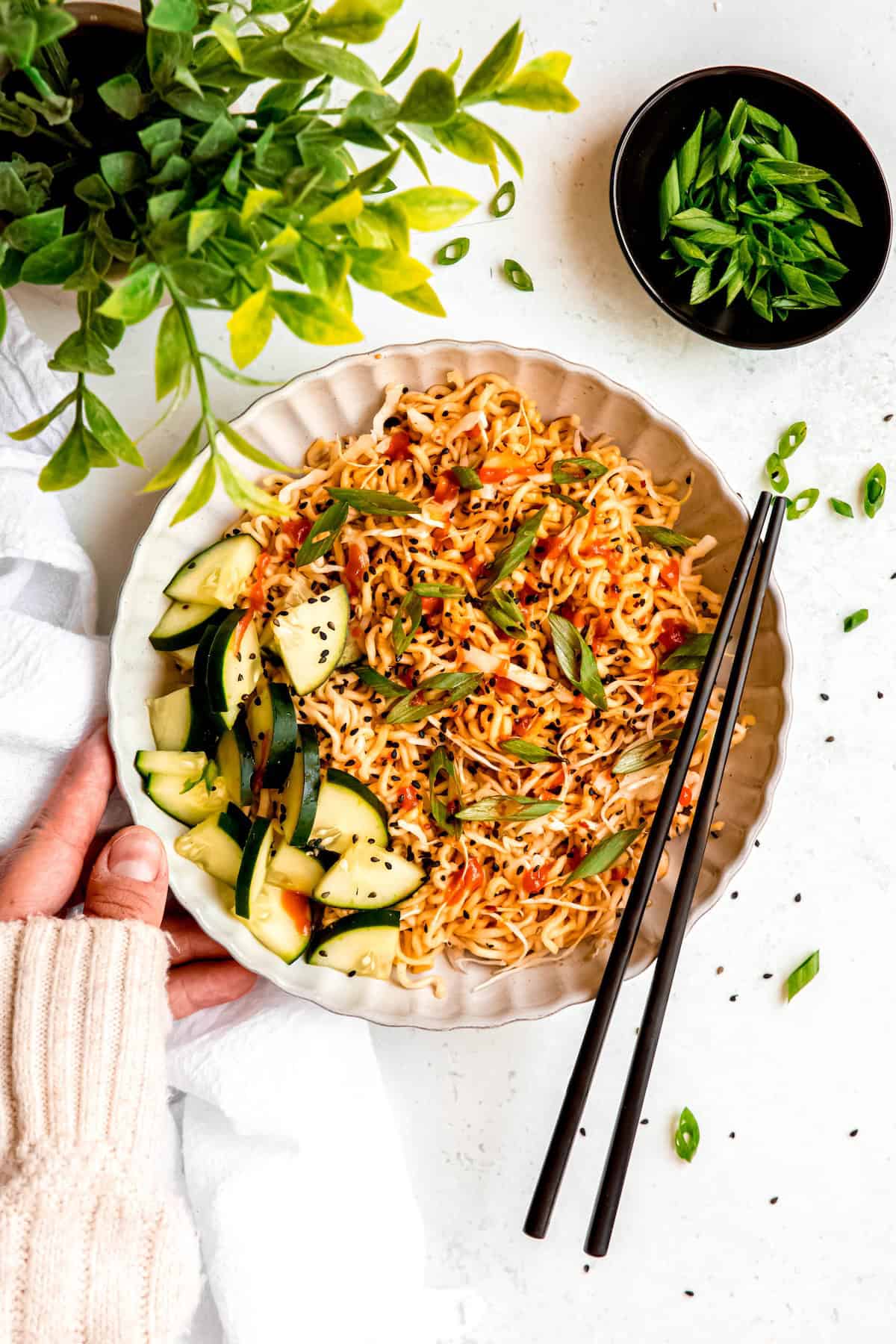
Storage Instructions
- Refrigerator: Store leftover noodles in an airtight container in the fridge for up to 4 days. The flavors actually deepen overnight, so don't be surprised if they taste even better the next time you dig in.
- With or without veggies: If you plan on meal prepping, consider storing the sauce separately from any delicate veggies like cucumber, which can get watery over time. Toss everything together just before eating for the best texture.
- Reheating: These chili ramen noodles are delicious cold, at room temperature, or gently reheated. If reheating, add a splash of water or a touch more oil (avocado oil or canola oil both work well) to loosen the sauce back up, since it tends to thicken in the fridge.
- Freezing: This dish doesn't freeze particularly well due to the fresh vegetables and sauce consistency, so it's best enjoyed fresh within the week.
FAQs
It depends on the noodles you opt to use. While most instant ramen noodles primarily contain monosodium glutamate in the contents of seasoning package, some brands may also include MSG in the noodles themselves. If you’re hoping to avoid MSG, make sure to read the label on your noodles.
I should note that I personally have no beef with MSG—I actually think it’s delicious, with a distinctly “meaty” taste. I often use it whenever I feel like a recipe is missing something umami or when I’m cooking for someone who is trying to reduce their sodium intake (it’s 60% less salty than regular salt by volume).
Furthermore, the U.S. Food and Drug Administration (FDA), the United Nations Joint FAO/WHO Expert Committee on Food Additives (JECFA), and the European Food Safety Authority (EFSA) have all concluded that MSG does not pose a health risk when consumed in normal dietary amounts.
Honestly, this comes down to personal preference and what's already sitting in your pantry. Instant ramen (minus the seasoning packet) gives you that classic springy, slurpable bite and cooks in just a couple of minutes, which makes it an easy weeknight win. That said, if you want a gluten-free option or just want to switch things up, rice noodles, soba, or even spaghetti all soak up the sauce beautifully. Whatever you choose, just make sure to cook it al dente so it holds its texture once tossed with the sauce and doesn't turn mushy.
Absolutely. Hot sesame oil adds a nice kick, but if you don't have it on hand, regular toasted sesame oil works great too—you'll just miss out on some of the built-in heat, which you can make up for with extra chili flakes, sriracha, or chili garlic paste. In a pinch, a neutral oil like avocado oil or canola oil will also keep your noodles from sticking, though you'll lose some of that signature nutty flavor.
Most well-stocked grocery stores now carry these in the international or Asian foods aisle, often right near the soy sauce and rice vinegar. If your local store doesn't have them, Asian grocery stores or online retailers are a reliable backup. Once you have them in your pantry, you'll find yourself reaching for them in all kinds of recipes beyond just this one!
This usually happens when noodles sit after draining without any oil or sauce to coat them. To avoid this, drain your noodles well and immediately toss them with a drizzle of oil while they're still warm—this keeps the strands separated and gives the sauce something to cling to later. Using a large pot with plenty of water while boiling also helps prevent the noodles from sticking to each other in the first place.
Yes! It's honestly one of the best parts of this dish. You can cook the noodles, make the sauce, and prep your veggies all in advance, storing everything separately in airtight containers in the fridge. When you're ready to eat, just toss it all together. This makes it one of my favorite ingredients-on-hand meals for busy weeks, since there's barely any work left to do by the time hunger hits.
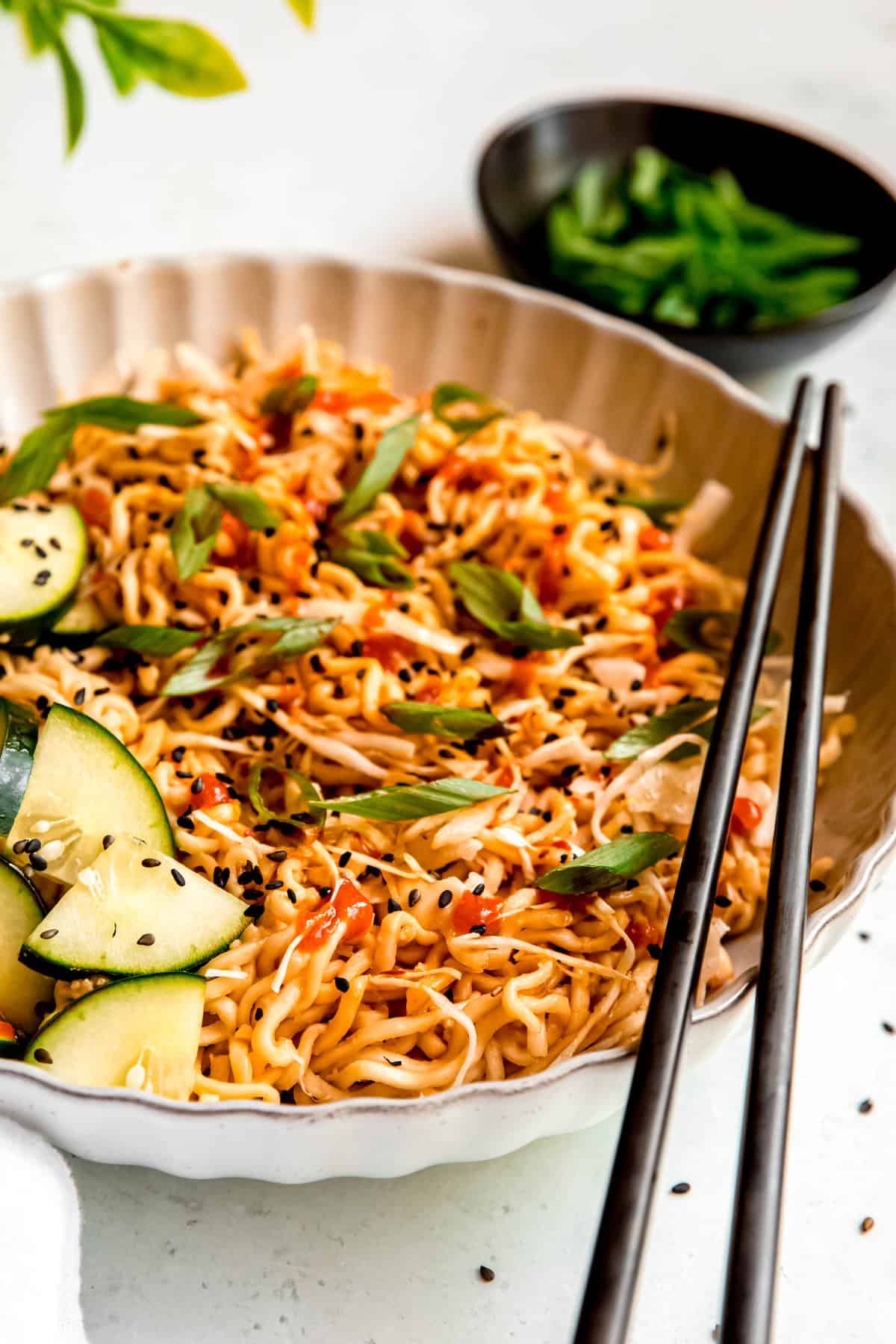
More Rent Week Recipes

If you tried this recipe and loved it, be sure to rate and review it below! For more inexpensive and delicious recipe inspiration, be sure to follow me on Pinterest. You can also get all of my newest content delivered straight to your inbox by signing up for my email newsletter!
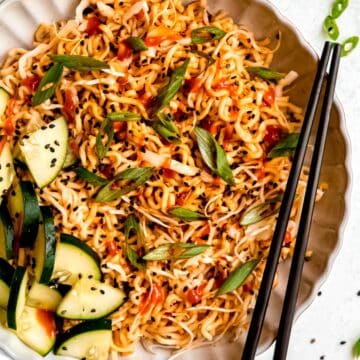
Spicy Garlic Chili Ramen Noodles With Instant Ramen
Ingredients
- 1 lb noodle of choice I used 5 packets of instant ramen noodles
- 1 drizzle hot sesame oil or regular toasted sesame oil, peanut oil, or olive oil
- ¼ C soy sauce or tamari, coconut aminos, or Bragg's liquid aminos
- 2-3 tablespoon rice wine vinegar
- 1-2 tablespoon fresh ginger grated or minced
- 3 tablespoon peanut butter, tahini or combination of both
- 2-5 cloves garlic, minced to taste
- 2 teaspoon sriracha optional, or use gochujang
- 2 teaspoon chili garlic (Sambal Oelek) optional
- 2 teaspoon agave nectar optional, or use the sweetener of your choice.
- crunchy vegetables of choice see notes
- toppings of choice see notes
Instructions
- Boil noodles of choice in salted water according to box directions and drain.1 lb noodle of choice
- Toss with oil. To keep the noodles from sticking together, toss them with a drizzle of hot sesame oil. NOTE: regular sesame oil, peanut oil, or even olive oil will achieve the same end. We just like foods nice and spicy over here.1 drizzle hot sesame oil
- Make Peanut Sauce by whisking together Soy Sauce, Rice Vinegar, Fresh Minced Ginger, Peanut Butter/Tahini, Fresh Chopped Garlic, Sriracha/Chili Garlic Sauce/Gochujang, and Agave Nectar. Taste and adjust the seasoning as needed.¼ C soy sauce, 2-3 Tbsp rice wine vinegar, 1-2 Tbsp fresh ginger, 3 Tbsp peanut butter, tahini or combination of both, 2-5 cloves garlic, minced, 2 tsp sriracha, 2 tsp chili garlic (Sambal Oelek), 2 tsp agave nectar
- Toss the noodles in your delicious sauce. Stop here and eat, or, if you have more time, energy, and ingredients move on to step 5!
- Add the prepped veggies, tossing to combine. Add any toppings you like!crunchy vegetables of choice, toppings of choice
- Eat. Repeat. You know you want to.
Notes
- Crunchy Vegetables of Choice - If you have them on hand, add in as many crunchy vegetables as your heart desires so you can eat the full rainbow! Here are a few of our favorites to add:
- Scallions, a.k.a. green onions, sliced thinly
- Bell Pepper, any color, sliced thinly
- Cucumber, seeded and sliced into short matchsticks or cut into wedges
- Carrot, either shredded or spiralized
- Cabbage, red, green, Napa, savoy, or Bok Choy, shredded or sliced thinly
- Radishes, cut into matchsticks
- Sugar Snap Peas and/or Snow Peas, sliced thinly on the bias
- Toppings of Choice - Add as many toppings as you like for extra flavor and crunch. I like:
- Fresh Mint, Fresh Cilantro, and/or Fresh Basil, Thai if you’ve got it, regular if you don’t
- Chopped Peanuts or Cashews
- Toasted Sesame Seeds
- TJ’s Ghost Pepper Flakes or Red Pepper Flakes
- Extra Sriracha and/or Sambal Oelek
- Nori Komi Furikake - This is a flavor shaker that has nori, which is dried seaweed, and sesame seeds. It is also awesome on popcorn with some sriracha salt.
- Maruesu Tempura Crisps - This is another Costco find that’s a GEM. We eat these by the handful, as well as use them as a garnish any time we can. Get you some!
- Consider sautéing your veggies. I am perfectly happy throwing in all of the veggies completely raw, but Joe prefers his to be a little softer. On the occasions that he’s going to eat with me, I briefly sauté these additions (excluding the cucumber) in a bit of oil and a sprinkling of salt before adding them to the mix. If you want cold sesame noodles that are more like a salad and/or want one less dish to clean up, omit this step. Or, be lazy like me and use the pot you boiled your noodles in.
- Consider adding protein. Keep it vegan with pan-fried crispy tofu or soy curls, or add sliced chicken, steak, salmon, or shrimp.
- Swap in Italian-style noodles. Don't have ramen on hand? You can make sesame peanut butter noodles with spaghetti, angel hair, fettuccini, rotini, penne, or literally any shape of pasta you have on hand.
- Gluten-Free - Opt for gluten-free noodles and use either tamari (soy product) or coconut aminos (soy alternative) in place of the soy sauce.
- Soy-Free - Use coconut aminos (gluten-free) or Bragg's Liquid aminos (not gluten-free) in place of the soy sauce.
- Nut-Free - Use tahini or sunflower seed butter in place of peanut butter.
- Refrigerator: Store leftover noodles in an airtight container in the fridge for up to 4 days. The flavors actually deepen overnight, so don't be surprised if they taste even better the next time you dig in.
- With or without veggies: If you plan on meal prepping, consider storing the sauce separately from any delicate veggies like cucumber, which can get watery over time. Toss everything together just before eating for the best texture.
- Reheating: These chili ramen noodles are delicious cold, at room temperature, or gently reheated. If reheating, add a splash of water or a touch more oil (avocado oil or canola oil both work well) to loosen the sauce back up, since it tends to thicken in the fridge.
- Freezing: This dish doesn't freeze particularly well due to the fresh vegetables and sauce consistency, so it's best enjoyed fresh within the week.
Nutrition
*They unfortunately do not tick the Whole30/Paleo or Keto boxes
** Soup exchanges are an awesome way to stock your freezer while simultaneously talking about food with your pals!
- Buy a bunch of delitainers and labels (for title, ingredient list and date purposes) and distribute them to your participants.
- Have a google doc signup sheet of what everyone is bringing so you don’t end up with 10 versions of chicken noodle (although different versions are fun in their own right).
- Pick a time and a location. Whoever is hosting should have some kind of soup, a bunch of mugs or bowls, maybe some crackers and bread to nosh on while you hang out.
- However many soup containers each person brought, they get to take an equal number of soup containers home. Such an easy concept and so easy to execute! I did this both years of business school, and it meant that we all ended up with two weeks worth of lunch or dinner worked out for the low investment of making one big batch of whatever soup I wanted. SO FUN!
- Remember, cream based soups don’t freeze well, so eat them first and freeze other, sturdier soups instead.



Comments
No Comments