
Show your fur babies a little extra love with this cheap and easy recipe for high quality Homemade Dog Food Topper! This highly customizable and super tasty add-on is great for supplementing your dog's diet, encouraging picky eaters, and even turning into homemade treats.
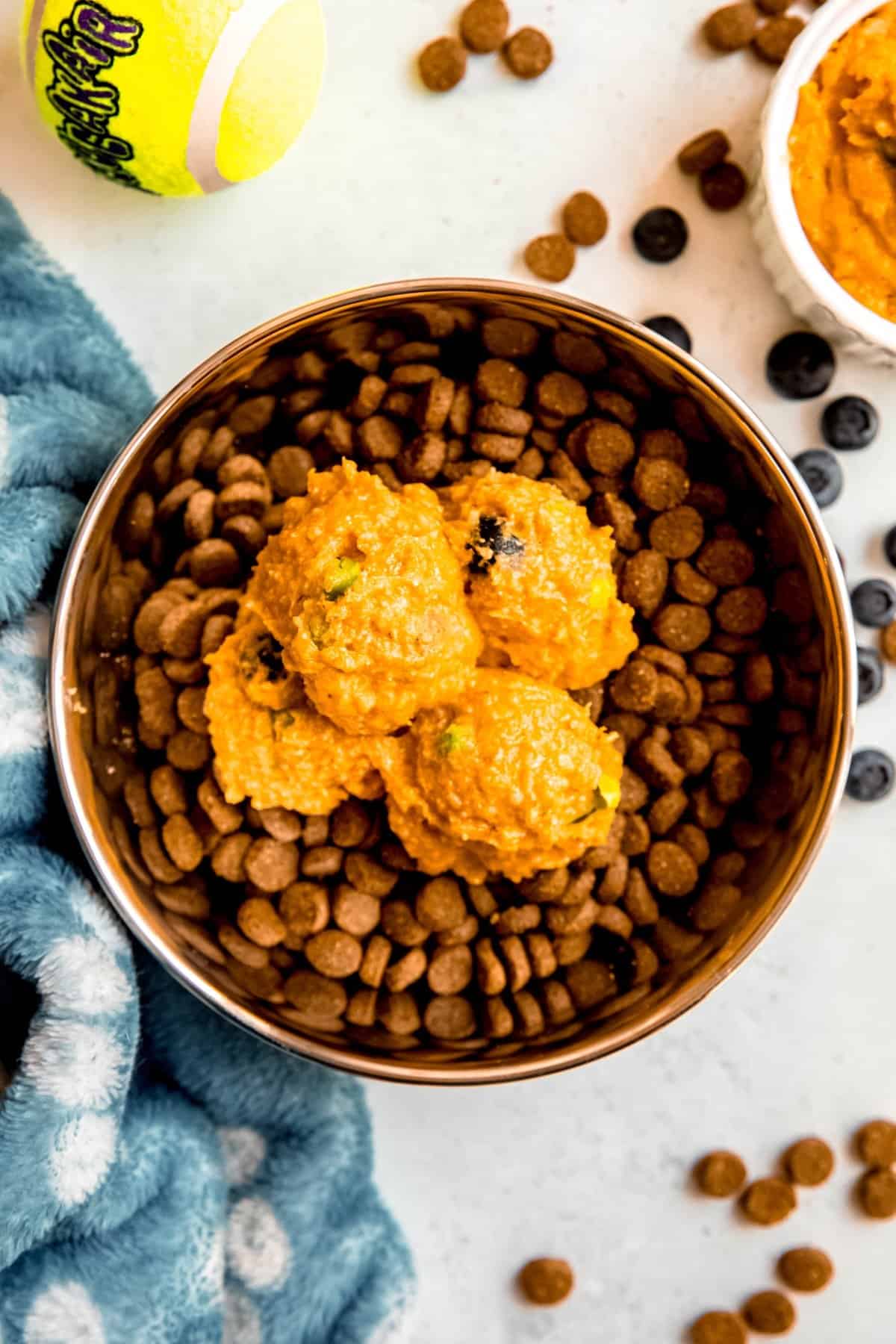
Joe and I may not have natural-born children, but Mikey and Ozzy are without a doubt our kids. While we want to do everything to make their lives the best they can be, commercial toppers are usually obscenely expensive—upwards of $15/pound for the fresh stuff. Considering I almost never spend that much for anything even Joe or I eat, I decided to replicate it at home.
As it turns out, the process of making DIY dog food topper is super easy, taking just 10 minutes of active prep per batch. I make it about once every 3-4 weeks to cover our two 70-pound lap-dogs—and that’s stretched to cover 2 meals a day and various treats. It can also be made with exclusively pantry goods for just $6-8. And my buddies LOVE IT.
Love spoiling your four-legged friends? Check out my easy, 4-ingredient homemade peanut butter pumpkin dog treats and peanut butter banana dog treats next!
Jump to:
Why You’ll Love DIY Dog Food Toppers
- Budget-Friendly - Depending on what particular mix of grain, meat, and fruits/veggies you use, you can keep costs extremely low. Using a mix of money-saving techniques like shopping sales and reducing food waste by using scraps, I’ve recently made a batch for just $2 (in 2025 money!)—and that's for high-quality, human-grade food!
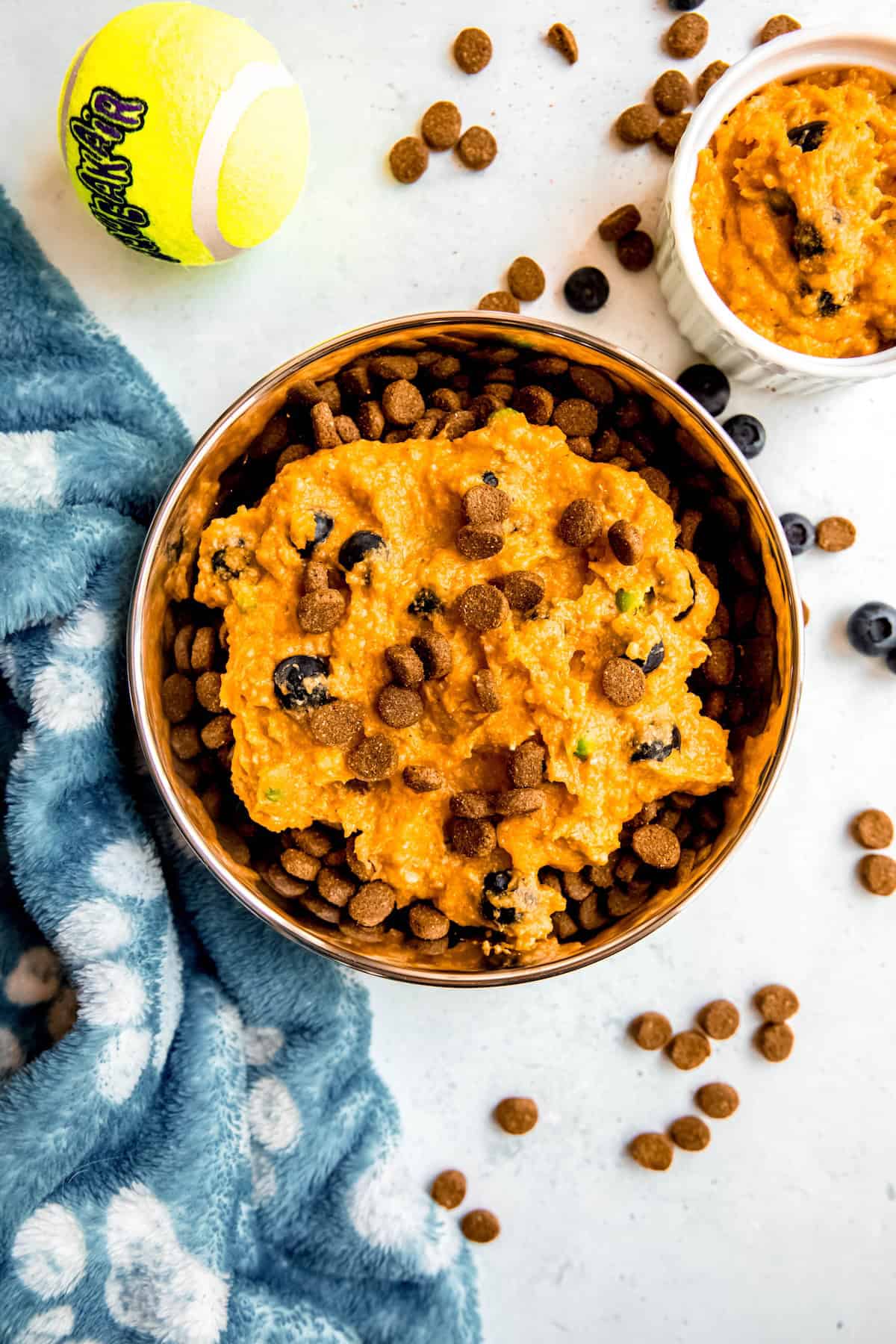
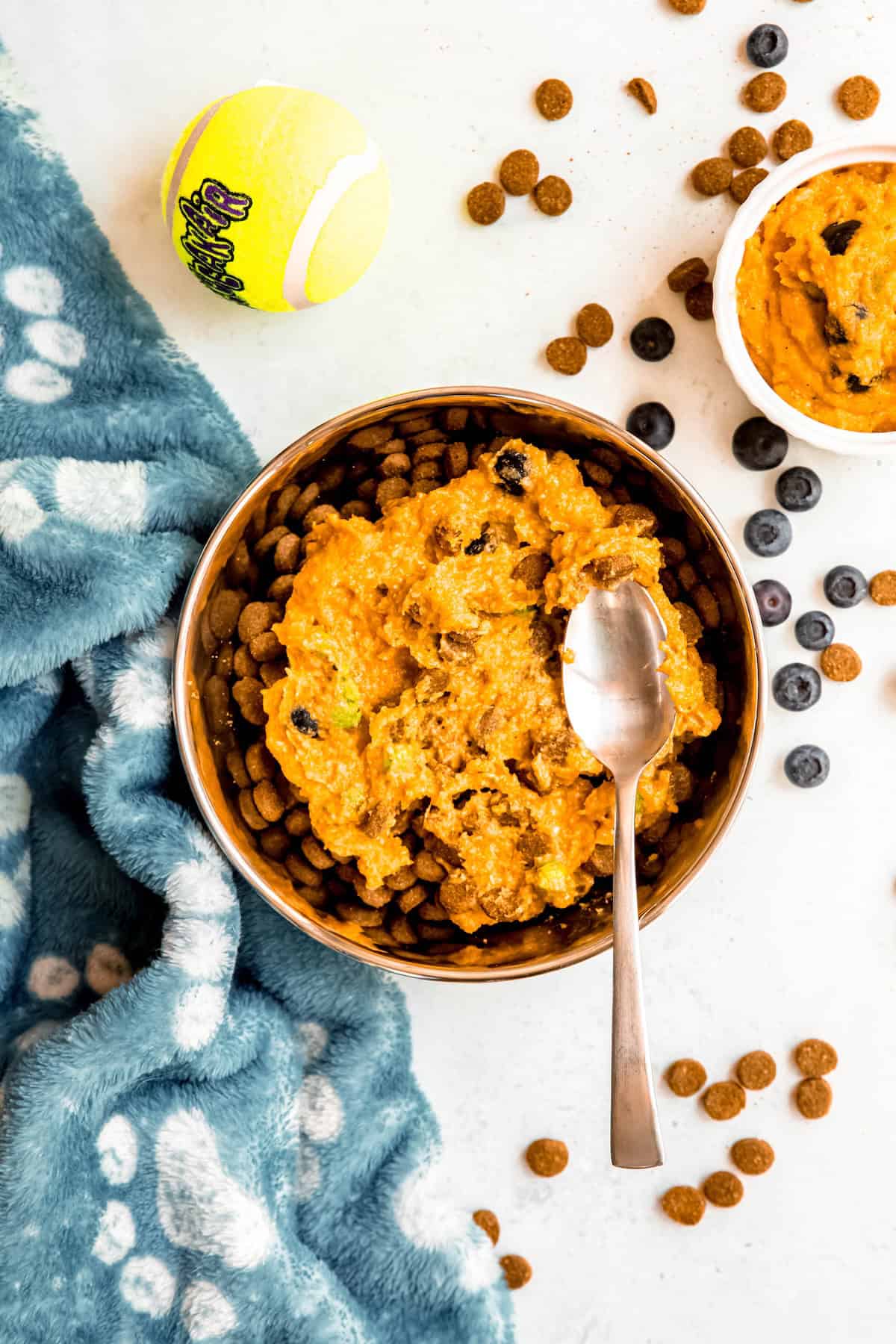
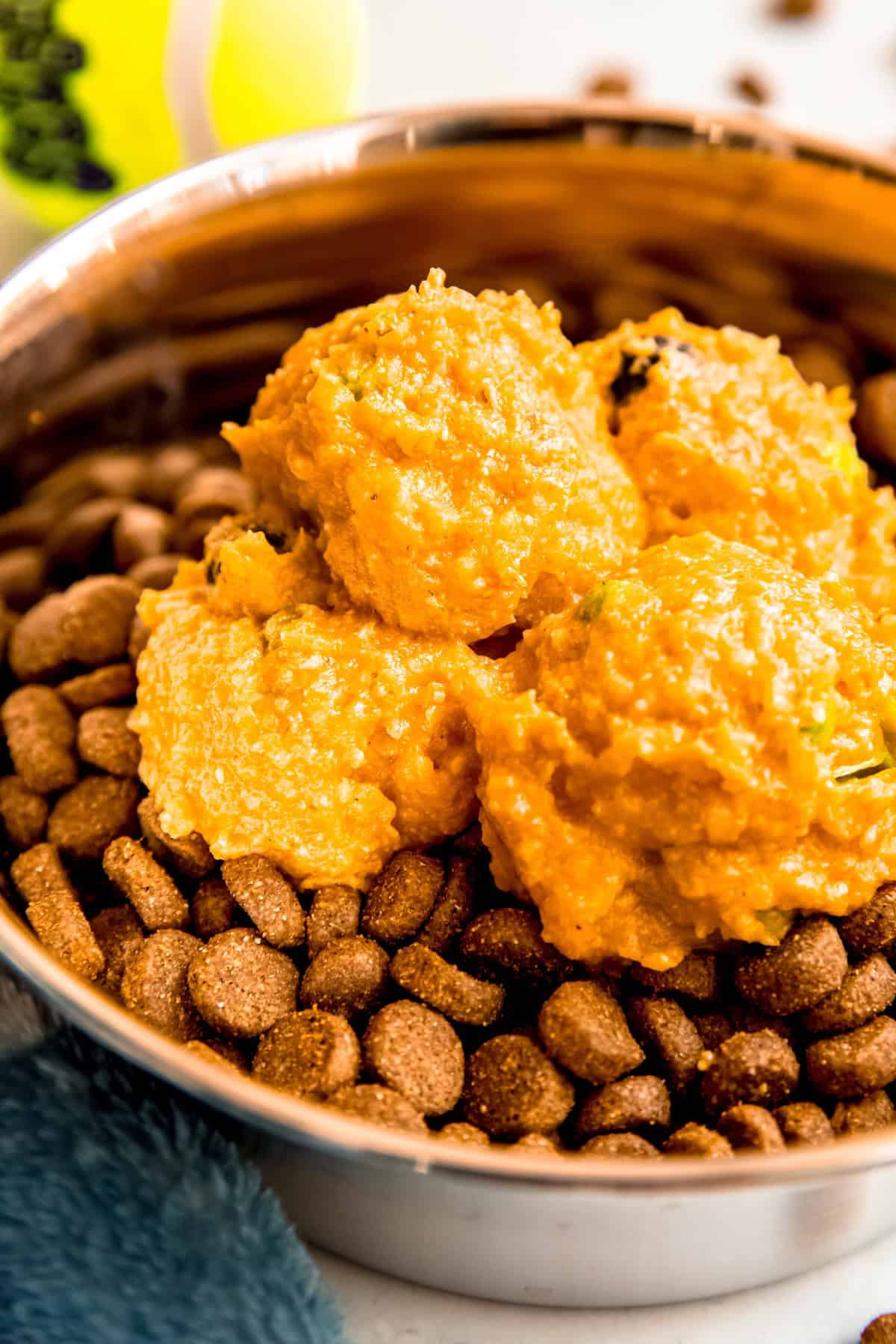
- Versatile & Customizable - Imagine this dog food topper as a concentrate—at its thickest, it’s like a paste, but can be diluted to become more of a soup. I use the diluted “soup” to soften my boys’ kibble, but keep the concentrated version for spreading on Licky Mats and freezing into homemade pupsicles with yogurt. You can also adjust the ingredient list to suit the nutritional needs of your pups!
- Gets the Attention of Picky Eaters - Mikey (my first born) is perhaps the least food-motivated dog I’ve ever met. He turns his nose up at things my other bub, Ozzy, loses his mind for. If he smells medicine in a gob of peanut butter, he’ll shun the entire bowl. If we don’t dress up his already high-quality kibble with extra flavor, he goes on hunger strike. But, ever since I started making this homemade dog food topper, he cleans his bowl every time! Sad news for Ozzy, who used to eat the leftovers, but happy news for a mama of a 13-year-old puppy prince!
Main Ingredients & Substitutions
As promised you don’t need much to make yummy meal toppers for your dog’s kibble. Note that these ingredients can easily be swapped out for others within each category! Here’s one version of what you can grab, followed by plenty of items you can swap in if your dog has food allergies or doesn’t like one of them:
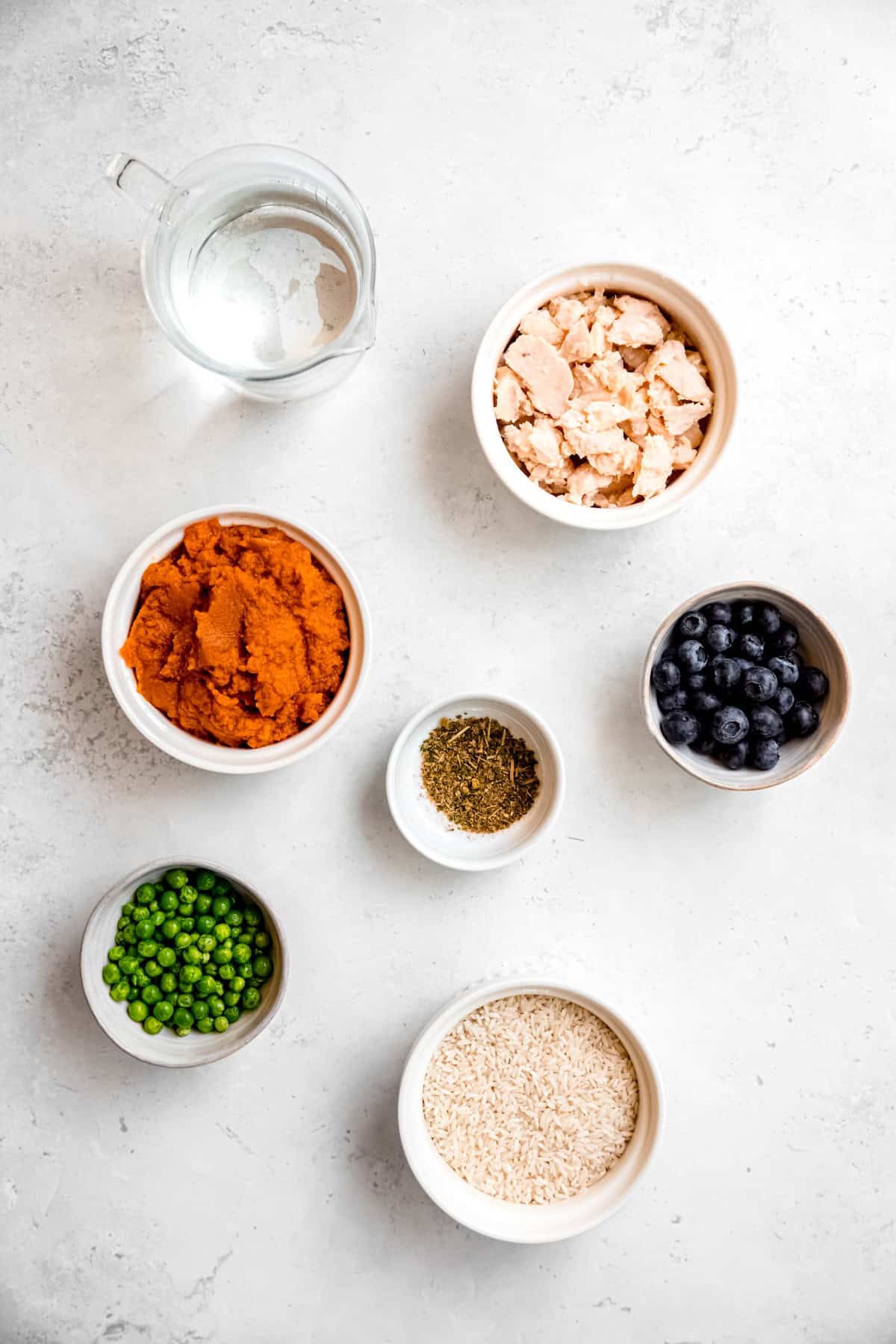
- Grains - I typically use long grain white rice since it cooks pretty quickly, but you can use brown rice for more fiber. Just note that it takes about twice as long to cook! Alternatively, swap in oats (steel cut or rolled), barley, quinoa, buckwheat, millet, sorghum, or teff. You may need to add a bit more water and/or cook longer depending on the particular grain.
- Meat - I tend to use either unsalted canned chicken, tuna, salmon, or sardines since they’re pre-cooked and readily available in the pantry. Don’t toss their juices if it’s unsalted and water-packed! Alternatively, use the unseasoned skins from a side of salmon (4-6 filets), or 1 cup of cubed chicken breast or browned ground meat like ground turkey, ground chicken, or lean ground beef. If your pup is meat free, tofu is a good alternative.
- 100% Pure Pumpkin Purée - Winter squash is packed with nutrients, is great for doggie digestion, and adds a nice sweetness my boys love. Feel free to use an equivalent amount of plain mashed sweet potato, or add cubes of the fresh or frozen winter squash (e.g. butternut squash or acorn squash) of your choice. Just make sure to continue to simmer the “soup” until they’re fork tender for easy blending.
- Water - Tap water is basically free, so it’s my go-to. If you have some unsalted bone broth or unsalted beef/chicken stock (from scraps!) that is free from onions, garlic, and other doggie no-nos, feel free to use that instead.
- Doggie Spice Mix (Recipe Below) - Optional, but great for an added nutritional boost. You can increase how much you add over time, but it’s best to start with a small amount—too much can upset sensitive tummies or turn off sensitive noses. Make sure to read the notes below and consult with your vet if your furry friend has medical issues, is pregnant, or is on medications.
- Fruit and/or Veggie Mix-Ins - Optional, but another way to add more color and whole foods to the mix. My boys love fresh, frozen or freeze-dried blueberries, strawberries, and mixed berries, chopped fresh or dried apples or pears (no seeds or cores!), bananas, frozen peas or corn, canned/cooked carrots or beets, steamed broccoli or green beans, celery, zucchini, and even spinach or other leafy greens. Use it as a way to clean out your crisper drawers, or choose based on what your fur babies like best!
Dog Herb & Spice Mix (makes ~½ cup)
This flavorful blend isn't just about making your dog’s meals smell like a gourmet feast—it’s packed with herbs and spices that offer essential nutrients, too. That said, every dog is different, and some ingredients may not be suitable for dogs with specific conditions. Adjust as needed for your pooch, and remember: only use dried herbs, never essential oils.
Here's what each ingredient brings to the table, plus some important safety notes to keep in mind:
- Dried Parsley - Great for freshening doggy breath and aiding digestion. It’s also a source of vitamins A, C, and K, plus antioxidants.
👉 Note: Avoid large amounts, especially for dogs with kidney issues or those who are pregnant, due to its diuretic action and potential to stimulate contractions. Only curly parsley is safe—other types (Italian, flat-leaf, spring) can be toxic. - Dried Basil - A gentle anti-inflammatory that may help ease arthritis pain and support immune health. Bonus: it smells amazing.
✅ Generally safe in small amounts for most dogs, though some dogs may be allergic—watch for rashes or stomach upset. Too much can upset digestion. - Dried Mint - Another breath-freshener and digestive aid, mint can also soothe upset tummies and support oral health.
⚠️ Note: Avoid pennyroyal or wintergreen mint, which is toxic to dogs. Use culinary spearmint or peppermint only, and in small amounts—too much mint can upset the stomach. - Dried Oregano - Rich in antioxidants with natural antibacterial and antifungal properties. It may also support digestive health, boost their immune system, and help fight off minor infections.
⚠️ Note: Use sparingly—too much oregano can irritate the stomach. - Dried Chamomile - Just a pinch can promote calmness and relaxation, plus it has some anti-inflammatory properties. It’s great for anxious pups, especially on overstimulating days like the 4th of July.
⚠️ Note: Chamomile may not be safe for dogs with ragweed allergies or those who are pregnant. Always introduce slowly and watch for any allergic reactions or tummy upset. - Ground Cinnamon – Helps regulate blood sugar and may have anti-inflammatory properties.
⚠️ Important: I prefer to use Ceylon/Mexican cinnamon (canela), not the more common cassia type, which can be harmful in large quantities thanks to higher levels of coumarin. If your dog has liver issues or dental issues, skip it. - Ground Turmeric - A powerful anti-inflammatory and antioxidant that may help with joint pain, mobility, and overall immune support.
⚠️ Note: Safe in moderation for most dogs, but avoid if your pup has gallbladder or bile duct problems. If your dog is on medication, confer with your vet. - Ground Ginger - Known to ease nausea and support digestive health, ginger is also anti-inflammatory and may help with joint stiffness.
⚠️ Note: In high doses, ginger may thin the blood. Avoid giving to dogs with bleeding disorders or those who are pregnant or on blood-thinning medications. - Dried Rosemary - A natural preservative with antioxidant properties. It’s also believed to support memory and circulation.
⚠️ Caution: Some sources suggest avoiding rosemary in dogs with epilepsy, as it may trigger seizures in sensitive dogs. - Dried Dill - This herb can help with gas and bloating, and some sources say it may support oral health thanks to its antimicrobial properties.
✅ This is a gentle herb that is safe for most dogs. - Dried Thyme - Offers antifungal and antibacterial benefits, plus it may help support respiratory health.
⚠️ Note: Use in small quantities, stick with dried leaves and sprinkle lightly. - Ground Coriander - Mild on the tummy, coriander supports digestion and may help settle upset stomachs.
✅ Generally safe and well-tolerated for most dogs.
How to Make Homemade Dog Food Topper
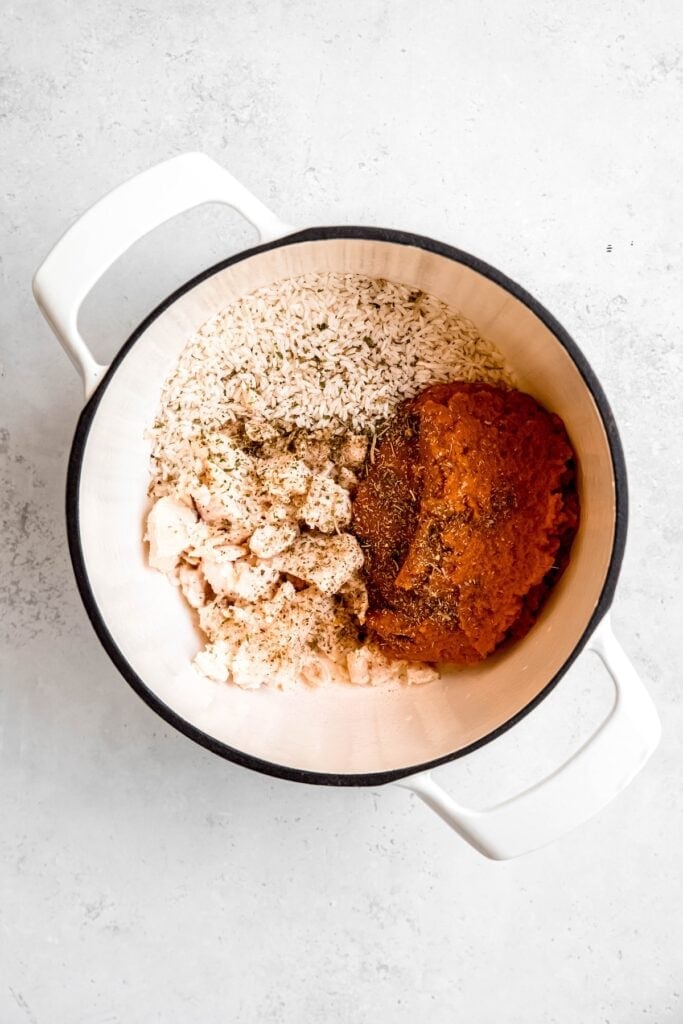
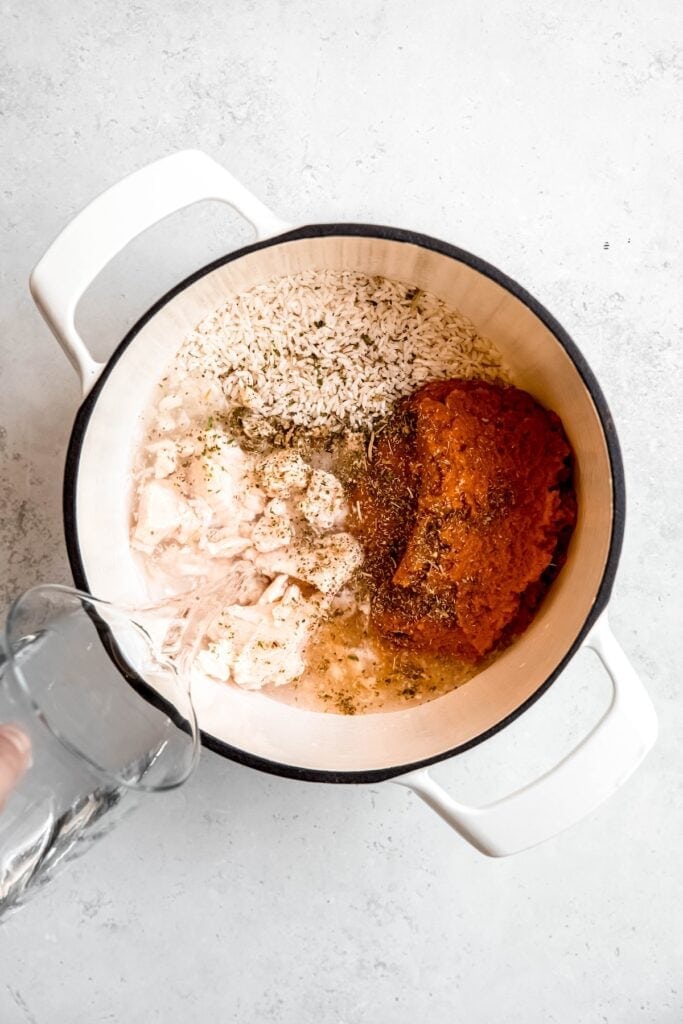
Step 1: Mix. Add the rice/grains, meat/juices, pumpkin, water, and spice mix to a large pot or saucepan, stirring to combine.
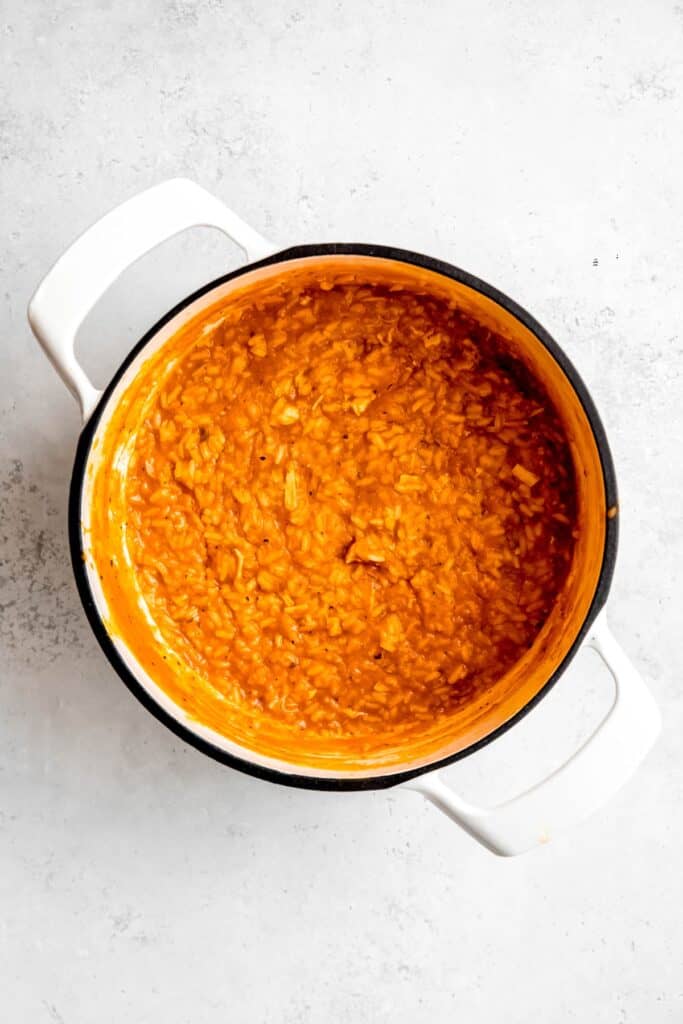
Step 2: Simmer. Bring to a boil, then reduce the heat, cover and simmer until the rice is tender—about 15-20 minutes. Add more water as needed (especially if using brown rice or other “thirsty” grains) to make the consistency soup-y.
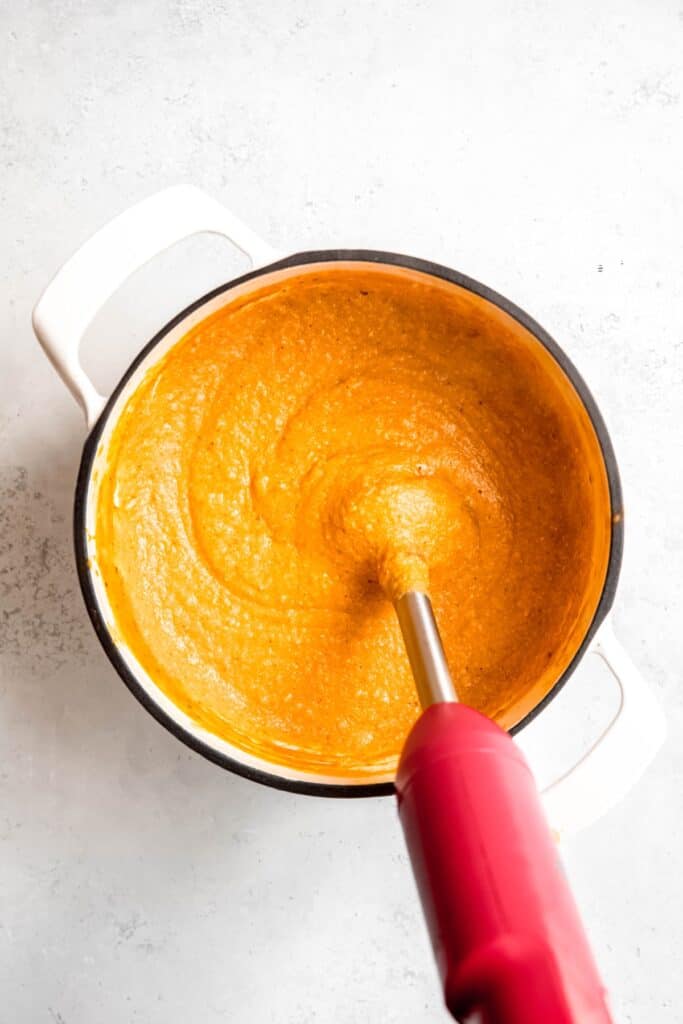
Step 3: Blend. Use an immersion blender, blender, or food processor to puree the cooked grains, meat, and pumpkin mixture until smooth.
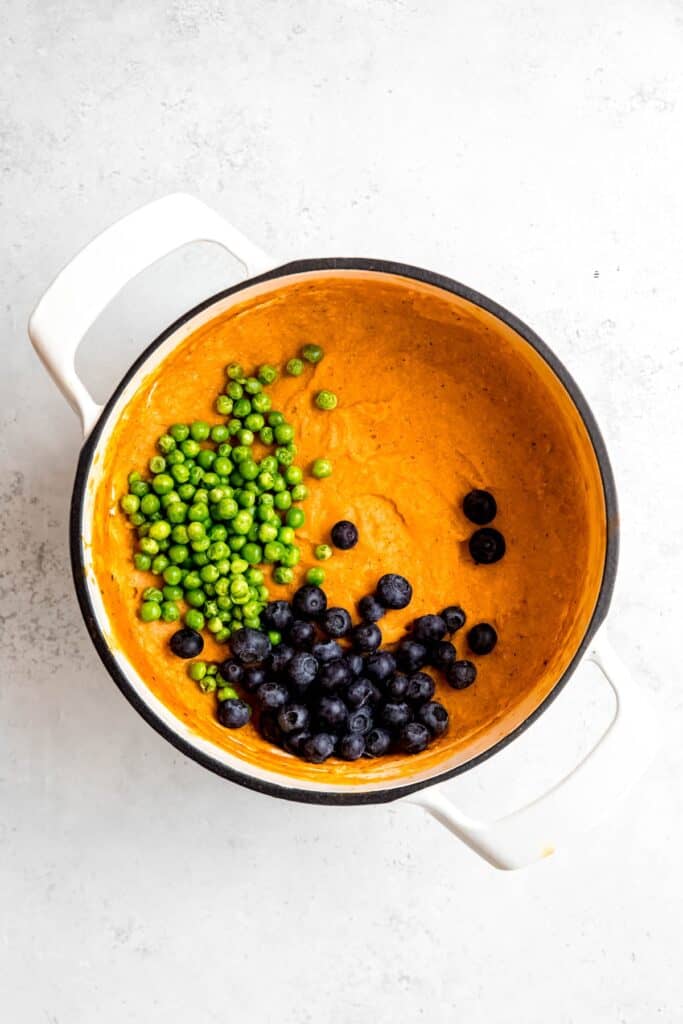
Step 4: Mix-Ins. Add the fruit and veggie mix-ins of your choice. You can either roughly blitz them into the mix if your dog picks around (Mikey will lick around any whole fruits or veggies, but has no complaints if they are mixed in), or leave them whole for sweet pops of flavor (Ozzy thinks fruit chunks are treats).
Step 5: Use or Store. Use the hot blended topper to quickly soften dry dog food and release the aromas for elderly or picky dogs. (You might wanna hold your nose, though—all the smells from our kibble are pretty gross for this human.) Alternatively, cool and store it.
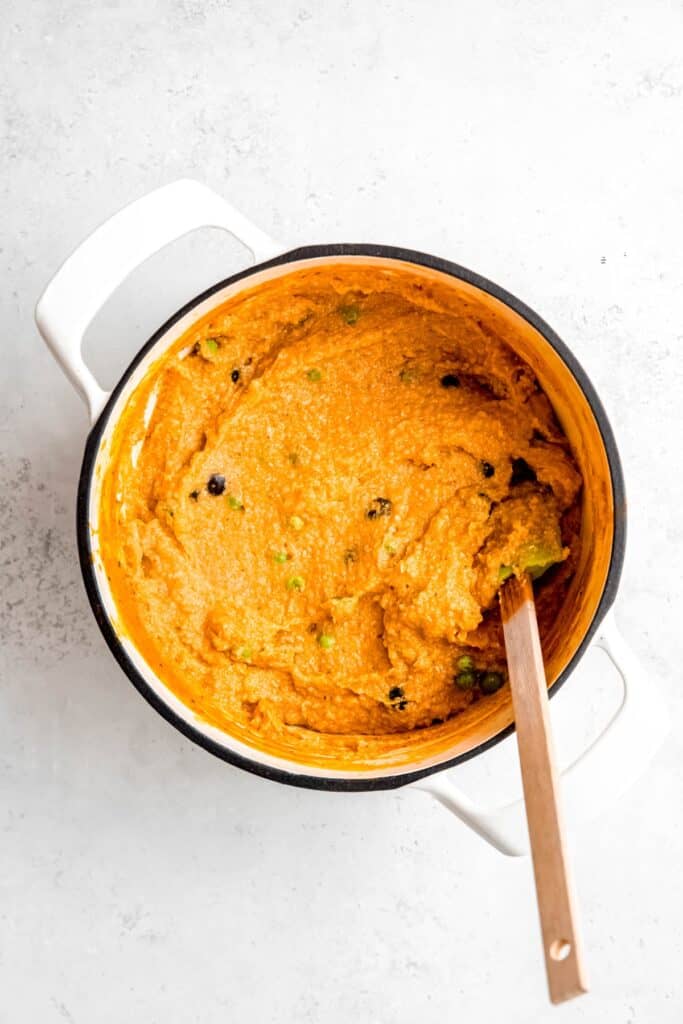
NOTE: The blended mixture gets pretty thick because of the starches in the rice, so feel free to adjust the water content as needed. I pop the frozen cup into a quart-sized plastic container, top it with boiling water (I stretch it out to make a whole quart at a time), cover until defrosted, then stir together and use about ¼ - ⅓ cup per meal to soften dry kibble. The thicker, pre-diluted version is excellent on Licky Mats!
Optional Variations & Dietary Adaptations
The great thing about making DIY dog food topper is you can fix it however your pups like. Here are just a few ideas of how to shake things up depending on what your buddy's specific dietary needs:
- Grain-Free - Skip the rice entirely and swap in pseudo-grains like quinoa, millet or buckwheat, extra pumpkin or sweet potato, or use cauliflower rice, cooked mashed lentils or chickpeas.
- Sensitive Stomachs - Start simple with just plain rice or oats, lean chicken meat, and pumpkin. Skip adding the spices and new ingredients until you know your dog tolerates the base well.
- Weight Management - Stretch servings with more fibrous veggies (like green beans or carrots) and stick to lean proteins like chicken breast or turkey.
- Hydration Boost - Add extra warm water or salt-free and allium-free bone broth for dogs who don't drink enough on their own. As a bonus, this helps to stretch the batch further!
- You can also get creative with other ways to gussy up the mix. Here are a few optional add-ins:
- Fish Oil - Dogs need 20 to 55 mg of combined EPA and DHA per pound of body weight per day, so I just add a 1200 mg capsule to each of my 70-pound boy’s bowls each dinnertime and use a bit of boiling water to soften the gel caps). If you have smaller pups, consider getting a dropper and vial for dosing.
- Egg Shells or Whole Eggs - Accidentally break an egg or have extra egg shells from another recipe? Toss ‘em in! The shells are a great source of calcium and blend up perfectly. If your pup needs a little extra protein but you want to keep fat low, egg whites are a great option. Feel free to use powdered or liquid whites for convenience!
- Peanut Flour/Peanut Butter Powder - Lower in fat than regular peanut butter, but with all the doggie-friendly flavor. Use pure ground peanuts (without sugar or salt) for the healthiest option. Make sure there is no xylitol or cocoa, which are toxic to pups.
- Taurine - Taurine is an amino acid that supports heart function, vision, and overall cardiovascular health—especially important for certain breeds prone to dilated cardiomyopathy (DCM), like Golden Retrievers and Dobermans. While most dogs can synthesize taurine from other amino acids, some may benefit from a supplement. A general guideline is 250–500 mg per day for small to medium dogs and up to 1000 mg per day for large breeds, but always consult your vet for personalized dosing based on your dog’s weight and health status. Taurine is typically sold in powder or capsule form and can be mixed right into the cooled topper.
Expert Tips
Whether you’re making this kibble topper as an occasional treat or adding it to every meal, these expert tips will help you keep your pup safe, happy, and well-fed—without breaking the bank.
🐾 Safety First: What Not to Add
Some ingredients that are totally fine for humans can be dangerous for dogs. Keep these out of your dog’s bowl at all times:
- No onions or garlic. Even small amounts (whether fresh, cooked, powdered) can cause toxicity.
- No leeks, shallots, or chives. They’re in the same family as onions and carry the same risks.
- No grapes or raisins. Even one can cause kidney failure.
- No artificial sweeteners. This is especially true of xylitol, which is deadly to dogs even in tiny amounts.
- No chocolate, caffeine, or alcohol. Perfectly acceptable vices for humans are very bad for dogs.
- Excessive salt or sugar. Dogs don’t need it, and too much can lead to dehydration, obesity, or long-term health issues. Stick with low-sodium/sugar or no-salt/sugar-added ingredients whenever possible.
💡 Ingredients to Use Sparingly
Even healthy ingredients should be portioned mindfully:
- Canned fish (like tuna or salmon) - Fish is a great source of omega-3s, but watch the sodium levels. Choose fish packed in water, not oil or brine, and limit if your dog has kidney or heart issues.
- Herbs and spices - Stick to small amounts of dog-safe herbs (like those in the spice mix). Introduce gradually to check for sensitivities.
- Fruit - Natural sugar is still sugar. Keep fruit to ½ – 1 cup max per batch.
💰 Budget-Friendly Tips
Homemade dog food toppers don’t have to be pricey. Here’s how to make them more affordable:
- Use kitchen scraps. Save things like apple and carrot peels, veggie butts (zucchini, celery, carrots, etc.), cilantro stems, or kale/chard ribs from your meal prep for the next batch. You can also use up wilty spinach and unseasoned fish skins. I also like to keep a jar of “canned meat juice” in the freezer with the water from canned fish and chicken that Joe and I eat to give the batch a little flavor boost.
- Freeze leftover cooked veggies. That one lonely scoop of green beans from last Tuesday? Freeze it and add to your next batch of topper.
- Buy canned goods and grains in bulk. Pumpkin, peas, sweet potatoes, rice, oats, and other grains can often be found cheaper at warehouse stores or during fall stock-up sales.
- Use what you already have. Got some leftover white rice from takeout? Or overripe fruit or limp veggies? Cook and blend ‘em in!
🧊 Batch Prep Like a Pro
- Souper Cubes are your best friend. I like to freeze the majority of the concentrate into 1 cup Souper Cubes (these cheaper knock-offs don’t have as sturdy of lids, but still work well) on meal prep day so I can defrost just what I need for the week. Any extra that doesn’t fit in the tray gets layered in a silicone mini muffin tray or in the molds for my Yipetor with nonfat plain yogurt for one-off treats.
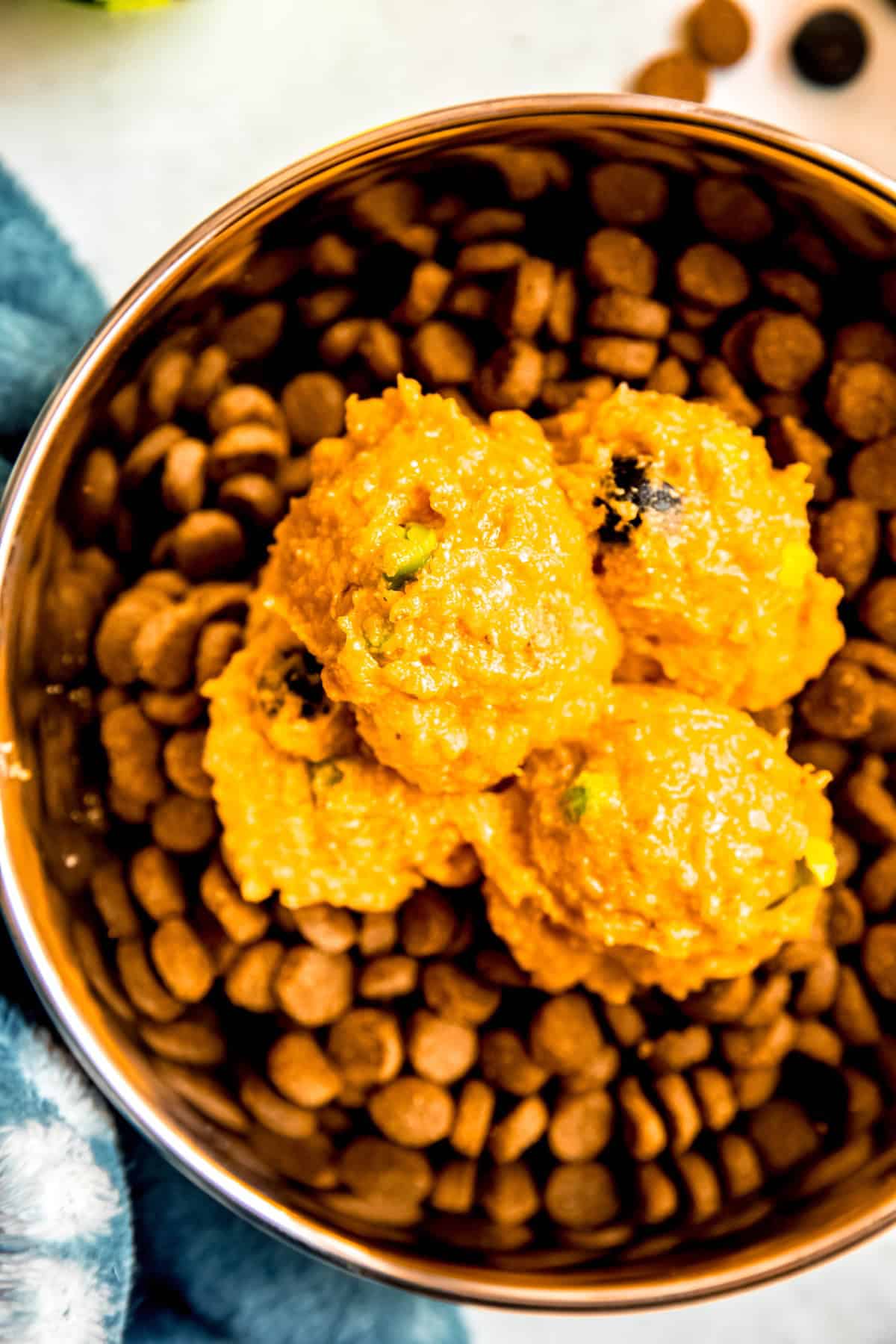
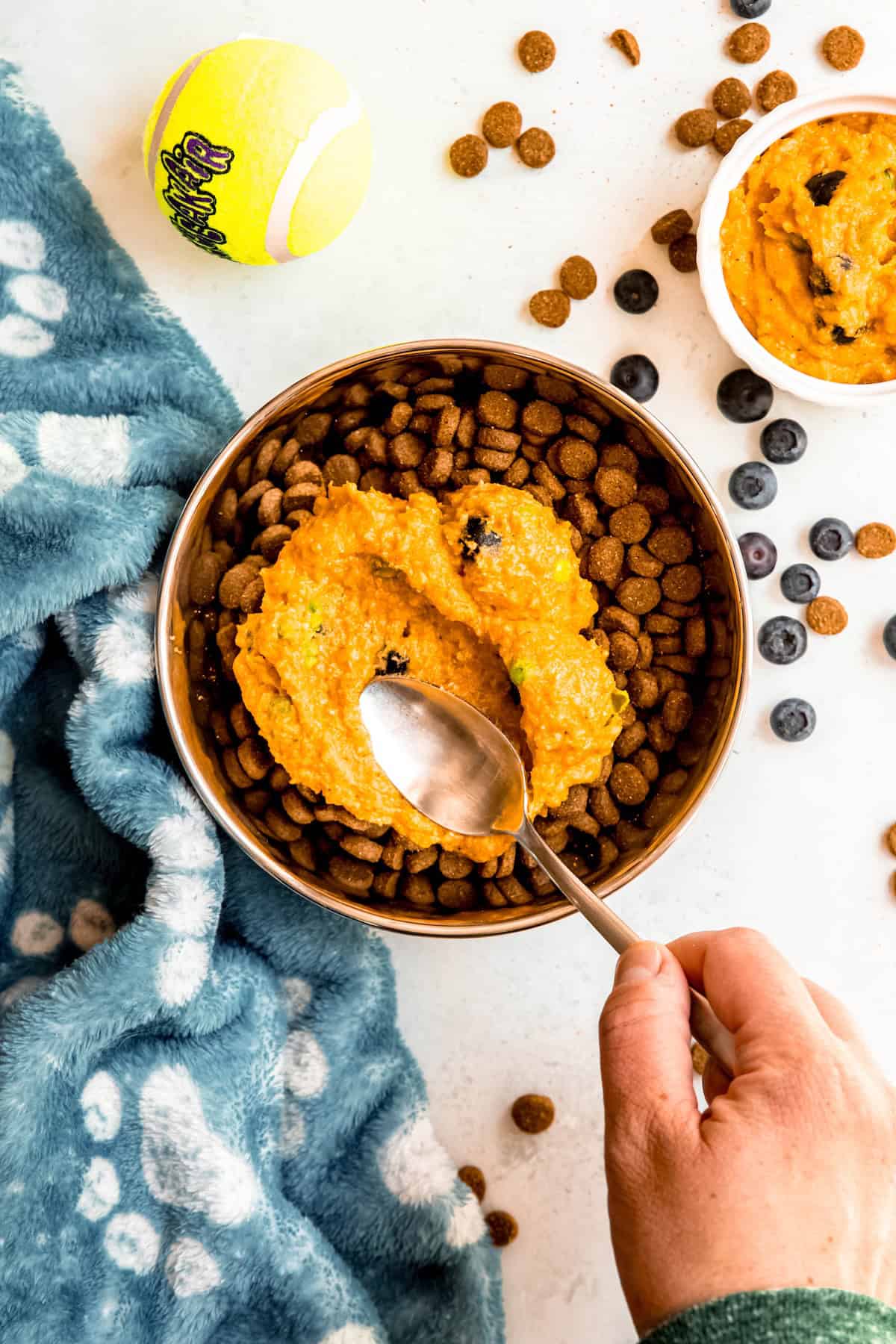
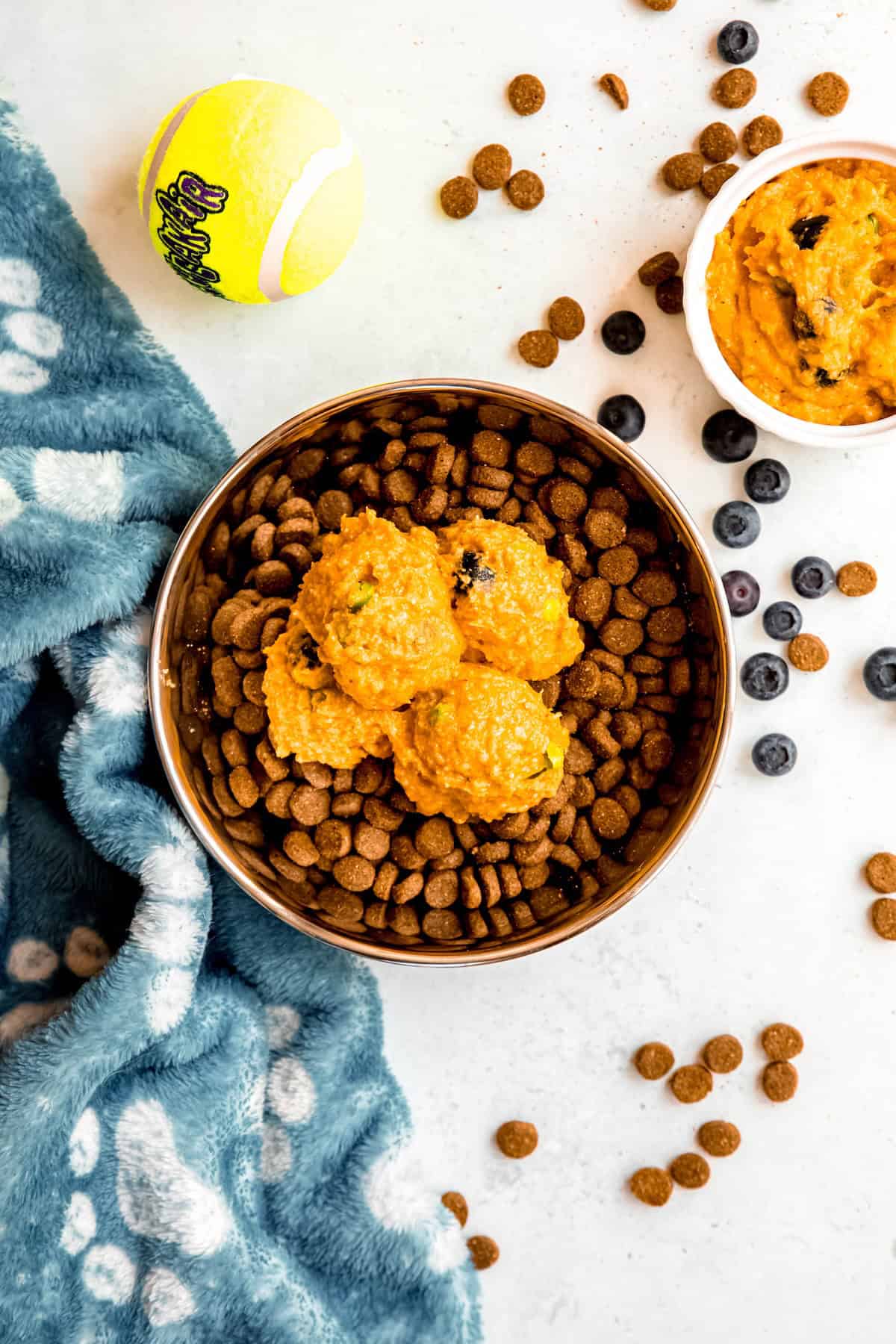
- Stretch it with water or broth. Dogs don’t mind a looser “soup” texture, and extra water helps hydrate them while softening dry kibble. I usually use a cup of the concentrated paste to make a quart of “soup” with about 3 cups of water.
- Rotate ingredients. Switch up proteins, veggies, or grains with each batch to give your pup a variety of flavors and nutrients. Note that some doggies are more sensitive and need time to become accustomed to changing their food routines. My boys have always had a wide variety (we even switch kibble flavors with each bag), so they handle new stuff with ease.
Storage Instructions
- Refrigerator - Store in an airtight container in the fridge for up to 1 week.
- Freezer - For longer storage, freeze in ½ or 1 cup portions using Souper Cubes, silicone muffin molds, or ice cube trays. Transfer frozen portions to a freezer-safe bag or container and store for up to 6 months.
- Defrost overnight in the fridge, or place the frozen portion in a lidded container, cover with boiling water, and let it sit for 10–15 minutes to thaw. I like to add a cup to a quart-sized delitainer and add enough hot water to cover it—this makes enough “soup” for my two dogs for the week.
Serving Suggestions
This homemade dog food topper is incredibly versatile! Whether you're mixing it into kibble, freezing it into treats, or spreading it on a licky mat, there are tons of ways to keep your pup happy and engaged. Here are a few things to keep in mind:
🍽 Portion Guidelines
Use this topper as a supplement—not a full replacement for your pup's regular meals—unless advised by your vet. A good starting point is:
- Small dogs (under 20 lbs): 1–2 tablespoons (undiluted) per meal
- Medium dogs (20–50 lbs): 2–4 tablespoons (undiluted) per meal
- Large dogs (50+ lbs): ¼–½ cup (undiluted) per meal
Adjust based on your dog’s weight, activity level, and dietary needs. If your pup is new to toppers, start slow and increase gradually.
As treats:
- 🐶 Licky Mats - This topper’s thick, creamy texture makes it perfect for Licky Mats! Add 2 tablespoons topper + 2 tablespoons nonfat Greek yogurt (or 2 tablespoons of pumpkin) to the mat, spread it evenly across the mat, and let your buddy lick away! This keeps my pups busy and mentally stimulated for 10–15 minutes. Pro Tip: pop it in the freezer for 20-30 minutes for a longer-lasting challenge on hot days.
- ❄️ Frozen Treats - Freeze into ice cube trays for quick, refreshing treats. For a more hydrating popsicle vibe, thin the mixture with extra water or low-sodium broth before freezing. These make great cooling treats after walks or as low-calorie snacks between meals.
- 🍦DIY Frosty Paws - For a richer frozen snack, alternate layers of undiluted topper and Greek yogurt in silicone molds. Stuff a freeze-dried liver treat or biscuit in the center for a fun surprise!
👀 The Yipetor is legit one of the best purchases I’ve made for my buddies. The frozen Frosty Paws holder is enough to keep the boys entertained for a solid 30 minutes—that’s really saying something for them. It can also be converted into a treat dispenser, so we add extra kibble or some training treats in there to get them to get moving inside on hot or stormy days. And our boy Ozzy the Destroyer (or the U-slurper, depending on how much he licks his paws 😅) hasn’t yet been able to pull off chunks of the rubber despite his very persistent and aggressive efforts.
FAQs
Yes, dog food toppers can be great for dogs! They add flavor, moisture, and variety to dry kibble, which can encourage picky eaters (like my 13-year-old, Mikey) and support hydration. When made with wholesome, dog-safe ingredients, toppers can also provide extra nutrients, fiber, and enrichment—just be sure they complement your dog’s main diet and don’t exceed 10–20% of their daily calories.
Try making this homemade dog food topper using simple, dog-safe ingredients like cooked rice, canned meat or fish, pureed pumpkin or sweet potato, and a sprinkle of dog-friendly herbs. You can also mix in veggies like peas, carrots, or green beans, and even fruits like blueberries or strawberries for added nutrition and flavor.
You can give your dog food toppers and homemade treats daily, as long as they make up no more than 10–20% of their total daily calories. Start with small amounts and monitor your dog’s weight, digestion, and overall health. If in doubt, check with your vet to make sure your topper routine supports your pup’s dietary needs.
You can add dog-safe, flavorful goodies like this homemade dog food topper—my pickiest boy has never once turned it down! Starting with a dog-friendly grain and meat mixture is excellent, but I like to add pureed pumpkin or sweet potato and small amounts of fruits and veggies (e.g., blueberries, carrots, or green beans) for sweetness. You can also use low-sodium bone broth, plain nonfat Greek yogurt, or even just a drizzle of hot water to soften the kibble and make it more enticing. I also like to crumble up a couple of hip & joint treats to add little flavor boosts throughout. Just make sure to keep any additions dog-healthy, simple, and free of toxic ingredients like onions, garlic, or excess salt.
More Pup-Friendly Recipes



If you tried this recipe and loved it, be sure to rate and review it below! For more inexpensive and delicious recipe inspiration, be sure to follow me on Pinterest. You can also get all of my newest content delivered straight to your inbox by signing up for my email newsletter!

Homemade Dog Food Topper
Equipment
- 4-quart Saucepan
Ingredients
- 1 cup Long Grain White Rice or other grain; see notes
- 12.5 oz Unsalted Canned Chicken or other protein; see notes
- 1 can Pumpkin Purée or plain mashed sweet potato; or ~2 cups cubed winter squash or sweet potatoes
- 4 cups Water plus more as needed
- 2 teaspoon Dog Spice Mix optional, recipe below; can increase to 1 tablespoon over time
- ½ cup Blueberries or other fruit/veg; see notes
- ½ cup Peas or other fruit/veg; see notes
Dog Spice Mix (Makes ~½ cup)—See Blog Post For Full Notes
- 1 tablespoon Dried Parsley only curly parsley is safe; omit for kidney issues or those who are pregnant
- 1 tbsp Dried Oregano generally safe, watch for tummy upset
- 1 tablespoon Dried Basil generally safe for most dogs, watch for allergies or upset tummies
- 1 tablespoon Dried Dill gentle herb that is safe for most dogs
- 1 tablespoon Dried Chamomile 1-2 torn open teabags; may not be safe for dogs with ragweed allergies or those who are pregnant
- 2 teaspoon Ground Coriander generally safe and well tolerated by most dogs
- 2 tsp Dried Mint avoid pennyroyal or wintergreen mint, which is toxic to dogs.
- 2 teaspoon Ground Mexican Cinnamon Ceylon/canela cinnamon, not cassia which is toxic; if your dog has liver issues or dental issues, skip it
- 2 teaspoon Ground Turmeric safe in moderation for most dogs, but avoid if your pup has gallbladder or bile duct problems. If your dog is on medication, confer with your vet.
- 1 teaspoon Ground Ginger avoid giving to dogs with bleeding disorders or those who are pregnant or on blood-thinning medications
- 1 tsp Dried Rosemary avoid in dogs with epilepsy
- 1 teaspoon Dried Thyme generally safe in small quantities
Instructions
- Add all spice mixture ingredients to a clean spice grinder and blitz to incorporate. You can also just stir together in a bowl, but shake the bottle every time before using as finer sediment will sink to the bottom. Store in an airtight container in a cool, dry, and dark spot like the pantry.1 tbsp Dried Parsley, 1 tbsp Dried Oregano, 1 tbsp Dried Basil, 1 tbsp Dried Dill, 1 tbsp Dried Chamomile, 2 tsp Ground Coriander, 2 tsp Dried Mint, 2 tsp Ground Mexican Cinnamon, 2 tsp Ground Turmeric, 1 tsp Ground Ginger, 1 tsp Dried Rosemary, 1 tsp Dried Thyme
- Add rice, chicken (and the juices), pumpkin, water, and dog spice mix to a saucepan. Stir to mix. Bring to a boil, then reduce heat, cover, and simmer until the rice is tender—about 15-20 minutes.1 cup Long Grain White Rice, 12.5 oz Unsalted Canned Chicken, 1 can Pumpkin Purée, 4 cups Water, 2 tsp Dog Spice Mix
- Blitz the mixture with an immersion blender. It will be pretty thick. Stir in the blueberries. NOTE: You can either leave the berries whole (great for dogs who like them as treats) or blend them in (for dogs who lick around them). Use or store.½ cup Blueberries
Notes
- Grains - I typically use long grain white rice since it cooks pretty quickly, but you can use brown rice for more fiber. Just note that it takes about twice as long to cook! Alternatively, swap in oats (steel cut or rolled), barley, quinoa, buckwheat, millet, sorghum, or teff. You may need to add a bit more water and/or cook longer depending on the particular grain.
- Meat - I tend to use either unsalted canned chicken, tuna, salmon, or sardines since they’re pre-cooked and readily available in the pantry. Don’t toss their juices if it’s unsalted and water-packed! Alternatively, use the unseasoned skins from a side of salmon (4-6 filets), or 1 cup of cubed chicken breast or browned ground meat like ground turkey, ground chicken, or lean ground beef. If your pup is meat free, tofu is a good alternative.
- 100% Pure Pumpkin Purée - Winter squash is packed with nutrients, is great for doggie digestion, and adds a nice sweetness my boys love. Feel free to use an equivalent amount of plain mashed sweet potato, or add cubes of the fresh or frozen winter squash (e.g. butternut squash or acorn squash) of your choice. Just make sure to continue to simmer the “soup” until they’re fork tender for easy blending.
- Water - Tap water is basically free, so it’s my go-to. If you have some unsalted bone broth or unsalted beef/chicken stock (from scraps!) that is free from onions, garlic, and other doggie no-nos, feel free to use that instead.
- Doggie Spice Mix (Recipe Below) - Optional, but great for an added nutritional boost. You can increase how much you add over time, but it’s best to start with a small amount—too much can upset sensitive tummies or turn off sensitive noses. Only use culinary dried herbs/spices, never essential oils. Make sure to consult with your vet if your furry friend has medical issues, is pregnant, or is on medications.
- Fruit and/or Veggie Mix-Ins - Fresh, frozen or freeze-dried blueberries, strawberries, and mixed berries, chopped fresh or dried apples or pears (no seeds or cores!), bananas, frozen peas or corn, canned/cooked carrots or beets, steamed broccoli or green beans, celery, zucchini, and even spinach or other leafy greens. Use it as a way to clean out your crisper drawers, or choose based on what your fur babies like best!
- Small dogs (under 20 lbs): 1–2 tablespoons (undiluted) per meal
- Medium dogs (20–50 lbs): 2–4 tablespoons (undiluted) per meal
- Large dogs (50+ lbs): ¼–½ cup (undiluted) per meal
- Refrigerator - Store in an airtight container in the fridge for up to 1 week.
- Freezer - For longer storage, freeze in ½ or 1 cup portions using Souper Cubes, silicone muffin molds, or ice cube trays. Transfer frozen portions to a freezer-safe bag or container and store for up to 6 months.
- Defrost overnight in the fridge, or place the frozen portion in a lidded container, cover with boiling water, and let it sit for 10–15 minutes to thaw. I like to add a cup to a quart-sized delitainer and add enough hot water to cover it—this makes enough “soup” for my two dogs for the week.
- Grain-Free - Skip the rice entirely and swap in extra pumpkin or sweet potato, or use cauliflower rice, cooked mashed lentils or chickpeas.
- Sensitive Stomachs - Start simple with just plain rice or oats, lean chicken meat, and pumpkin. Skip adding the spices and new ingredients until you know your dog tolerates the base well.
- Weight Management - Stretch servings with more fibrous veggies (like green beans or carrots) and stick to lean proteins like chicken breast or turkey.
- Hydration Boost - Add extra warm water or salt-free and allium-free bone broth for dogs who don't drink enough on their own. As a bonus, this helps to stretch the batch further!
- You can also get creative with other ways to gussy up the mix. Here are a few optional add-ins:
- Fish Oil - Dogs need 20 to 55 mg of combined EPA and DHA per pound of body weight per day, so I just add a 1200 mg capsule to each of my 70-pound boy’s bowls each dinnertime and use a bit of boiling water to soften the gel caps). If you have smaller pups, consider getting a dropper and vial for dosing.
- Egg Shells or Whole Eggs - Accidentally break an egg or have extra egg shells from another recipe? Toss ‘em in! The shells are a great source of calcium and blend up perfectly. If your pup needs a little extra protein but you want to keep fat low, egg whites are a great option. Feel free to use powdered or liquid whites for convenience!
- Peanut Flour/Peanut Butter Powder - Lower in fat than regular peanut butter, but with all the doggie-friendly flavor. Use pure ground peanuts (without sugar or salt) for the healthiest option. Make sure there is no xylitol or cocoa, which are toxic to pups.
- Taurine - Taurine is an amino acid that supports heart function, vision, and overall cardiovascular health—especially important for certain breeds prone to dilated cardiomyopathy (DCM), like Golden Retrievers and Dobermans. While most dogs can synthesize taurine from other amino acids, some may benefit from a supplement. A general guideline is 250–500 mg per day for small to medium dogs and up to 1000 mg per day for large breeds, but always consult your vet for personalized dosing based on your dog’s weight and health status. Taurine is typically sold in powder or capsule form and can be mixed right into the cooled topper.




Ash, The Grocery Addict says
I only have to make about 1 batch of this per month to keep my two 70-lb dogs happy for a whole month! Thin it out to make more of a "soup" that you can drizzle over dry kibble to add flavor, nutrients, and moisture, or keep it thick for freezing into pupsicles or smearing on a licky mat to keep your buddies entertained for 15-30 minutes at a time. It's also SUPER FLEXIBLE, so feel free to use the grains, proteins, fruits, and veggies you have on hand/are on sale/your doggie likes.