
Whether it’s Christmas, Valentine’s Day, a birthday, or a big promotion, this recipe for Red Wine Braised Short Ribs and Parmesan Polenta is built for celebration. True to the simplicity of traditional Italian cooking, there’s no fancy-schmancy gimmicks, no chef-y tricks and no crazy ingredients involved. It’s also perfect for making ahead!
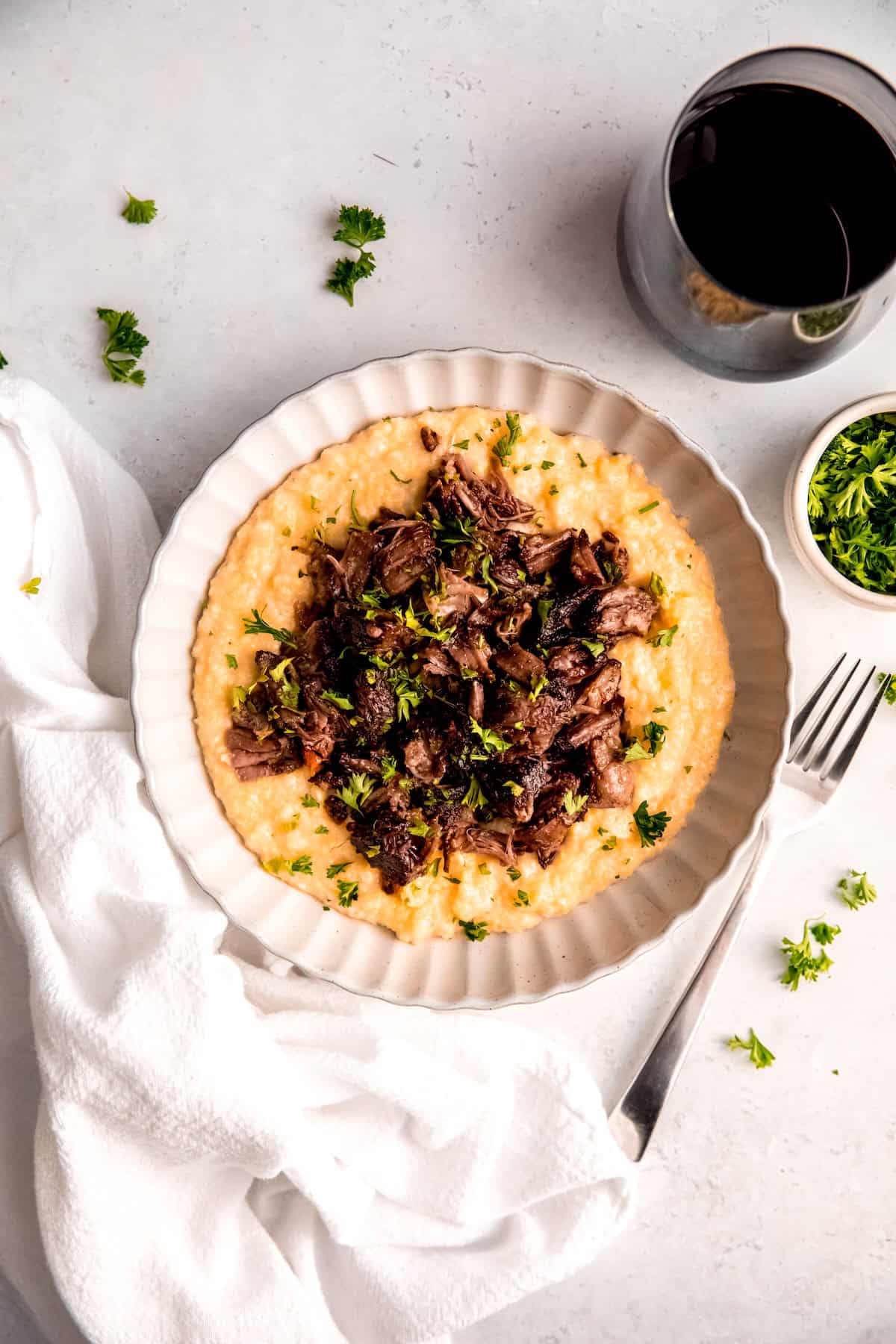
If the way to a person’s heart is through their stomach, this red wine braised short rib and polenta dinner is enough to earn you permanent residence there. Deeply flavorful, fork tender and made with simple ingredients, this impressive (but easy) dinner recipe is one to put in your winter repertoire for good.
When I was growing up in Sacramento, CA, Biba's Ristorante Italiano—Biba Caggiano's flagship restaurant—was about as high-brow as it got. I only got to go on special occasions, like father-daughter dates with my Dad. This red wine braised short ribs recipe is adapted from a recipe out of one of her cookbooks, Trattoria Cooking, and it brings back all the fancy feels.
Please note that this recipe is not particularly affordable if you are on a limited budget. Short rib prices have increased A LOT since I first published the post. If you're looking for yummy ways to entertain on a budget, I've got you covered elsewhere!
Jump to:
- What Are Short Ribs?
- Why You’ll Love Polenta and Short Ribs
- Ingredients & Substitutions
- How to Make Red Wine Braised Short Ribs
- How to Make Parmesan Polenta
- Optional Variations & Dietary Adaptations
- Expert Tips
- Storage & Reheating
- Serving Suggestions
- FAQs
- More Special Occasion Recipes
- Red Wine Braised Short Ribs with Parmesan Polenta
- 💬 Reviews
What Are Short Ribs?
Beef short ribs are a similar cut to pork spare ribs, but they’re meatier, richer, and more deeply flavored than their pork counterparts. In American parlance, short ribs come from the rib area of the cow—a hard-working region that includes the brisket, chuck, and plate.
For reference, other cuts from the rib region include ribeye and prime rib, which are beloved for their deep, beefy flavor. Short ribs share that same steak-like richness but are often much more affordable per pound. Why? Due to a large amount of muscle and connective tissue, short ribs are considered a tough cut of meat.
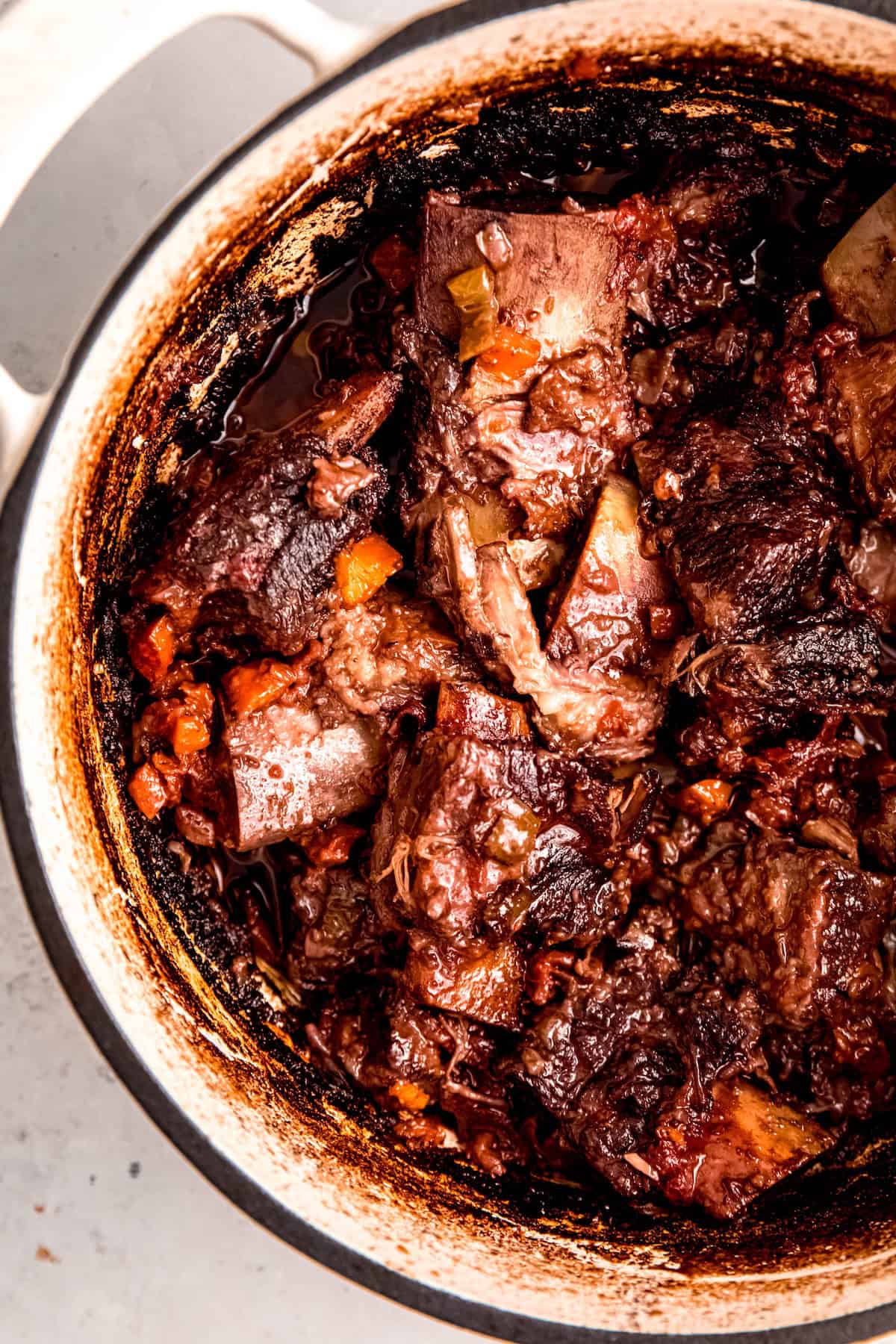
While this might sound like a downside, they shine with the right cooking method. Using low, slow heat—like braising—melts the connective tissue and transforms them into something impossibly tender. It’s similar to what happens with chuck roast pieces in my Instant Pot beef stew!
Why You’ll Love Polenta and Short Ribs
- Festive & Fancy - Despite being a recipe anyone can master, this Italian dinner is the kind of meal you make when you’re pulling out all the stops. It’s sure to impress even the snobbiest of foodies!
- Perfect for Beginners - Braising is an ideal method for any level of cooking skill. Since you're slow cooking the meat over low heat, this recipe is incredibly forgiving. Once you have the browning done, you can basically set it on the stove and forget about it. It is, for all intents and purposes, impossible to overcook.
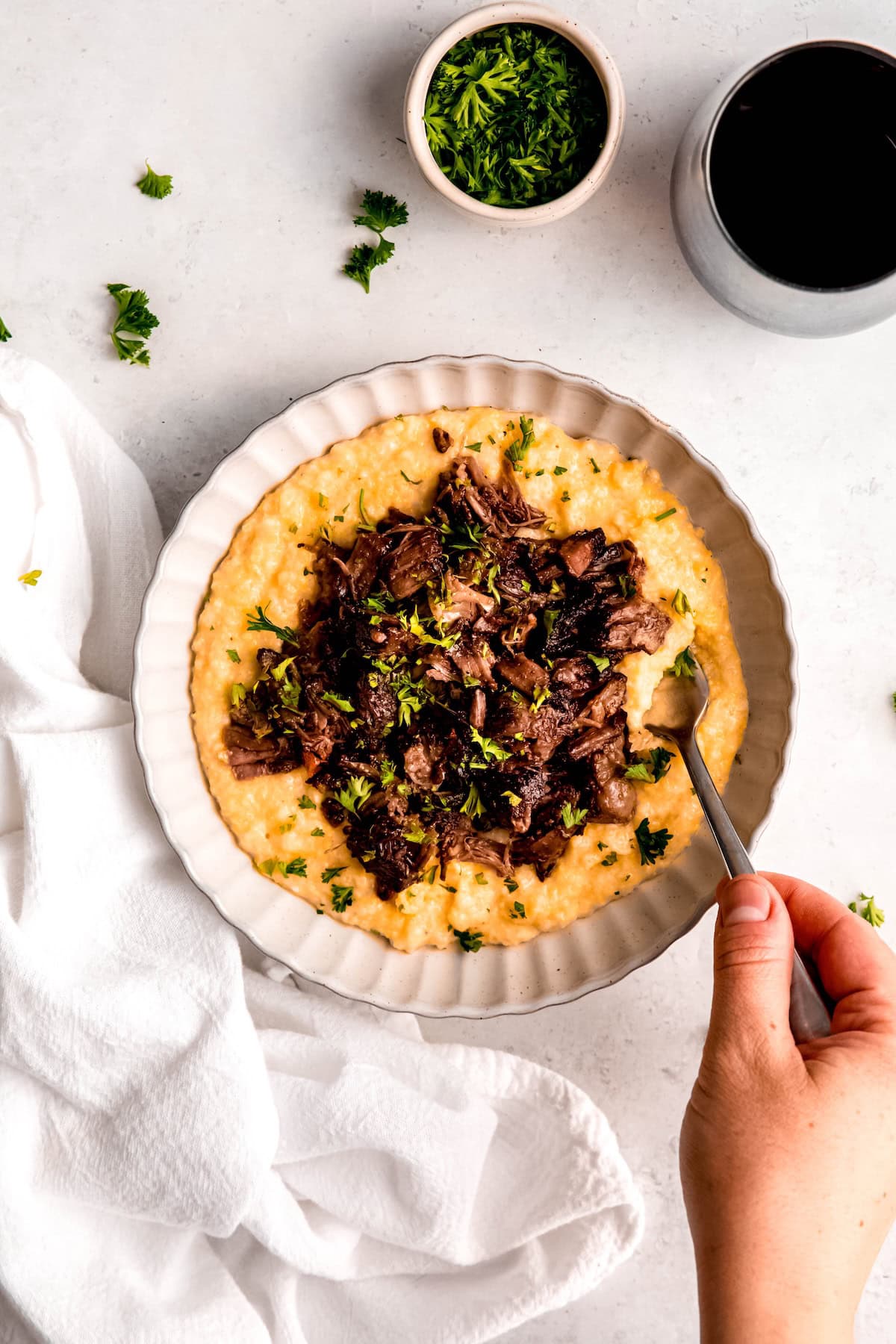
- Meal-Prep Friendly - These red wine-braised short ribs actually taste better over time. I love to make the recipe the day before the dinner party, so the celebration day is just as much mine to enjoy as everyone else's. The only thing to do is heat up the stew and make a pot of cheesy polenta, which takes just 20 minutes of active time.
Ingredients & Substitutions
As promised, this Italian braised short rib recipe is made with simple ingredients. Here's what to grab:
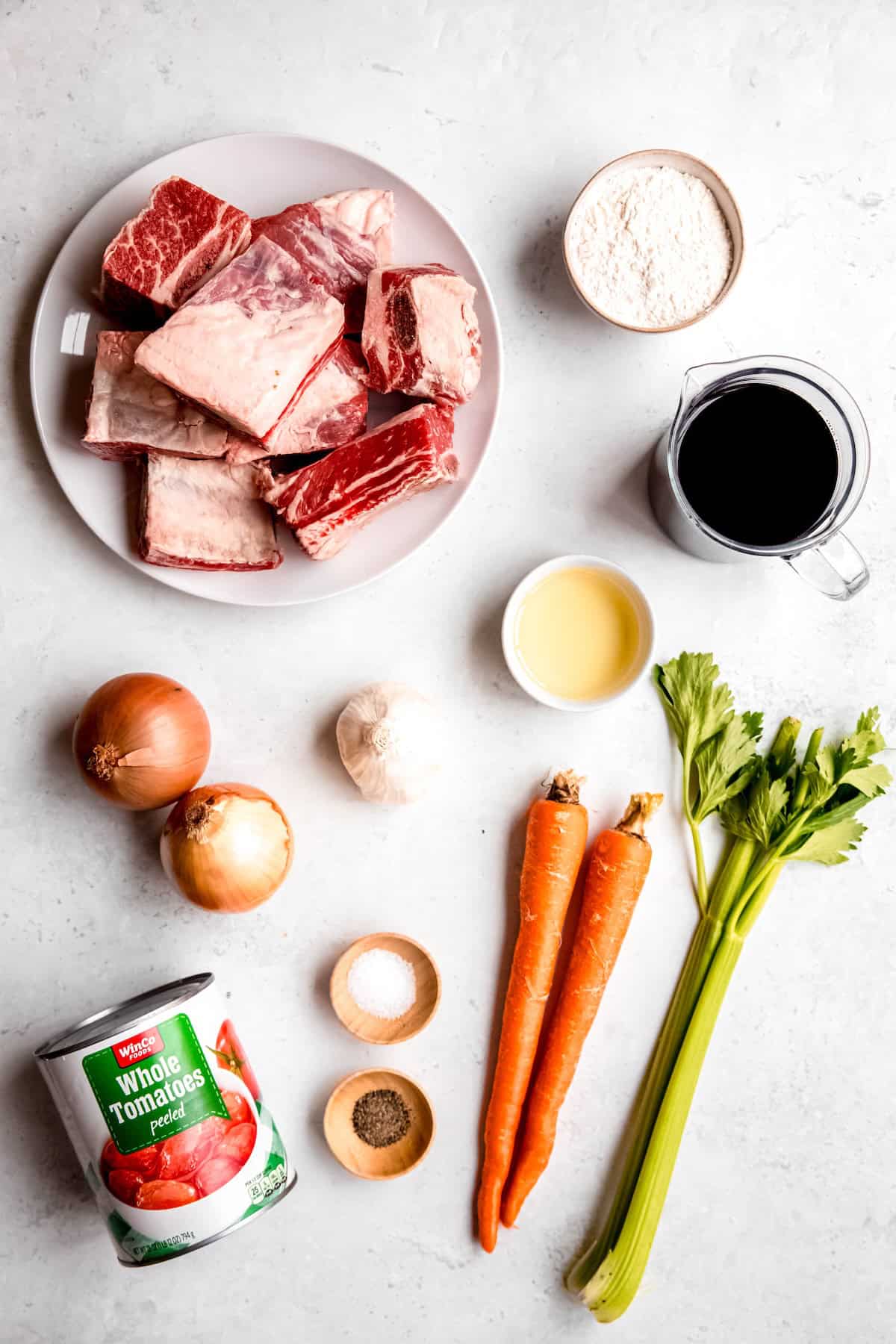
- Short Ribs - Choosing the right cut of short rib comes down to your preference. Either bone-in or boneless short ribs will work for this recipe. Some people prefer bone-in meat due to the flavor the bones give—plus you can turn them into no waste beef stock when you’re done. Bone-in cuts are often a bit cheaper, too. Win, win!
- All-Purpose Flour - Coating the meat in flour helps promote browning and later thickens the red wine sauce.
- Yellow Onions, Celery & Carrots - Also known as mirepoix or the “French trinity,” this trio of inexpensive aromatics adds deep flavor to many of my favorite soups and stews.
- Minced Garlic - Fresh is best, but you’re welcome to use jarred minced garlic for a shortcut. Alternatively, use ¼ teaspoon of garlic powder per clove of fresh.
- Dry Red Wine - No need to bust out expensive wine. Boxed wine will still create plenty of depth of flavor!
- Canned Whole Tomatoes - While they’re more expensive, Italian-style tomatoes (e.g. San Marzano) are typically much higher quality and have better flavor. If you can’t swing it, regular ones are fine!
- Salt, Black Pepper, & Olive Oil - Just the basics! Use freshly cracked black pepper for the most potent flavor and use whatever your preferred cooking oil is.
And for the cheesy parmesan polenta, you'll need:
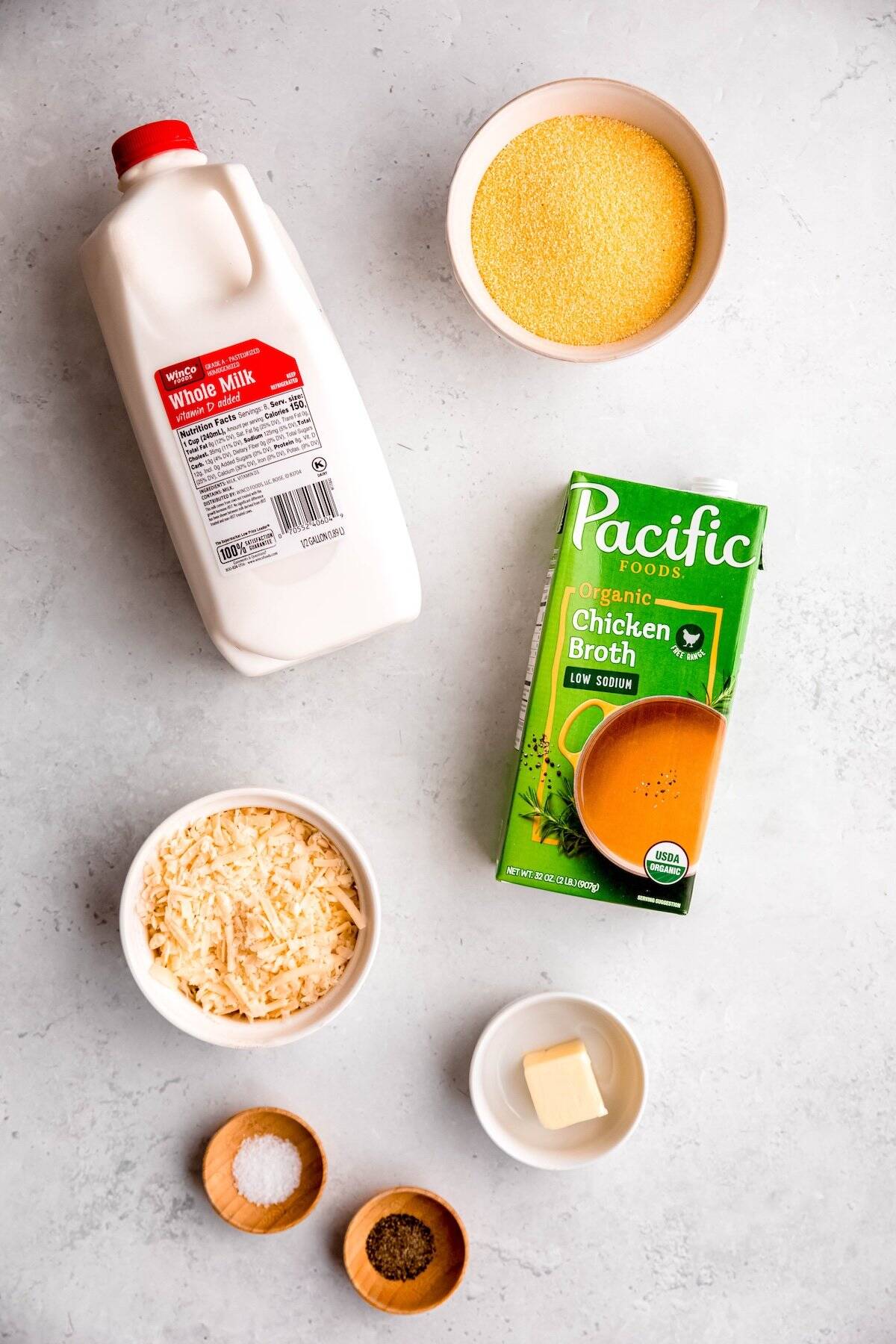
- Milk - I prefer using whole milk for the creamiest, dreamiest polenta, but you’re welcome to swap in a lower percentage of dairy milk if you prefer.
- Chicken Stock - You can also use bone broth (which adds more protein) or swap in veggie broth or stock instead.
- Polenta - Feel free to sub in coarse cornmeal or grits.
- Butter - If possible, use organic, grass-fed butter for the best nutritional profile and yummiest flavor.
- Parmesan Cheese - I always recommend you buy a wedge of parmesan and grate it yourself. Not only is it typically cheaper per ounce, but it also melts better and tastes better than the pre-grated kind.
How to Make Red Wine Braised Short Ribs
Step 1: Toss the short ribs in flour that’s been generously seasoned with kosher salt and pepper, making sure each piece is well coated.
Step 2: Brown the Meat. Heat a splash of olive oil in a large Dutch oven over medium-high heat. Working in batches, sear the floured short ribs until golden brown on all sides—about 2-3 minutes per side. Add more oil between batches if the pan starts to look dry. Transfer the browned ribs to a plate and set aside.
Step 3: Sauté Aromatic Vegetables. Don’t stress about the browned bits on the bottom of the pot—those little dark speckles are pure flavor gold (a.k.a. the fond). Add the carrots, onions, and celery along with a big pinch of kosher salt. Sauté for 4-5 minutes, scraping up the fond as the veggies soften and take on color.
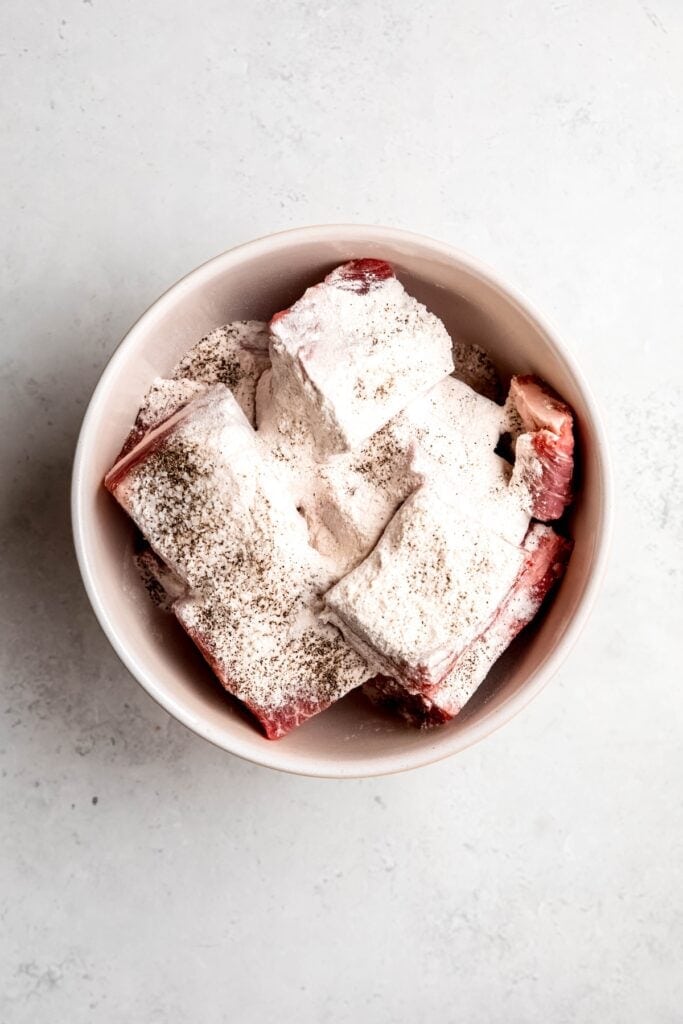
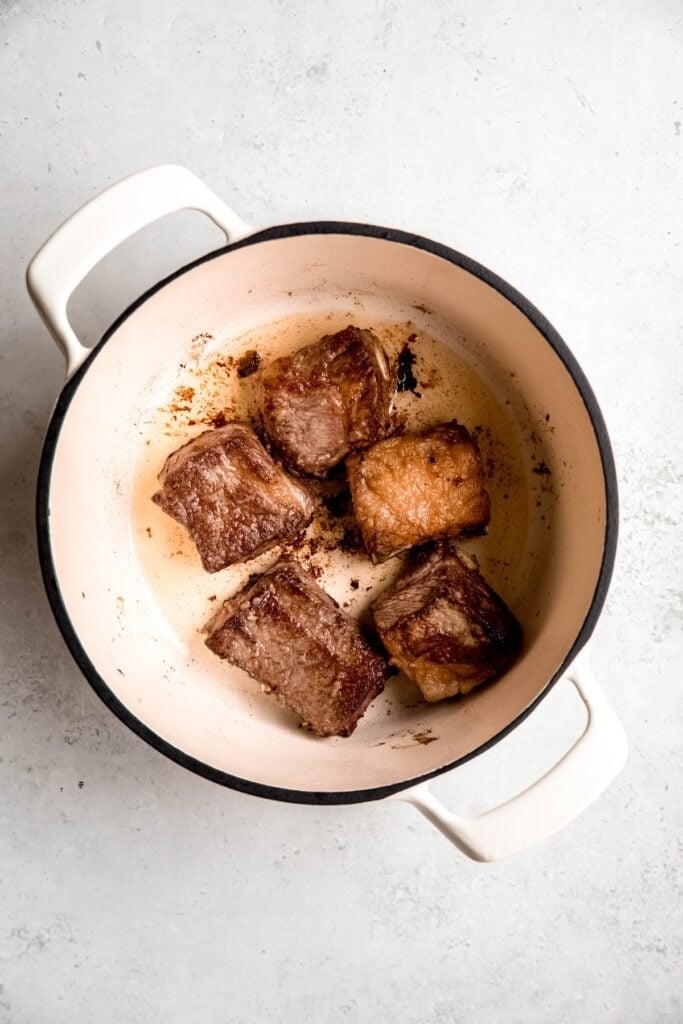
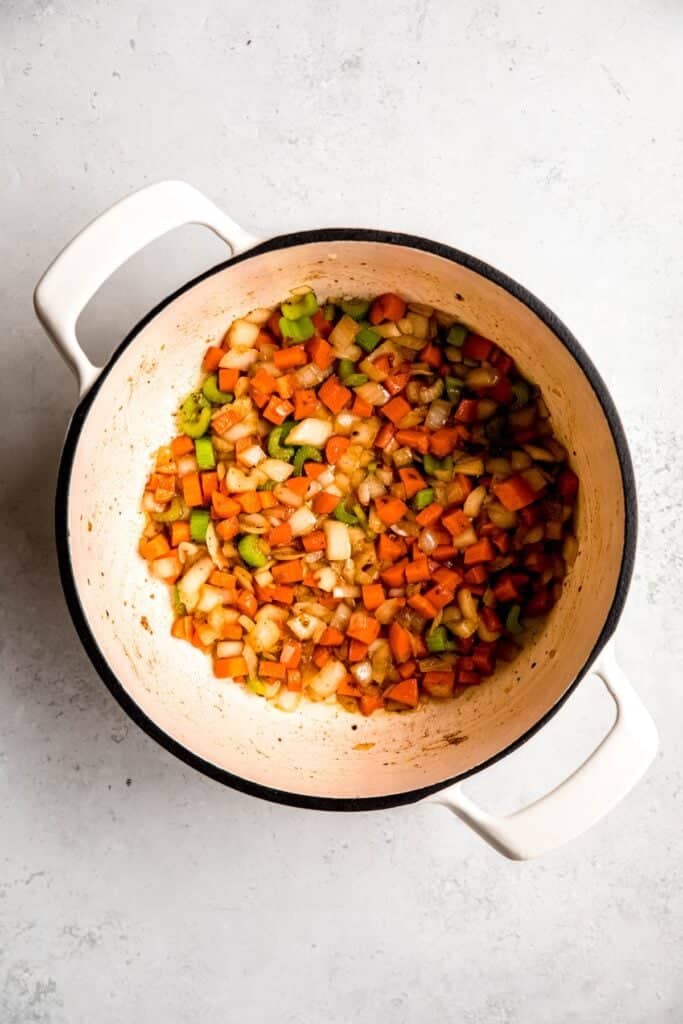
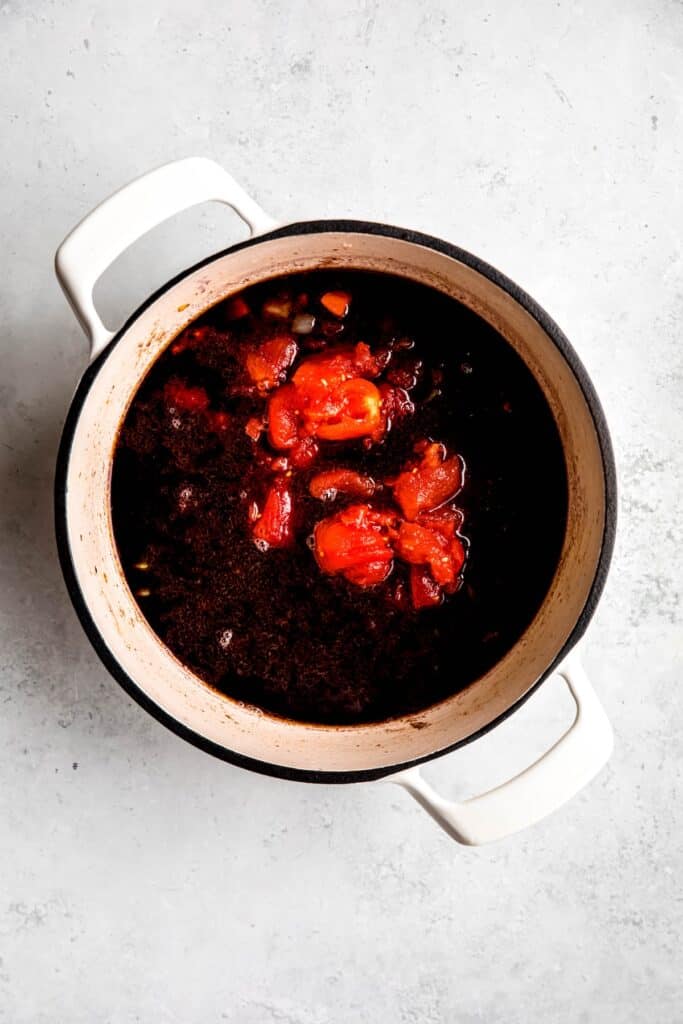
Step 4: Add Garlic & Deglaze. Once the mirepoix is golden, stir in the garlic and cook for another minute until fragrant. Pour in the red wine and tomatoes, stirring to loosen any fond still stuck to the bottom.
Step 5: Braise. Nestle the browned meat back into the pot, making sure it’s tucked into the braising liquid. Bring everything to a boil, then reduce the heat to maintain a gentle simmer. Cook for 3-3 ½ hours, stirring occasionally, until the meat is fork tender and falling off the bone.
Note: If you’re making the dish ahead, let it cool completely, then refrigerate the entire Dutch oven. When you’re ready to reheat, lift off any solidified fat on top (optional) and warm the stew gently over medium-low heat until heated through.


How to Make Parmesan Polenta
Step 1: Warm Liquid. Bring the milk and stock to a gentle boil in a medium saucepan. Once bubbling, slowly whisk in the polenta, making sure it doesn’t clump as it hits the liquid.
Step 2: Simmer & Stir. Reduce the heat to a low simmer and cook, stirring often, until the polenta thickens. If any lumps pop up along the way, just whisk vigorously—they’ll smooth right out. (If you want more information on how to cook the best possible polenta, this is an incredibly helpful article.)
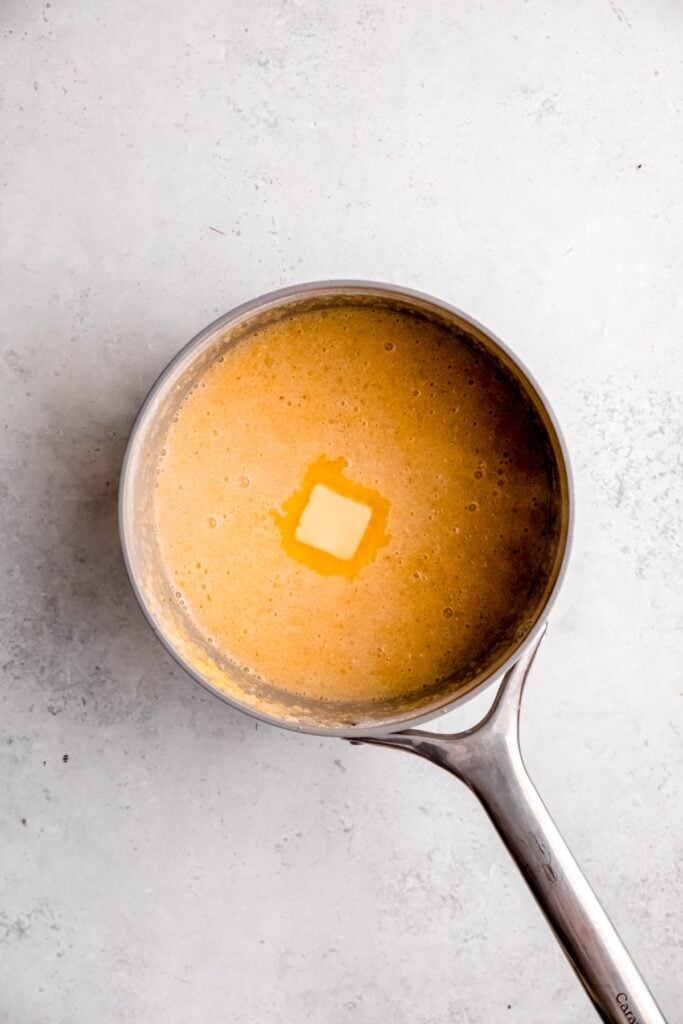
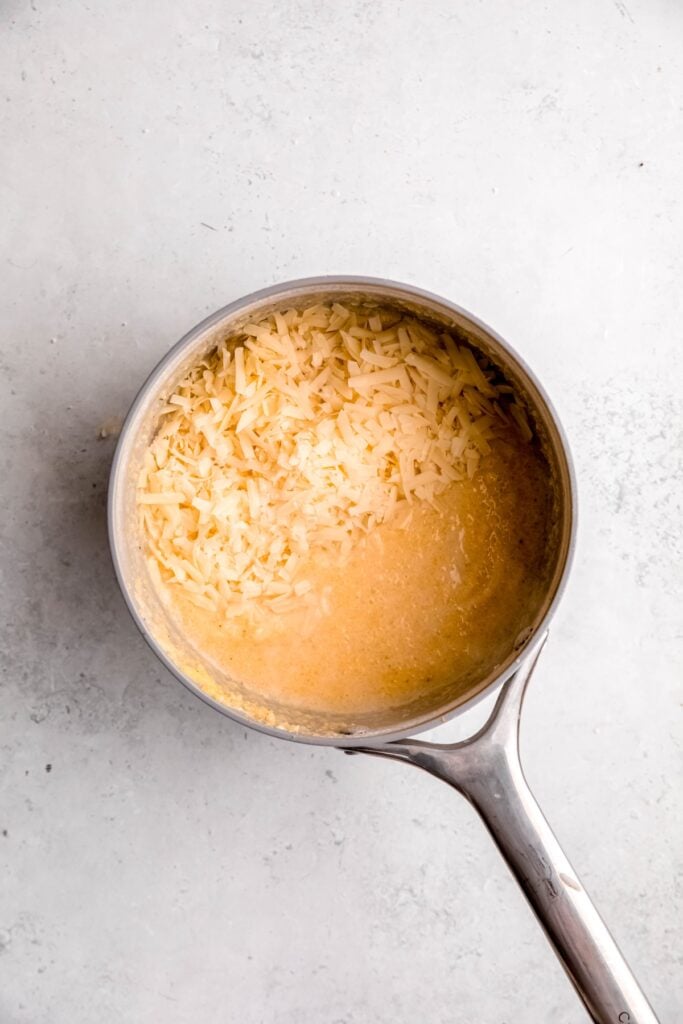
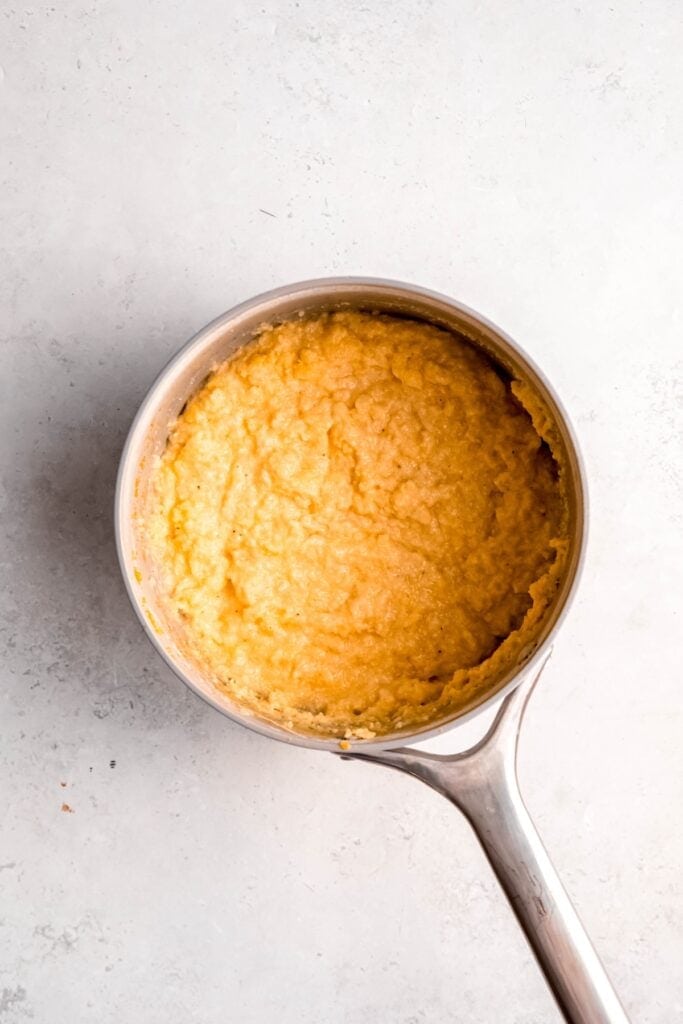
Step 3: Add Dairy. When the polenta reaches your ideal consistency (usually around 15 minutes), pull it off the heat. Whisk in the butter until melted, then fold in the parmesan. Taste and season with salt and pepper to suit your palate.
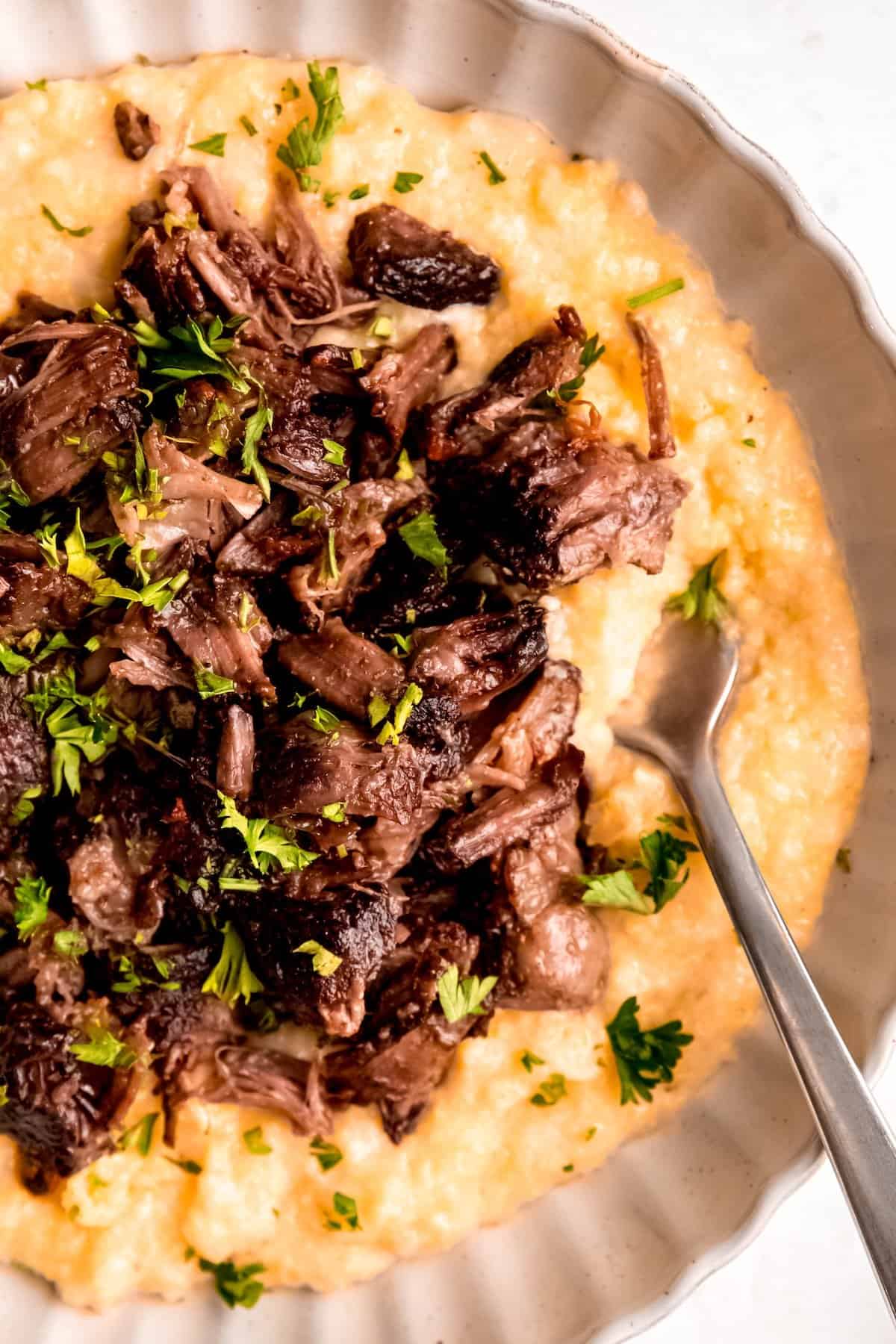
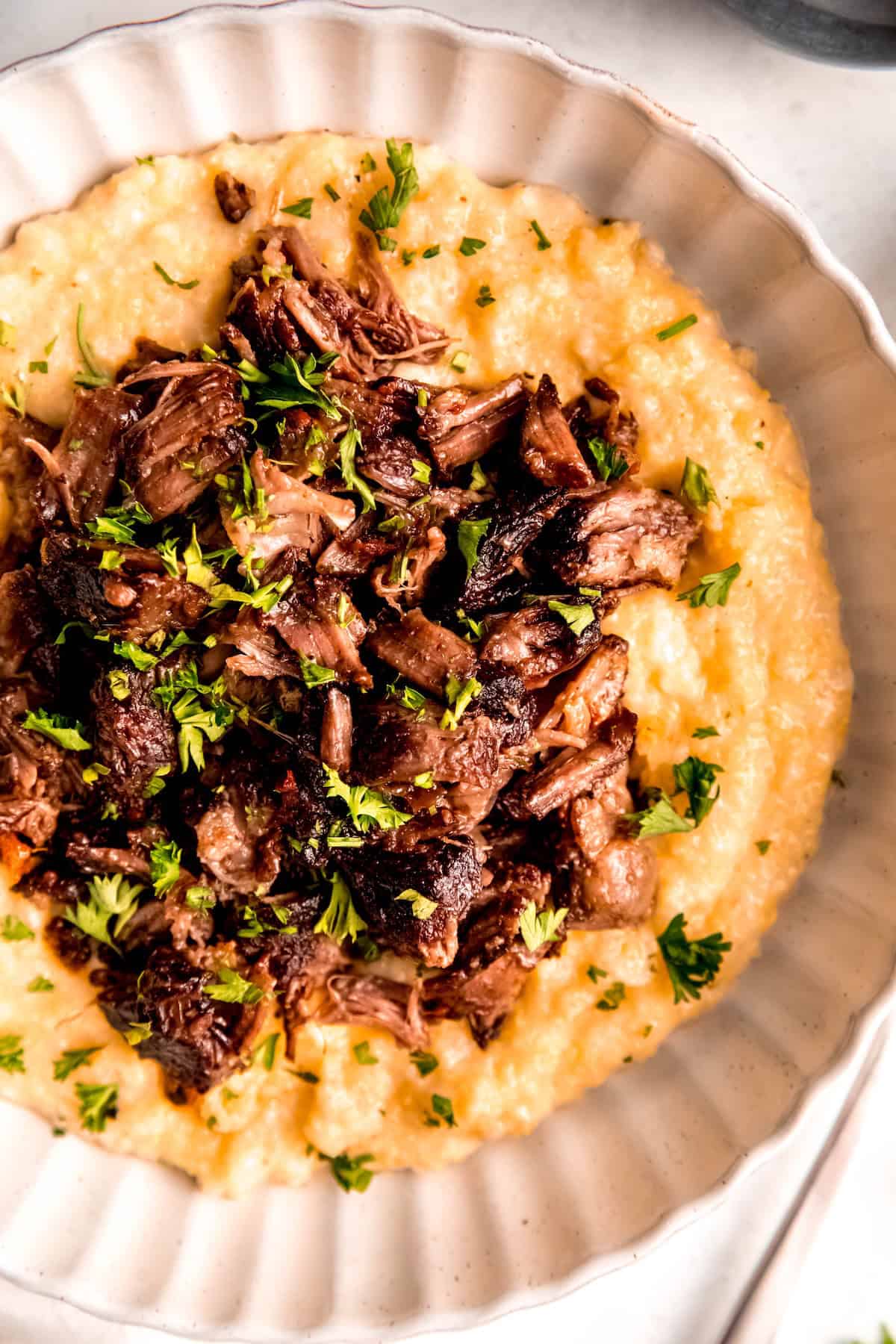
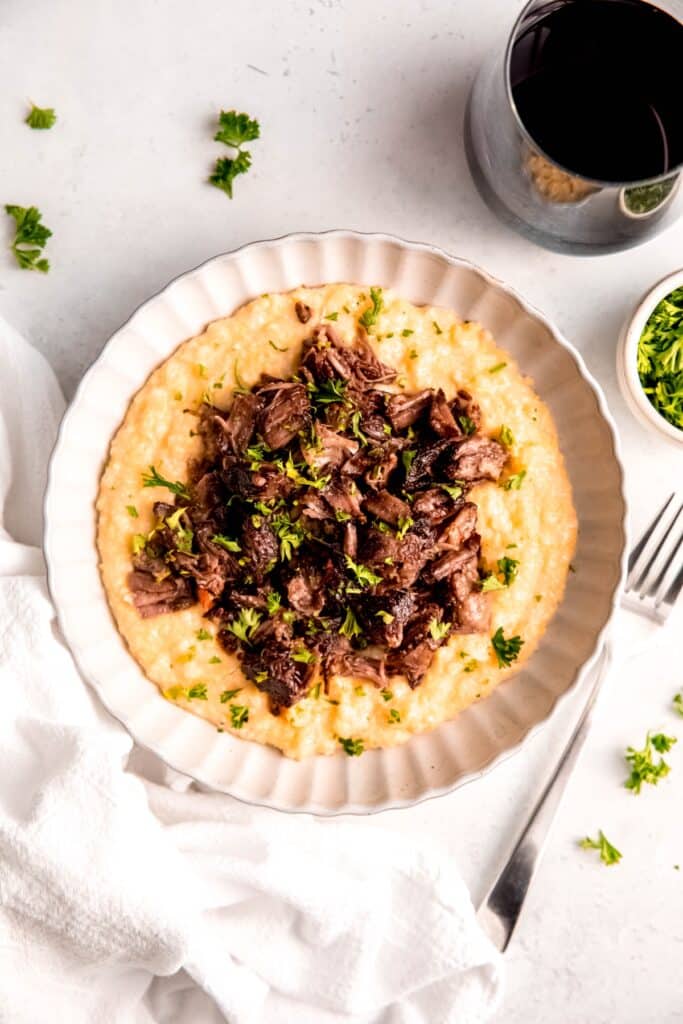
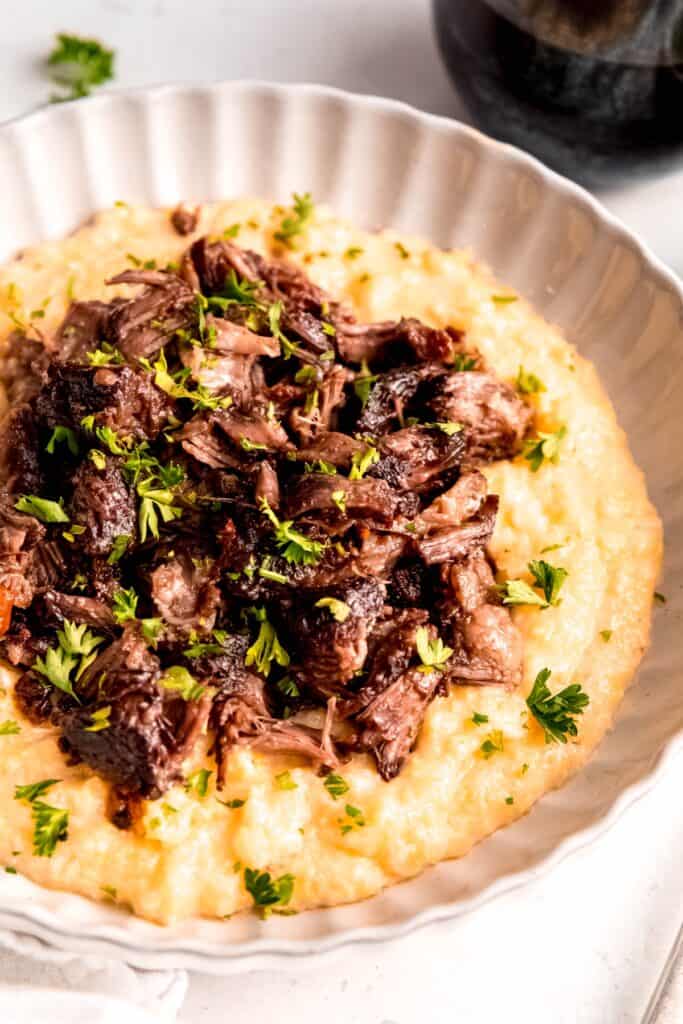
Step 4: Plate & Serve. Spoon a generous mound of creamy polenta into each bowl. Top with the hot braised short ribs and plenty of sauce. Finish with a sprinkle of fresh herbs, then dig in!


Optional Variations & Dietary Adaptations
- Dairy-Free - If you and milk don’t get along, simply swap in your preferred plant-based milk and vegan butter.
- Gluten-Free - If you have a gluten sensitivity or allergy, feel free to use cornstarch, potato starch, rice flour or your favorite gluten-free all-purpose flour mix instead!
- Different Base - Whether you’re allergic to corn or just don’t like the consistency of polenta, there are plenty of other yummy options for plating your braised short ribs. Try swapping in creamy mashed potatoes, low-carb garlic roasted cauliflower mash, or springy egg noodles instead!
- Add Herbs - While the simplicity of this red wine sauce is lovely, you’re welcome to add your own spin with herbs. Try adding 1-2 bay leaves or a few sprigs of fresh thyme for a pop of piney freshness.
Expert Tips
- Brown the ribs deeply—don’t rush this step! A dark, crusty sear builds the foundation of flavor for the entire dish. If the pan looks a little intense afterward, perfect. That’s the fond, and it dissolves into the braising liquid like magic.
- Choose the right cut of short rib. If you want ultra-rich flavor and dramatic presentation, go for bone-in. Boneless works too, but bone-in ribs release collagen that thickens the sauce naturally and gives the stew a velvety finish.
- Use a full-bodied red wine. Pick something dry and bold—Cabernet Sauvignon, Merlot, or a Côtes du Rhône. If it’s good enough to drink, it’s good enough to braise with.
- Keep the simmer gentle. A low, lazy bubble is the sweet spot. Too much heat can make tough cuts tighten up before they have a chance to become tender.
- Cook it longer than you think. Short ribs tell you when they’re done. If they’re not meltingly tender after 3 hours, give them another 20-30 minutes. Time is your friend here.
- Make it ahead for even better flavor. Short ribs taste phenomenal on day two. Chilling the whole pot overnight also makes it easy to remove excess fat from the surface before reheating.
- Don’t skimp on aromatics. The mirepoix (carrots, onions, celery), garlic, and tomatoes build layers of flavor. Let them get a little color—it translates directly into a richer sauce. Also, cut them finely for a more luscious sauce. If you have the time, I recommend dicing your own veggies for this recipe rather than buying prepackaged mirepoix which is usually much larger.
- Season in layers. Salt the flour, salt the mirepoix, taste the sauce midway, and season again before serving. This slow build keeps the dish balanced instead of salty.
- For creamier polenta, stir often. Polenta thickens as it cooks, and frequent stirring helps it stay silky. If it firms up too much in the pot or on the plate, just whisk in a splash of milk or broth to loosen it.
- If you're short on refrigerator space and it's cold where you live, feel free to let the outdoors act as an extension of your refrigerator. Refrigerators should be 40F or lower, so check your forecast beforehand. Also, to prevent critters from gobbling up all of your homemade goodness, be sure your pot lid is heavy (preferably cast iron), tied shut, or is secured inside a cooler or your grill.
Storage & Reheating
Braised short ribs store beautifully, which makes them perfect for meal prep, entertaining, or getting ahead on a holiday dinner.
- Refrigerator: Once the short ribs have cooled to room temperature, transfer them—along with all the braising liquid—to an airtight container or keep them right in the Dutch oven with the lid on. Refrigerate for up to 4 days.
- Freezer: Cool completely, then pack the ribs and their braising liquid into freezer-safe containers or heavy-duty bags. Freeze for up to 3 months.
- Reheating: To reheat, place the short ribs and sauce in a pot on the stovetop over medium-low heat, stirring occasionally until warmed through. If the sauce has thickened in the fridge, splash in a bit of stock or water to loosen it. You can also reheat individual portions in the microwave in 60-90 second intervals, stirring between bursts to ensure even heating.
Creamy polenta is best served fresh since it tends to thicken up in the fridge. That said, you can make it ahead and either reheat to a soft or firm consistency.
- Refrigerator: Cool completely. Store leftovers in an airtight container for up to 3 days.
- Reheating Option 1: Soft. transfer the polenta to a small pot and warm gently over low heat, adding milk, broth, or even a little water until it becomes creamy again. Stir often to prevent sticking. Microwave reheating works too—just add a splash of liquid and heat in short increments, stirring as you go.
- Reheating Option 2: Firm. Pour leftovers into a greased 8x8 pan to cool. When you are ready to reheat, turn the polenta out, cut into desired sizes and pan fry in a bit of butter or oil.
Serving Suggestions
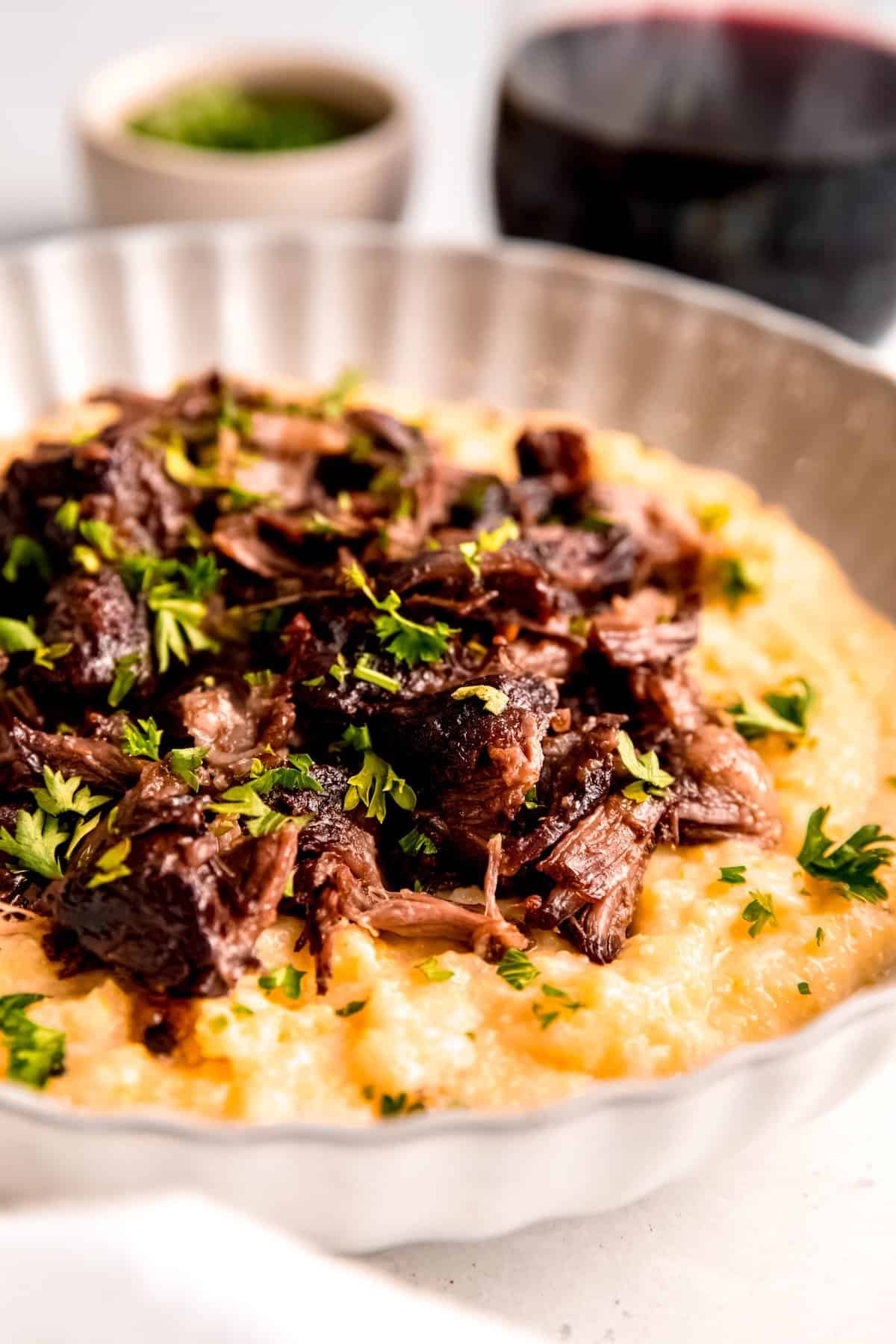
Braised short ribs, polenta, and a fluffy piece of black pepper focaccia are all you need for a spectacular celebration. Of course, a glass of red wine wouldn’t hurt. A simple side of mixed greens tossed with a tangy vinaigrette would be nice as a bright foil to all the rich flavors, but it’s not necessary.
If you want to round out the meal, my French cream cheese mousse with raspberry coulis would be a light, lovely finish. If you prefer to stay on theme, my Italian lemon cake with almonds and ricotta is an eternal fan favorite. Or, for a foolproof finale, my easy blueberry peach cobbler with cake mix is a simple dump cake that tastes like a million bucks.
FAQs
While the two are both made from corn, typically speaking grits are finer than polenta, which can have more of a chewy consistency. Traditionally, polenta is made from yellow corn while grits are made from white corn or hominy. If you have one and not the other in your pantry, feel free to use them interchangeably.
First of all, you don’t need to spend an arm and a leg. While I'm 100% on board with the idea that you shouldn't cook with bad wine (i.e. anything corked), in my restaurant days, we used boxed red wine all the time. Guess what? Food still turned out GREAT! If you happen to have a hefty disposable income, of course feel free to use your spendy bottles.
I opted for a box of Pinot Noir for this recipe, but Cabernet Sauvignon, Merlot, Shiraz/Syrah, Côtes du Rhone, Chianti or Zinfandel would all probably do quite nicely. I would recommend buying a box of something that you'll also enjoy sipping on, since you won't need all 4 bottles for the recipe. If you'd like a more scientific approach to determining which wine would be the best, check out this awesome article from Cook's Illustrated.
YES! In fact, I highly recommend that you do. As with many stews, the braised short ribs will continue to develop flavor over time. I also love that after refrigeration, the excess fat that has rendered will float to the top and solidify. To remove it, simply scrape a spoon across it before reheating. For more details, hop up to the “Storage & Reheating” section above.
Yes, but with a caveat. While I prefer a creamy polenta for this dish (which should be made right before serving), if you prefer firm polenta that you can cut, you should be making it ahead of time. Hop up to the “Storage & Reheating” section above for more details.
More Special Occasion Recipes



Red Wine Braised Short Ribs with Parmesan Polenta
Equipment
Ingredients
Red Wine Braised Short Ribs
- 3 ¼ lb Boneless Short Ribs cut into 3" chunks. Can substitute bone in if preferred
- ½ C AP Flour
- Kosher Salt and Pepper to taste
- 2-3 glugs Olive Oil
- 2 Yellow Onions diced fine
- 2 stalks Celery diced fine
- 2 Carrots diced fine
- 6-8 cloves Garlic minced
- 3 C Dry Red Wine
- 2 C Canned Whole Tomatoes preferably Italian (e.g. San Marzano), chopped roughly
Parmesan Polenta
- 4 C Milk
- 4 C Chicken Stock
- 2 C Polenta or sub grits
- 3 tablespoon Butter
- 2 C Parmesan Cheese freshly grated
- Kosher Salt and Pepper to taste
Instructions
Braise Short Ribs
- Toss short ribs in flour that has been generously seasoned with kosher salt and pepper.3 ¼ lb Boneless Short Ribs, ½ C AP Flour, Kosher Salt and Pepper
- Heat olive oil in heavy bottomed dutch oven over medium high heat. Working in batches, brown floured short ribs on all sides. If needed, add more olive oil to the pan between batches. Remove browned short ribs to the side.2-3 glugs Olive Oil
- Add carrots, onions and celery to dutch oven with a hefty pinch of kosher salt. Sauté 4-5 minutes, scraping up the browned bits on the bottom of the pan. Mirepoix should be golden.2 Yellow Onions, 2 stalks Celery, 2 Carrots
- Add garlic and sauté until fragrant, about another minute.6-8 cloves Garlic
- Add red wine and tomatoes, stirring to incorporate. Add browned meat back to pan, nestling it into the braising liquid.3 C Dry Red Wine, 2 C Canned Whole Tomatoes
- Bring mixture to a boil, then reduce heat to a simmer for 3-3 ½ hours, until meat is fork tender. Stir occasionally.
- If making ahead, allow stew to cool before refrigerating entire dutch oven. To reheat, remove from refrigerator, scrape off any excess fat that has solidified on the top (optional) and reheat over medium low heat.
Parmesan Polenta
- Bring milk and stock to a gentle boil.4 C Milk, 4 C Chicken Stock
- Whisk in polenta and a hefty pinch of salt. Stir until there are no lumps. Reduce heat to simmer. Cook, stirring often, until thick. If lumps form, whisk vigorously until smooth.2 C Polenta, Kosher Salt and Pepper
- When polenta looks thick enough for your liking, remove from heat and whisk in butter. Fold in cheese and season with salt and pepper to your liking.3 Tbsp Butter, 2 C Parmesan Cheese
- To plate, scoop a hefty serving of polenta into a bowl. Top with hot short ribs. Garnish with fresh herbs. Enjoy!
Notes
- Dairy-Free - If you and milk don’t get along, simply swap in your preferred plant-based milk and vegan butter.
- Gluten-Free - If you have a gluten sensitivity or allergy, feel free to use cornstarch, potato starch, rice flour or your favorite gluten-free all-purpose flour mix instead!
- Different Base - Whether you’re allergic to corn or just don’t like the consistency of polenta, there are plenty of other yummy options for plating your braised short ribs. Try swapping in creamy mashed potatoes, low-carb garlic roasted cauliflower mash, or springy egg noodles instead!
- Add Herbs - While the simplicity of this red wine sauce is lovely, you’re welcome to add your own spin with herbs. Try adding 1-2 bay leaves or a few sprigs of fresh thyme for a pop of piney freshness.
- Brown the ribs deeply—don’t rush this step! A dark, crusty sear builds the foundation of flavor for the entire dish. If the pan looks a little intense afterward, perfect. That’s the fond, and it dissolves into the braising liquid like magic.
- Choose the right cut of short rib. If you want ultra-rich flavor and dramatic presentation, go for bone-in. Boneless works too, but bone-in ribs release collagen that thickens the sauce naturally and gives the stew a velvety finish.
- Use a full-bodied red wine. Pick something dry and bold—Cabernet Sauvignon, Merlot, or a Côtes du Rhône. If it’s good enough to drink, it’s good enough to braise with.
- Keep the simmer gentle. A low, lazy bubble is the sweet spot. Too much heat can make tough cuts tighten up before they have a chance to become tender.
- Cook it longer than you think. Short ribs tell you when they’re done. If they’re not meltingly tender after 3 hours, give them another 20-30 minutes. Time is your friend here.
- Make it ahead for even better flavor. Short ribs taste phenomenal on day two. Chilling the whole pot overnight also makes it easy to remove excess fat from the surface before reheating.
- Don’t skimp on aromatics. The mirepoix (carrots, onions, celery), garlic, and tomatoes build layers of flavor. Let them get a little color—it translates directly into a richer sauce. Also, cut them finely for a more luscious sauce. If you have the time, I recommend dicing your own veggies for this recipe rather than buying prepackaged mirepoix which is usually much larger.
- Season in layers. Salt the flour, salt the mirepoix, taste the sauce midway, and season again before serving. This slow build keeps the dish balanced instead of salty.
- For creamier polenta, stir often. Polenta thickens as it cooks, and frequent stirring helps it stay silky. If it firms up too much in the pot or on the plate, just whisk in a splash of milk or broth to loosen it.
- If you're short on refrigerator space and it's cold where you live, feel free to let the outdoors act as an extension of your refrigerator. Refrigerators should be 40F or lower, so check your forecast beforehand. Also, to prevent critters from gobbling up all of your homemade goodness, be sure your pot lid is heavy (preferably cast iron), tied shut, or is secured inside a cooler or your grill.
- Refrigerator: Once the short ribs have cooled to room temperature, transfer them—along with all the braising liquid—to an airtight container or keep them right in the Dutch oven with the lid on. Refrigerate for up to 4 days.
- Freezer: Cool completely, then pack the ribs and their braising liquid into freezer-safe containers or heavy-duty bags. Freeze for up to 3 months.
- Reheating: To reheat, place the short ribs and sauce in a pot on the stovetop over medium-low heat, stirring occasionally until warmed through. If the sauce has thickened in the fridge, splash in a bit of stock or water to loosen it. You can also reheat individual portions in the microwave in 60-90 second intervals, stirring between bursts to ensure even heating.
- Refrigerator: Cool completely. Store leftovers in an airtight container for up to 3 days.
- Reheating Option 1: Soft. transfer the polenta to a small pot and warm gently over low heat, adding milk, broth, or even a little water until it becomes creamy again. Stir often to prevent sticking. Microwave reheating works too—just add a splash of liquid and heat in short increments, stirring as you go.
- Reheating Option 2: Firm. Pour leftovers into a greased 8x8 pan to cool. When you are ready to reheat, turn the polenta out, cut into desired sizes and pan fry in a bit of butter or oil.
Nutrition


Comments
No Comments